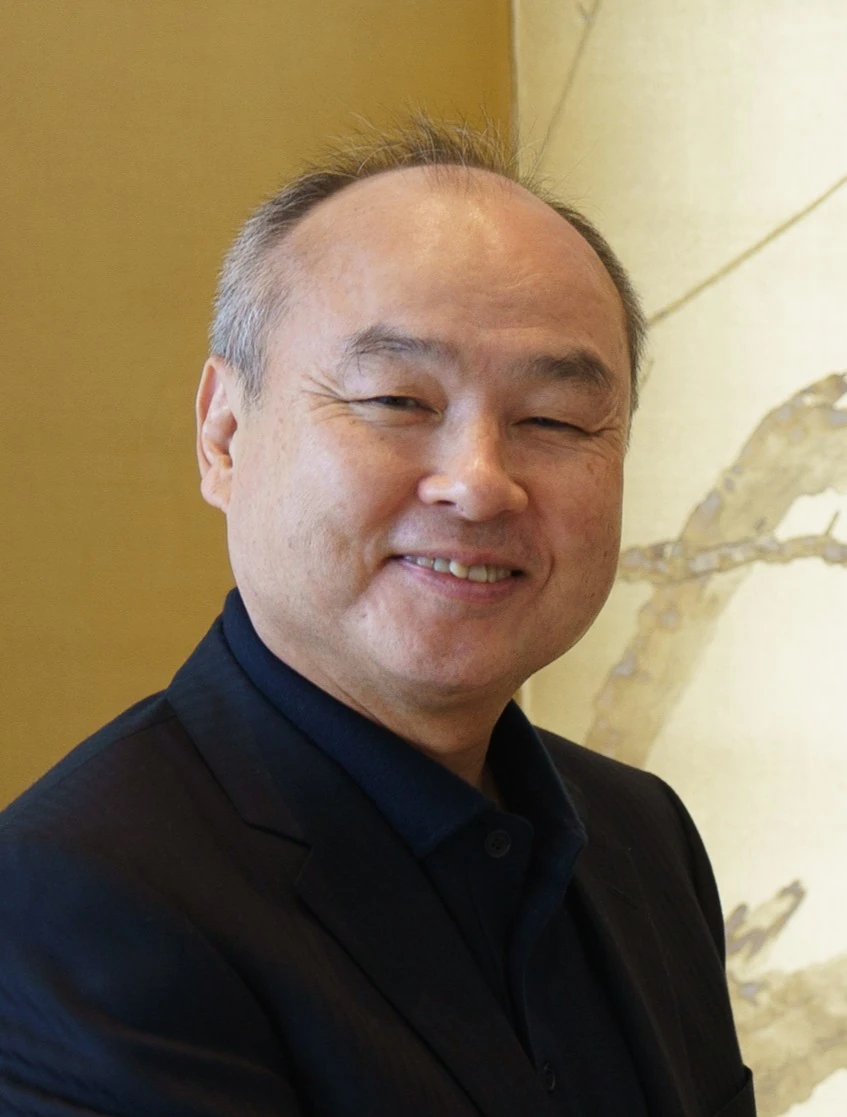
On 1 July, SoftBank Group borrowed another $10 billion and sent the proceeds into OpenAI. The transaction was the second instalment of a three-part follow-on investment agreed in February, and it took Masayoshi Son one step closer to an extraordinary concentration of capital: an expected cumulative $64.6 billion investment and roughly 13 per cent ownership once the final $10 billion tranche is completed, as planned, in October.
For Son, this is more than another large technology wager. It is an attempt to turn SoftBank from a portfolio of valuable but loosely connected holdings into the financing and distribution layer of an artificial-intelligence system. OpenAI supplies the models and users; Arm supplies a pervasive computing architecture; Stargate supplies infrastructure; and SoftBank’s Japanese telecoms and enterprise relationships offer a market in which to prove that the stack can generate durable revenue.
The strategic logic is unusually coherent by SoftBank standards. The financial architecture is unusually exposed. The next stage of Son’s leadership will therefore be judged less by the size of his vision than by whether he can fund it without making SoftBank hostage to one private company’s valuation, capital appetite and path to liquidity.
A conviction bet becomes the portfolio
SoftBank had invested $34.6 billion in OpenAI through Vision Fund 2 by the end of March 2026. The new $30 billion commitment is being paid in equal tranches in April, July and October at a $730 billion pre-money valuation. By mid-July, two had closed. The remaining commitment matters because the full amount would make OpenAI one of the defining exposures in SoftBank’s history, comparable in strategic importance to Son’s early investment in Alibaba and more tightly bound to the group’s financing choices than a conventional venture holding.
The accounting will amplify the effect. OpenAI shares are measured at fair value through profit or loss, so quarterly changes in the private company’s assessed value will flow into SoftBank’s investment gains or losses. That can make reported earnings look spectacular when valuations rise and fragile when assumptions change, even before cash is realised. SoftBank reported net income attributable to owners of the parent of ¥1.15 trillion for the year ended March 2026, but the more revealing measure for an investment holding company is the relationship between asset values, debt and liquidity.
At 31 March, SoftBank put net asset value at ¥40.06 trillion, against ¥48.26 trillion of equity holdings and ¥8.21 trillion of adjusted net debt. Its loan-to-value ratio was 17 per cent, comfortably below the stated normal ceiling of 25 per cent and emergency maximum of 35 per cent. That starting cushion is real. So is its sensitivity. Arm accounted for an adjusted ¥19.15 trillion of holdings and Vision Fund 2 for ¥17.19 trillion. A large part of SoftBank’s value is therefore tied to two linked propositions: demand for AI computing and confidence in the economics of frontier models.
Son is accepting that correlation because he sees the holdings as components rather than diversifiers. If OpenAI drives more inference, Arm-based systems and related infrastructure should benefit. If Arm expands from mobile devices into data centres and edge AI, SoftBank gains a broader hardware base for its model and robotics ambitions. But a flywheel can also transmit a shock. Slower model adoption, cheaper competing systems, regulatory intervention or a correction in AI infrastructure spending could pressure several assets at once.
Debt is doing the early work
The July instalment was financed by a $10 billion drawing under a bridge facility signed in March. The total facility is $40 billion, primarily intended for the OpenAI follow-on investment, and SoftBank says it will refinance or repay the bridge over time using asset monetisation and other financing measures. That sequence preserves speed, which Son prizes, but transfers the burden to future capital markets and disposal decisions.
The central financial question is not whether SoftBank can pay October’s tranche. Its disclosed headroom and access to financing suggest it can. The question is what it must sell, pledge or refinance afterwards, and on what terms. Asset-backed finance already reduces the adjusted value attributed to Arm and SoftBank Corp. in the group’s own NAV calculation. Higher interest costs, currency movements between the dollar and yen, and weaker listed-asset prices could narrow the room available before the formal LTV limits are reached.
SoftBank’s policy of holding enough cash to cover at least two years of bond redemptions is an important guardrail. So is management’s explicit promise to keep LTV below 25 per cent in normal conditions. Yet those rules govern solvency and resilience, not investment quality. A transaction can remain financeable while still producing an unattractive return. At a $730 billion pre-money valuation, OpenAI must translate enormous user reach into cash generation sufficient to support continuing model development, data-centre commitments and investor expectations.
This is where Son’s record invites both respect and scepticism. He has repeatedly identified platform shifts early and used balance-sheet leverage to increase exposure. He has also shown how conviction can outrun governance and operating evidence. The 2026 version of that tension is sharper because the commitment is concentrated, the asset is private and the capital intensity of the underlying industry is still rising.
Infrastructure must become an operating advantage
Stargate is meant to turn capital intensity into a moat. SoftBank and OpenAI announced the US infrastructure venture with Oracle and MGX in 2025, with Son as chairman, and later expanded the planned site network. SoftBank has also pursued data-centre capacity in Europe, including a partnership aimed at a one-gigawatt campus in France within a larger five-gigawatt ambition.
Owning or financing infrastructure can secure scarce compute and create strategic influence. It can also burden investors with long construction cycles, power constraints and utilisation risk. Data centres earn attractive returns when customers need the capacity at contracted prices for years. They become dangerous when chips improve faster than expected, workloads migrate to more efficient models or projects are built before demand is firm. SoftBank needs commercial structures that allocate those risks clearly among landowners, utilities, cloud operators, model developers and financiers.
Arm strengthens the thesis but does not remove that challenge. Its architecture is central to smartphones and increasingly relevant to servers, automotive systems and edge devices. Son can reasonably argue that AI will require far more than graphics processors in hyperscale facilities. It will spread into robots, vehicles, factories and personal devices. The economic prize lies in connecting those layers. The danger lies in assuming that strategic adjacency guarantees that value will accrue to SoftBank rather than to customers, chip designers or cloud platforms.
Japan is the proof market
The most consequential Asian element is not SoftBank’s ability to finance an American model company. It is whether the group can build a repeatable enterprise business in Japan. SoftBank and OpenAI launched SB OAI Japan as a 50-50 venture to market a corporate AI system called Crystal intelligence. SoftBank intends to be the first large-scale user, deploying it across roughly 2,500 internal business systems after group employees created about 2.5 million custom GPTs.
That internal deployment is strategically useful. Japan combines labour scarcity, high service-sector costs and large companies with complex legacy processes. A successful implementation could show customers how agents handle sales support, software work, procurement, customer service and administration while preserving access controls and auditability. SoftBank Corp. already has enterprise distribution, network infrastructure and trusted billing relationships. Those are assets a stand-alone AI laboratory would take years to recreate.
But enterprise adoption is not a simple extension of consumer popularity. Customers will ask who owns outputs, where data reside, how models are evaluated in Japanese, what happens when an agent makes a costly mistake, and whether escalating usage produces measurable savings. They will also compare OpenAI with Google, Microsoft, Anthropic, domestic models and open systems that may offer more control or lower prices. Crystal must become a product with implementation discipline and service margins, not merely privileged access to a leading model.
If SoftBank can demonstrate that outcome at home, it gains a template for other ageing, industrial Asian economies. Japan’s manufacturers could connect language models to robotics and edge computing; financial groups could automate document-heavy workflows; and regional enterprises could buy managed AI with local governance. If the deployment stalls, the gap between Son’s global capital commitment and SoftBank’s own operational gains will become hard to ignore.
Concentration changes the leadership test
There is also a governance issue that cannot be separated from the investment case. SoftBank’s own risk disclosures describe Son as pivotal to the group and acknowledge that an unforeseen interruption to his leadership could impede decision-making. The company says it has contingency plans and that its nomination and compensation committee discusses succession. That is necessary, but the scale of the OpenAI commitment raises the standard.
A robust succession plan must explain who can evaluate future funding requests, negotiate with OpenAI and allocate capital among Arm, infrastructure, robotics and telecoms without relying on the founder’s personal authority. It must also ensure that independent directors can challenge the assumptions behind private-company valuations and related strategic projects. The more SoftBank’s portfolio is organised around Son’s thesis, the more costly ambiguity over decision rights becomes.
Son’s achievement in 2026 is to make SoftBank impossible to treat as a passive technology conglomerate. It is becoming an active sponsor of the AI build-out, with credible assets across chips, networks, capital and distribution. The July payment confirms that this transformation is not rhetorical.
Its success, however, will be measured in less theatrical numbers: refinancing maturities, contracted infrastructure utilisation, enterprise revenue, customer retention, model costs and cash returned to the holding company. The final October tranche will complete the announced investment. It will not complete the strategy. Son must prove that concentration creates operating leverage before the balance sheet begins to dictate his choices.