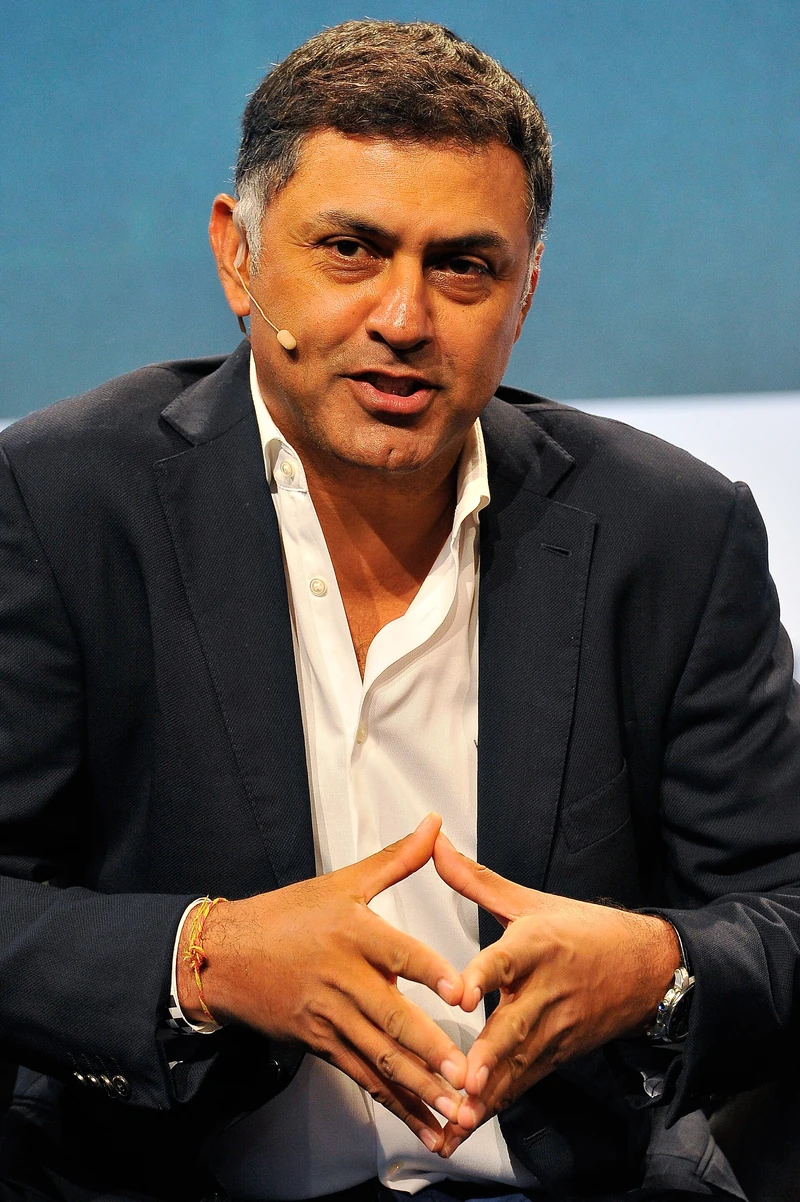

FedEx completed the separation of FedEx Freight on 1 June 2026, and the transaction gave Raj Subramaniam something that large transport groups rarely obtain without pain: a cleaner strategic argument. The remaining company is more clearly an express, parcels and logistics network, while Freight can pursue the economics of less-than-truckload transport as an independent public company. Yet structural clarity is not the same as operating proof. Subramaniam now has to show that a more focused FedEx can produce returns that are less dependent on a favourable surcharge environment, episodic cost programmes or the exceptional conditions of a single peak season.
The starting position is encouraging. FedEx reported fiscal 2026 revenue of $94.7 billion, up from $87.9 billion, and adjusted operating income of $6.61 billion, compared with $6.12 billion a year earlier. Adjusted operating margin reached 7.0 per cent. In the fourth quarter, revenue rose to $25.0 billion and adjusted operating income was $2.09 billion. Higher US domestic and International Priority yields, cost savings and increased export-package volume all helped. Capital spending fell to $3.8 billion, or 4.0 per cent of revenue, the lowest annual ratio in the company’s history.
Those numbers capture the central opportunity and the central risk. FedEx is demonstrating that it can grow while spending a smaller proportion of sales on physical assets. But a delivery network cannot be optimised like a software cost base. Aircraft, hubs, stations, vehicles and labour form a service system in which savings taken in one place can reappear as delays, purchased transport expense or customer churn elsewhere. Subramaniam’s leadership case therefore rests not on how much cost leaves the system, but on whether the redesigned system remains reliable at lower structural expense.
The separation is a beginning, not a victory lap
FedEx Freight transferred approximately $4.1 billion to the former parent before the spin-off, funded mainly through a senior-notes offering and term borrowing. That cash strengthens FedEx’s financial flexibility, but it also makes the capital-allocation question more visible. Shareholders will expect debt management, distributions and investment to be balanced with discipline. During fiscal 2026, FedEx returned about $2.2 billion through dividends and repurchases, while $1.3 billion remained under its existing buyback authorisation at year end.
The temptation after a separation is to treat the proceeds as evidence that value has already been created. The better test is whether each company can now make decisions suited to its own asset cycle. For FedEx, the decision set includes fleet retirement, air-capacity deployment, automation, station consolidation and the integration of previously separate ground and express operations. Ten aircraft were designated for permanent retirement in the fourth quarter, following twelve a year earlier. Such moves can improve utilisation and reduce maintenance expense, but only if demand forecasting and contingency planning are accurate.
Subramaniam has spent much of his tenure pressing FedEx away from the organisational inheritance of independently managed operating companies. The logic of a unified network is compelling: parcels should travel through the lowest-cost route consistent with the promised service, rather than through a route determined by a historic corporate boundary. Network 2.0 and the broader DRIVE programme aim to remove duplication, standardise processes and improve asset density. The difficult work lies in local execution. Route design, contractor relationships, pickup windows and hub flows interact in ways that are obvious only after disruption occurs.
A credible post-Freight strategy will consequently need better operational transparency, not simply a lower expense line. Investors should be able to see whether on-time performance, claims, customer retention and incremental margins improve together. If service indicators deteriorate while headline savings rise, the programme will be borrowing from future revenue. If both improve, FedEx will have shown that decades of accumulated complexity can be converted into an advantage rather than merely cut away.
Yield quality matters more than volume for its own sake
Parcel markets have changed since the pandemic surge. Large retailers have developed delivery capabilities, regional carriers have become more credible and customers can allocate volume dynamically. At the same time, low-value e-commerce parcels put pressure on networks designed around time-definite, higher-yield shipments. FedEx cannot win by filling every available cubic metre. It must choose business whose density, service requirement and price support the cost of the network.
The recent strength in US domestic and International Priority yields is therefore important. Priority traffic rewards reliability and global reach, especially in healthcare, aerospace, advanced manufacturing and urgent business supply chains. Those categories can justify the customs expertise and air capacity that differentiate FedEx from cheaper alternatives. They also expose the group to trade-policy volatility. Fiscal fourth-quarter results already reflected financial effects from changing global trade policy, alongside higher purchased transportation and wage rates.
Subramaniam’s task is to keep commercial discipline intact when capacity is available and competitors discount. A parcel network has high fixed costs and a powerful instinct to chase volume. Yet volume that crosses several hubs, requires manual handling or enters an imbalanced trade lane can destroy value even when reported revenue rises. The company needs pricing systems that account for dimensional weight, lane scarcity, delivery complexity and the full cost of exceptions. It also needs sales incentives that reward contribution rather than gross volume.
This is where digital investment should have a practical purpose. Better demand prediction can align aircraft and line-haul capacity with shipment flows. More accurate address and customs data can prevent expensive interventions. Dynamic routing can improve density without degrading commitments. Customer tools can make inventory and transport decisions more predictable. None of these capabilities is glamorous in isolation. Together, they determine whether FedEx earns a return on its global infrastructure or merely keeps it busy.
Asia is both the growth case and the complexity case
For an Asia-focused investor or customer, the strategic relevance is direct. Manufacturing supply chains are diversifying across India, Vietnam, Malaysia, Thailand and other markets while remaining deeply connected to China. Semiconductor, electronics, pharmaceutical and automotive shipments often cross borders several times before a finished product reaches the buyer. FedEx’s international network can benefit from that fragmentation because complexity increases demand for reliable, time-definite logistics.
It also raises the cost of mistakes. Trade rules, de minimis thresholds, export controls and security requirements are changing quickly. Capacity must be positioned before demand is fully visible, while customs delays can undermine a premium service even when the transport operation performs correctly. Subramaniam, who has extensive experience across FedEx’s Asian and international operations, has to translate that institutional knowledge into a network that adjusts faster than policy and production patterns change.
The company should resist reducing Asia to a simple volume-growth story. The attractive business is not every cross-border parcel; it is the set of flows where FedEx’s clearance capability, network reach and service assurance command an adequate return. That may mean deeper sector specialisation, selective gateway investment and partnerships that improve the last mile without reproducing fixed assets everywhere. It may also mean declining traffic whose economics depend on regulatory exemptions that can disappear overnight.
The calendar change creates an unusually clear checkpoint
FedEx changed its financial year end from May to December from 1 June 2026, creating a seven-month transition period. The accounting change is administrative, but it provides a useful strategic boundary. By the time the company reports its first full calendar-year pattern, investors should have a better view of the earnings quality of the post-Freight group, the resilience of network savings and the capital needed to sustain service.
The key scorecard should be compact. First, adjusted operating margin must improve through structural productivity rather than an unsustainably favourable mix. Second, capital spending should remain disciplined without allowing fleet age, automation needs or maintenance backlogs to become hidden liabilities. Third, cash generation should comfortably fund both strategic investment and shareholder returns. Fourth, service reliability must hold through peak demand and network transitions. Finally, the unified operating model should make FedEx easier for customers to use, not merely easier for management to describe.
Subramaniam has already done the visible corporate work: a major separation, a simplified organisational direction and a lower capital-intensity profile. The next phase is less theatrical and more consequential. It requires thousands of local operating decisions to reinforce one economic design. FedEx will not be judged on whether it looks simpler on a chart, but on whether every aircraft hour, vehicle route and handling touch produces more dependable value.
There is also a cultural dimension. A unified FedEx asks teams formed under different operating traditions to share data, capacity and accountability. Subramaniam must make incentives follow the new network logic and ensure that local leaders can raise service risks before they become customer failures. Structural simplification will endure only when frontline behaviour changes with the organisation chart.
That is the leadership challenge after unbundling. A global network is valuable because its pieces work together, but togetherness can also conceal weak returns. Subramaniam must preserve the reach and trust that make FedEx distinctive while forcing each part of the system to earn its place. If he can do that through a volatile trade cycle, the Freight separation will be remembered not as the end of a restructuring, but as the moment FedEx became a more coherent industrial company.