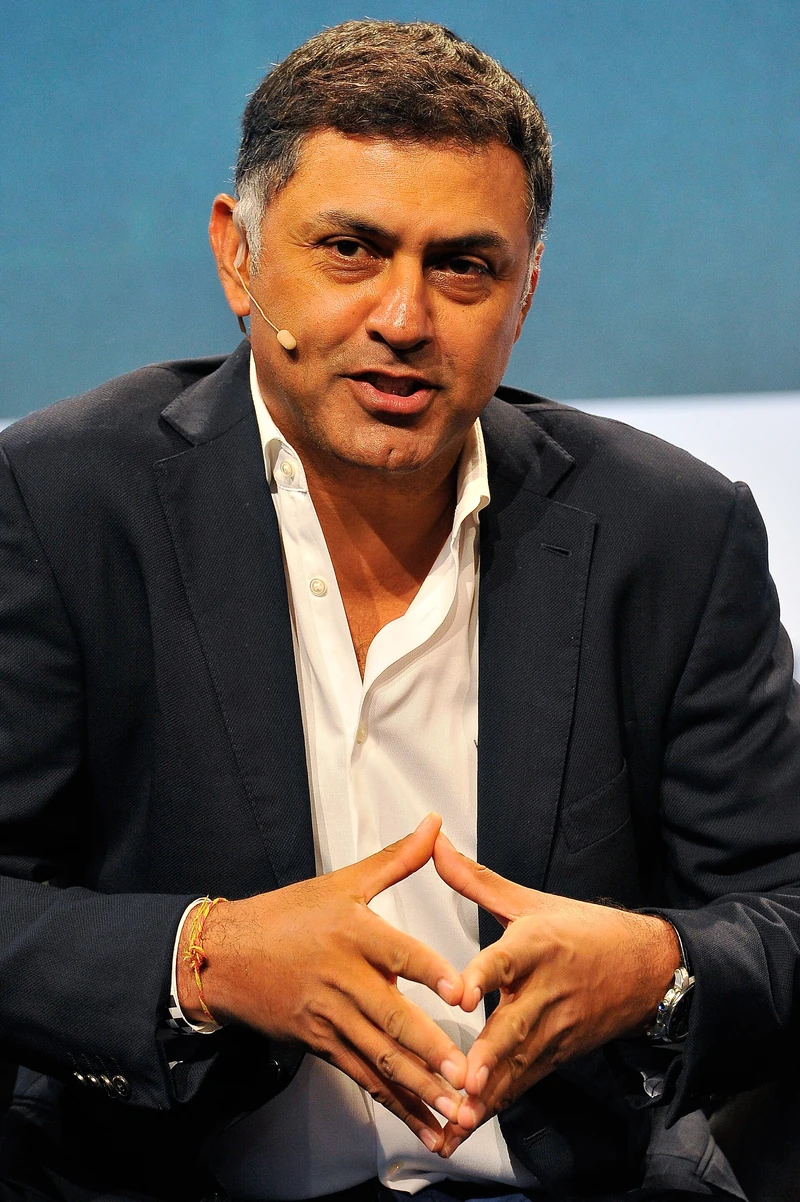

Safra Catz is no longer Oracle’s chief executive, but the company’s artificial-intelligence expansion makes her financial discipline as executive vice chair unusually important. Oracle ended fiscal 2026 with remaining performance obligations of $638 billion, up 363 per cent from a year earlier. The backlog reflects enormous demand for cloud infrastructure, including contracts for AI computing.
Revenue and cash do not arrive at the same time as a signed commitment. Oracle must build data centres, procure accelerators, secure power and connect networks before much of the contracted usage can be delivered. In fiscal 2026, operating cash flow reached $32 billion while free cash flow was negative by about $23.7 billion as investment surged.
Catz spent years as the operator most closely associated with Oracle’s margins, acquisitions and capital allocation. Her leadership test now is not whether the company can cut cost. It is whether a backlog of unprecedented size can finance a buildout without exposing shareholders to excessive debt, customer concentration or assets that outlive the contracts supporting them.
The growth is real and capital intensive
Oracle reported fourth-quarter fiscal 2026 revenue of $19.2 billion, up 21 per cent. Cloud revenue rose 47 per cent to $9.9 billion, and infrastructure-as-a-service revenue increased 93 per cent to $5.8 billion. Full-year revenue reached $67.4 billion, with cloud and infrastructure growing faster than the company overall.
Those figures show that Oracle has become a significant AI infrastructure supplier, not merely a database company announcing future capacity. Its ability to build large clusters and offer multiple model and software relationships has attracted customers that need enormous computing resources.
The economics remain in formation. Accelerators are costly and can depreciate quickly as new generations arrive. Data-centre construction, power equipment and networking require long lead times. Revenue may ramp over several years, while cash leaves earlier.
Catz should insist that each major capacity plan has a contract, financing structure and downside case. Growth targets should not cause Oracle to build speculative infrastructure merely to signal ambition.
Backlog quality matters more than headline size
Remaining performance obligations represent contracted future revenue, but not every dollar has the same timing, margin or enforceability. Some commitments may depend on Oracle delivering capacity or achieving milestones. Customers may have options, termination rights or credits if schedules slip.
Oracle should provide a maturity profile showing how much backlog is expected to become revenue in the next year, several years and later periods. Investors need to understand concentration among the largest AI buyers and how much is prepaid or secured.
Catz can press for contract structures that align cash with capital. Oracle has said customer prepayments and customer-provided graphics processors reduce the amount it must finance, with large contracted contributions expected. These arrangements can improve liquidity if obligations and ownership are clear.
Backlog should be stress-tested for customer credit. AI companies may raise enormous capital, but their long-term revenue can be uncertain. A contract is only as strong as the counterparty and collateral. Parent guarantees, deposits and staged capacity can reduce exposure.
Financing should follow the asset
Not every data centre needs to sit entirely on Oracle’s corporate balance sheet. Project finance, joint ventures, leases and customer-backed structures can match funding with a specific site and contract. They can also hide obligations if economics are opaque.
Catz should favour structures where risk allocation is visible. Oracle needs control over service quality and access to capacity, while lenders and partners need predictable cash flows. Guarantees, take-or-pay commitments and residual-value exposure should be disclosed.
Customer-supplied accelerators can lower Oracle’s upfront spending, but operational responsibility remains. The company must integrate, secure and maintain hardware and define who bears obsolescence or replacement. Prepayments should not be recognised as economic profit before service is delivered.
Debt maturity should match contract duration. Funding a long-lived facility with short-term borrowing creates refinancing risk. Hedging and local financing may be needed for global sites. Catz’s experience can impose this discipline while operating teams focus on delivery.
Power is now a commercial constraint
AI computing requires electricity, cooling and grid connections at a scale that can exceed local capacity. A data centre can be physically built but unable to operate fully because power arrives late. Oracle’s backlog is valuable only when megawatts and equipment are available together.
Site selection should include realistic interconnection schedules and the cost of generation, transmission and water. Long-term power agreements can improve certainty, but they may create obligations if customer demand changes. Backup generation and grid services add complexity.
Oracle should avoid relying on environmental claims based solely on purchased certificates. Customers and regulators increasingly examine actual electricity supply and emissions. Efficient hardware utilisation, cooling and workload scheduling can reduce both cost and impact.
Asia presents opportunities and constraints. Demand in Japan, India, Singapore and other markets is strong, while land, power and data-residency rules differ. Partnerships can accelerate capacity, but Oracle must keep service and security consistent.
GPU obsolescence requires contractual protection
Accelerators improve quickly. A cluster built for today’s models may be less competitive before a long contract ends. Oracle must estimate useful life based on economic demand, not only accounting convention.
Contracts can include technology-refresh provisions and pricing that reflects the hardware generation. Customers may contribute equipment or commit to minimum use. Oracle can redeploy older chips to inference or less demanding workloads if its software and scheduling support mixed fleets.
High utilisation is the best defence. Capacity reserved for one customer but unused can destroy returns unless the contract compensates Oracle. Flexible architecture should allow the company to serve other workloads when terms permit.
Catz should ask for return measures at the cluster and site level, including power, networking and support. Aggregate cloud growth can hide assets that underperform. Capital allocation improves when operating teams see the full cost of reserved capacity.
Concentration is a strategic risk
Large AI contracts can transform Oracle’s revenue trajectory, but they can also give a few customers bargaining power and make results volatile. A delayed site or customer financing problem could affect billions of expected revenue.
Oracle should disclose enough concentration to let investors assess risk without revealing competitive terms. It can broaden the base through enterprises, governments and model providers that use smaller clusters. Database and application customers offer a distribution channel for AI workloads that are less dependent on one buyer.
Technical concentration matters too. Dependence on a small number of accelerator suppliers exposes Oracle to allocation, pricing and road-map changes. Supporting several chips and its own optimised software can create resilience, though fragmentation raises engineering cost.
Catz can ensure that commercial enthusiasm does not override counterparty limits. No single contract should justify commitments whose downside threatens the wider company.
Margins need a new interpretation
Oracle historically produced high software margins and predictable cash. AI infrastructure has lower gross margins and higher capital needs, particularly during a rapid build. Investors should not expect identical economics, but they need a credible path to returns above the cost of capital.
Management should separate depreciation, financing, power and support in its internal measures. Contract margin should reflect the full life of the asset. Cash received upfront can improve liquidity without changing lifetime profitability.
Applications and database services can raise the value of infrastructure. If customers adopt Oracle software around AI clusters, the relationship becomes more durable and margins improve. Bundling should be transparent so infrastructure economics are not concealed by software allocation.
Catz’s role is to connect operating growth with financial truth. A slower project with better risk-adjusted returns may be preferable to winning a contract that requires excessive capital or weak protections.
Execution talent is a limiting resource
Oracle needs engineers who understand high-density computing, networking, cooling, construction and grid operations. Hiring cannot scale instantly, and contractors may be working for several cloud providers. Standard designs and rigorous programme management can reduce dependence on individual expertise.
Supplier relationships require similar discipline. Long-lead transformers, generators and networking equipment can delay a site even when chips are available. Oracle should qualify alternatives, reserve capacity where contracts support it and avoid paying scarcity premiums for speculative projects.
Catz can insist that workforce and supply milestones appear in the same investment cases as revenue. A signed customer does not shorten construction lead time. Capacity forecasts are credible only when people, power and equipment have executable plans.
Governance must keep pace with the build
Projects of this scale need board oversight beyond a single annual capital budget. The board should review backlog quality, site commitments, financing, customer credit and power milestones. Independent expertise in infrastructure and energy can strengthen scrutiny.
Executive compensation should reward delivered capacity, cash conversion and returns, not only bookings. Safety, reliability and environmental performance also matter because failures can interrupt customer models and attract regulatory response.
Safra Catz helped build Oracle’s reputation for financial control. As executive vice chair, she can serve as the counterweight to the urgency surrounding AI. A $638 billion backlog is an extraordinary commercial asset, but it is not cash and it is not automatically profitable. Oracle will validate it by delivering capacity on time, collecting contracted revenue and funding each site without weakening the balance sheet that allowed the opportunity in the first place.