Apollo Hospitals entered the 2027 financial year with a problem many healthcare groups would welcome: its digital and pharmacy arm had finally become profitable, just as the company was preparing to separate it. Apollo HealthCo produced Rs10,808 crore of FY26 revenue and Rs488 crore of EBITDA, more than doubling operating profit from a year earlier. The proposed demerger is meant to crystallise that progress. It will also expose whether the business can stand on its own economics rather than on the halo and patient flows of the Apollo name.
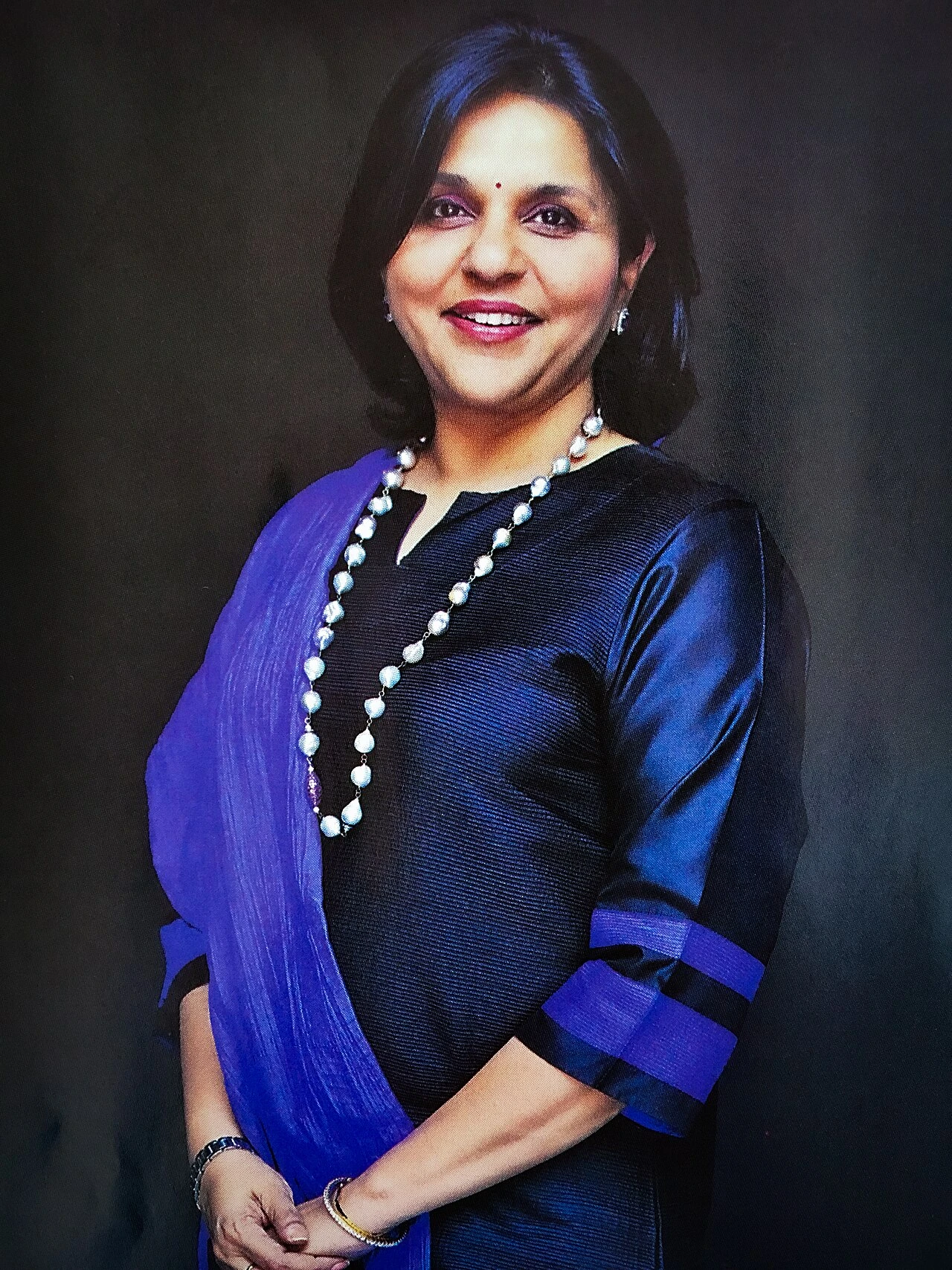
For Sangita Reddy, Apollo's joint managing director and one of the leaders who has pushed the group towards technology-enabled, connected care, the separation creates a demanding two-sided test. The hospitals must retain the clinical and referral advantages of an integrated platform. HealthCo must convert pharmacy scale, digital engagement and distribution reach into margins that justify an independent valuation. A legal division can make accounts clearer; it cannot manufacture competitive advantage.
Apollo plans a potential listing of the demerged entity by the fourth quarter of FY27, subject to regulatory and stakeholder processes. The structure is expected to bring together retail pharmacies, Apollo 24/7 and the Keimed distribution business, while hospital-based pharmacies remain with the core company. That boundary is financially rational, but operationally porous. Patients move between consultations, diagnostics, prescriptions and hospital care. The value lies in keeping those movements connected after ownership is separated.
Profitability changes the demerger debate
Investors once treated Apollo's digital spending mainly as a drag on a high-quality hospital franchise. FY26 altered that argument. Consolidated revenue rose 16 per cent to Rs25,229 crore, EBITDA increased 25 per cent to Rs3,769 crore and profit after tax climbed 34 per cent to Rs1,942 crore. Apollo 24/7's cost to the group fell to Rs467 crore from Rs586 crore, even as gross merchandise value reached Rs2,037 crore. The broader HealthCo operation reported a 4.5 per cent EBITDA margin and Rs324 crore of profit after tax.
The fourth quarter showed further acceleration. HealthCo revenue increased 20 per cent to Rs2,848 crore and EBITDA reached Rs156 crore, equivalent to a 5.5 per cent margin. The digital platform generated Rs330 crore of revenue, while offline pharmacy distribution produced Rs2,518 crore. Apollo added 176 stores during the quarter, taking the network to 7,289, and the digital operation averaged about 69,000 daily orders across pharmacy, diagnostics and consultations, excluding hospital referrals.
These figures establish commercial scale. They do not yet establish mature returns. Distribution is a high-volume, low-margin activity, while online healthcare requires technology, fulfilment and customer-acquisition spending. The demerged company will need working capital to carry inventory and serve a sprawling network. Its margin target depends partly on integrating Keimed, capturing procurement benefits and improving the unit economics of Apollo 24/7. Each assumption is plausible; all are execution-heavy.
Apollo has previously indicated that the combined HealthCo and Keimed platform could be running at about Rs25,000 crore of revenue with a 7 per cent EBITDA margin around the intended listing period. Compared with the current reported HealthCo margin, that is a meaningful step-up. The distinction between pro forma revenue, gross merchandise value and recognised revenue will matter. So will cash conversion: accounting EBITDA has less value if inventory and receivables absorb the operating gain.
Value unlocking can also unlock friction
The standard case for a demerger is focus. Hospital investors can value beds, occupancy, clinical mix and expansion without assigning a discount to digital investment. Health-platform investors can assess user growth, pharmacy reach and distribution without treating the business as an adjunct to hospitals. Separate boards and capital budgets can make management more accountable. Equity incentives can be tied to the performance of each operation.
Healthcare does not divide as neatly as a conglomerate spreadsheet. Apollo 24/7 benefits from a trusted clinical brand built over four decades, access to doctors and a pathway into diagnostics and hospitals. The hospitals benefit when a digital relationship keeps patients inside the network before and after an admission. A demerger creates questions over referral fees, data access, brand licensing, shared technology and the price of services exchanged between related entities. If those arrangements are opaque, valuation clarity in one area may be replaced by governance uncertainty in another.
Reddy's role is especially relevant because her leadership has consistently linked technology with access rather than presenting digital health as a standalone retail proposition. That philosophy now needs contractual expression. Patient consent and data protection must survive the transfer of information between listed entities. Clinical recommendations should not be distorted by commercial incentives to route demand within the group. Doctors and customers need a seamless experience even when the underlying transaction crosses a corporate boundary.
The ownership structure also requires careful scrutiny. Apollo remains promoter-led, with several members of the Reddy family in senior board and executive positions. Family stewardship has supported long investment horizons and preserved the brand. It also increases the importance of independent oversight when assets, intellectual property or economic benefits move among affiliated companies. A successful demerger will be judged as much by the fairness of its governance as by the initial market value it reveals.
The hospital engine cannot be treated as finished
Apollo's core healthcare-services division remains the source of clinical authority and most operating profit. FY26 hospital revenue rose 13 per cent to Rs12,555 crore, while EBITDA increased 14 per cent to Rs3,069 crore, a 24.4 per cent margin. At March 2026, the network had 8,131 operating beds, excluding lifestyle and managed facilities. Fourth-quarter occupancy was 68 per cent, one percentage point higher than a year earlier.
The group commissioned a 400-bed hospital in Hyderabad's Financial District in April and launched a 270-bed facility in Sonarpur, Kolkata. New capacity can sustain growth, but hospitals usually incur staffing, depreciation and interest costs before occupancy matures. Apollo is also increasing its exposure to complex specialties, where revenue per patient is higher but dependence on scarce clinicians and expensive equipment rises. The demerger should not distract management from commissioning beds on time and filling them without compromising outcomes.
Regional figures illustrate both strength and unevenness. In the fourth quarter, the eastern cluster operated at 77 per cent occupancy, while the western cluster was at 56 per cent. Average revenue per patient rose across several regions, sometimes faster than inpatient volumes. Better case mix can explain that growth, but affordability and insurer resistance impose limits. India's hospital market has strong demand, yet patients remain highly sensitive to out-of-pocket costs and payors increasingly challenge tariffs.
The group's AAA credit rating in FY26 gives it an advantage as it funds expansion. It signals balance-sheet resilience and can lower borrowing costs. It should not encourage complacency. Hospitals, diagnostics and HealthCo each have different capital cycles. Separating HealthCo may make it easier for Apollo to allocate funds to beds, but it could also remove a future source of diversified cash generation. Dividend policy, debt allocation and inter-company obligations at the point of demerger will determine which shareholders inherit which risks.
Asia's connected-care opportunity is real, but local
Apollo's model has relevance beyond India because Asian healthcare often combines fragmented primary care, underdeveloped insurance and rapidly rising demand for chronic-disease management. A platform that connects consultations, tests, medicines and hospital treatment can reduce leakage and make follow-up more reliable. Pharmacy density gives Apollo a physical distribution layer that digital-only companies lack, while the hospitals provide clinical credibility that e-commerce groups cannot easily buy.
Yet Asia is not a single addressable market. Pharmacy regulation, data localisation, prescribing rules and reimbursement vary sharply. Apollo's international patient business draws demand from Bangladesh, the Middle East, Africa and Southeast Asia, but exporting a domestic pharmacy-and-digital platform would require local licences, fulfilment networks and clinician supply. The more immediate regional opportunity is to use technology to make India a more accessible destination for complex care and to manage international patients before arrival and after discharge.
That opportunity carries geopolitical and operating risk. Medical travel can be disrupted by conflict, visas, currency swings and airline capacity. Digital consultations across borders raise licensing and liability questions. Apollo reported continued international traction in FY26, but its most defensible strategy is not to depend on foreign patients for bed utilisation. Domestic insurance penetration, ageing and rising incomes offer a larger and steadier demand base.
The connected model can also improve capital productivity. Digital triage may direct minor cases away from expensive hospital infrastructure, while remote follow-up can shorten stays and reduce readmissions. Pharmacy data may reveal adherence gaps; diagnostics can identify risk earlier. Those benefits are clinically and economically valuable only when incentives reward prevention. A transaction-led platform that simply sells more tests and medicines would increase revenue without necessarily lowering the total cost of care.
The post-demerger scorecard
Reddy and Apollo's board now need to define success with measures more demanding than a higher combined market capitalisation. HealthCo should demonstrate organic growth after removing the effects of Keimed, steady margin improvement and positive operating cash flow. Customer-acquisition spending should produce repeat behaviour rather than subsidised transactions. The relationship with Apollo's hospitals should be disclosed clearly enough for investors to distinguish genuine network effects from favourable related-party terms.
The hospitals, meanwhile, must keep occupancy and returns on new beds moving upward. Apollo Health and Lifestyle, which includes diagnostics and retail formats, reported FY26 revenue of Rs1,865 crore and EBITDA of Rs213 crore but still made a small annual loss. Its maternity and fertility combination with Cloudnine adds another partnership structure to supervise. The broader group will be simpler in the market's eyes only if management prevents operational complexity from migrating into a web of cross-holdings and alliances.
There is a strategic tension at the centre of the transaction. Apollo spent years persuading patients and investors that integrated care was more valuable than isolated services. It is now arguing that separate ownership will make those integrated services more valuable still. Both can be true if the demerger sharpens capital accountability while technology, brand and clinical pathways continue to work across the boundary.
By the proposed FY27 listing, the evidence should be visible in cash flow and patient behaviour. HealthCo needs to approach its margin ambition without sacrificing service or loading the balance sheet with working capital. The hospital company must preserve referral access while giving the new entity commercial independence. If Reddy can deliver that balance, Apollo will have created two credible Asian healthcare investments. If integration weakens or conflicts multiply, the separation will reveal that some of the platform's value existed precisely because it had never been divided.