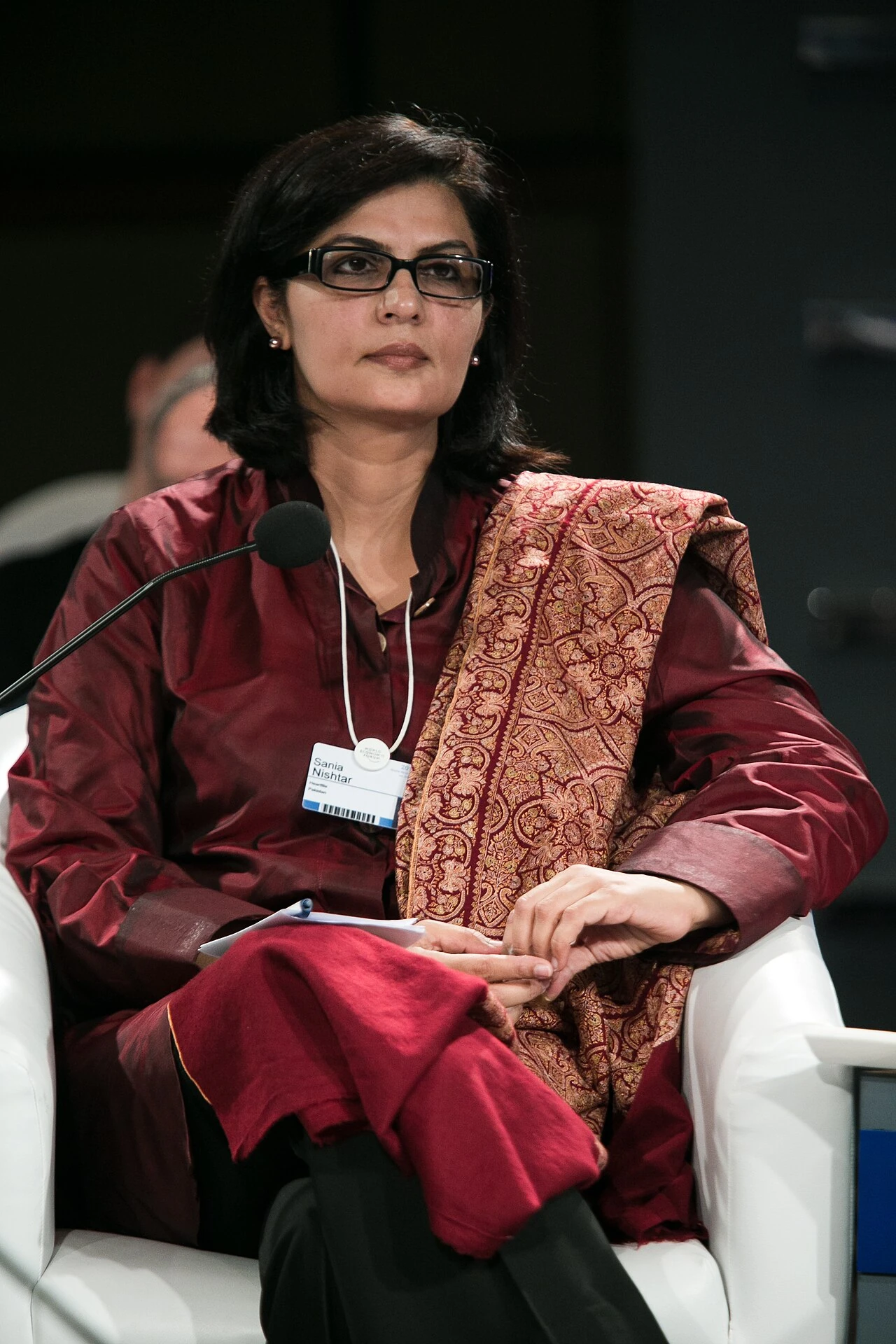
Sania Nishtar began Gavi’s 2026–2030 strategic period with a mandate larger than its committed donor envelope. At the alliance’s replenishment summit in June 2025, governments and partners pledged more than US$9 billion against a request of US$11.9 billion. Gavi still aims to immunise more than 500 million children, avert between eight million and nine million deaths and generate at least US$100 billion in economic benefits during the five-year period.
The gap is not a temporary accounting inconvenience. It changes which vaccines can be supported, how much governments must contribute and how quickly programmes can expand. Nishtar’s response is Gavi Leap, the largest redesign of the alliance’s operating model since it was created. Countries receive more control through unified vaccine budgets and simpler grants, while the secretariat narrows processes and directs a larger share of resources towards fragile settings.
Nishtar ranks fifth because this is leadership under financial constraint at continental scale. The Gavi chief executive is trying to preserve the purchasing power and public-health impact of a global alliance while making it less administratively heavy and more nationally owned. If the reform works, it could become a model for development finance after the era of abundant donor growth. If it fails, funding scarcity may be devolved to governments without enough fiscal space to absorb it.
A replenishment that funds ambition only partly
The more than US$9 billion raised for Gavi’s core work was a substantial commitment at a time of pressure on aid budgets. It was still about US$3 billion below the alliance’s requested amount. That shortfall sits alongside rising demand for vaccines, outbreak response, climate resilience and health-system capacity.
Gavi also announced approximately US$4.5 billion of complementary financing from development-finance institutions, as well as around US$1.5 billion of liquidity support. These facilities can mobilise resources beyond grants, smooth cash timing and help governments invest in health systems. They are not direct substitutes for donor contributions. Loans and guarantees create obligations, require viable projects and may sit on national or institutional balance sheets.
The distinction matters when measuring Nishtar’s success. A blended-finance headline can appear to close the gap while leaving core vaccine subsidies constrained. Development-bank capital may fund cold chains, primary-care infrastructure or emergency liquidity, but the poorest countries cannot finance recurring vaccine purchases with debt indefinitely. Gavi must match each instrument to the type of cost it can sustain.
The alliance also depends on confidence from manufacturers. Advance demand visibility helps suppliers invest in capacity and offer lower prices. If funding uncertainty leads to smaller or delayed orders, procurement savings can weaken. Nishtar therefore needs to convert pledges into predictable multi-year purchasing plans rather than manage the shortfall year by year.
Gavi Leap changes the operating contract
Under the reform, participating countries are moving towards one vaccine budget, one consolidated cash grant and one application process. Gavi says the redesign cuts application requirements by 74 per cent and uses a more digitised system. The objective is to replace fragmented product-by-product requests with a single national view of immunisation priorities.
That is more than administrative simplification. A country vaccine budget gives ministries the ability to allocate within a defined envelope, potentially responding faster to disease burden and local delivery constraints. It can also reveal trade-offs that were previously dispersed across separate programmes. Funding one introduction may delay another; expanding coverage may require reducing ancillary activity.
For ministries, autonomy must come with analytical capability. Governments need reliable demographic data, disease surveillance, cost estimates and procurement forecasts. Countries with weak information systems may struggle to choose among vaccines or may be influenced by short-term political pressure. Gavi’s lighter process should not mean weaker technical challenge.
For the secretariat, fewer forms should reduce transaction cost and shorten approval. The risk is that consolidated reporting hides programme-level weakness. A single grant can make oversight more efficient only if the underlying data allow Gavi and national auditors to trace spending, stock, coverage and missed communities.
Scarcity is being concentrated where fragility is highest
Gavi plans to direct almost US$3 billion, about 35 per cent of country resources, to fragile and conflict-affected settings, although those countries account for roughly 26 per cent of births in the eligible group. That priority reflects a sound public-health logic: children in fragile places are more likely to miss routine doses and face outbreaks.
It also forces difficult reductions elsewhere. Gavi has indicated that some grants outside fragile settings will be cut by between 20 per cent and 40 per cent. Countries approaching or moving through transition will have to finance more of their own programmes, improve efficiency or slow expansion.
Nishtar’s challenge is to prevent a binary system in which fragile states receive intensified support while lower-middle-income countries lose assistance before their budgets and institutions are ready. Economic growth measured at national level can conceal weak local revenue, exchange-rate shocks or large under-immunised populations. Eligibility and co-financing rules need enough discipline to protect fairness and enough flexibility to avoid coverage reversals.
Re-entry provisions are part of that design. For the new period, Gavi’s eligibility framework includes 56 countries and applies an income threshold of US$2,300 gross national income per person, with Angola and Timor-Leste among those returning to support. The framework recognises that graduation is not always permanent. It also creates budget uncertainty if more countries become eligible during a downturn.
Asia’s manufacturers are central to the funding equation
Nearly half of Gavi’s 20 vaccine suppliers in 2024 were based in emerging markets. India is especially important. Serum Institute of India supplies high-volume vaccines, including the R21 malaria vaccine, while Bharat Biotech is expected to add capacity for the RTS,S malaria vaccine through a technology transfer. Asian manufacturers can reduce price, diversify supply and shorten delivery routes to many eligible countries.
Low price alone is not a resilient market. Manufacturers need dependable orders, regulatory support and sufficient margin to maintain quality and invest in new products. A donor shortfall that produces volatile demand can undermine the very suppliers Gavi relies on to stretch each dollar. The alliance must provide credible forecasts even when country budgets are more flexible.
Procurement design also needs to avoid excessive dependence on one plant or country. Concentrating orders can produce economies of scale, but a quality problem, export restriction or production interruption can affect multiple programmes. Gavi should use multi-supplier strategies where the market can support them and targeted commitments where a new entrant needs demand certainty.
For Asian biotechnology, Gavi remains both a buyer and a market-shaping institution. Its standards can help manufacturers build regulatory records and enter additional markets. Nishtar must balance affordability with an industrial policy that preserves competition rather than extracting the lowest near-term price at the expense of future supply.
Development banks can multiply impact if roles are clear
The Asian Infrastructure Investment Bank has discussed as much as US$1 billion for public-health work and a possible US$500 million liquidity facility connected to Gavi. The Asian Development Bank is collaborating across 36 countries in Asia and the Pacific. These relationships could connect vaccine programmes with broader primary-care, data and logistics investment.
The strongest use of development-bank capital is for assets with a long useful life: warehouses, solar-powered cold chains, laboratories, digital systems and workforce capability. Grants can then support public goods and the recurring cost of reaching communities that cannot pay. Blending the two requires transparent allocation so that debt is not used to hide a shortage of grant finance.
Currency exposure is another concern. Governments may borrow in foreign currency while health spending is funded in local currency. Depreciation can raise debt-service cost and make imported vaccines more expensive simultaneously. Gavi and its partners need financing structures that recognise this double pressure, including local-currency instruments or risk-sharing where practical.
The alliance should also measure additionality. A facility is valuable if it enables a programme that would not otherwise occur, lowers its cost or accelerates delivery. Simply relabelling existing development-bank lending as complementary financing does not increase resources. Nishtar’s reform will gain credibility from reporting disbursement and results, not only commitments.
Country ownership needs stronger financial management
Gavi Leap assumes that national ownership improves relevance and sustainability. That is likely when finance and health ministries jointly understand the future cost of vaccine schedules. It is less likely when immunisation remains a donor-managed enclave separated from medium-term budgets.
Nishtar should use the new consolidated budget to encourage full lifecycle costing. Introducing a vaccine creates recurring procurement, storage, training, surveillance and communication expenses. Governments need to see the cost after Gavi support declines, including exposure to population growth and currency movement.
Performance incentives need care. Coverage rates can reward visible national averages while masking missed districts. Payment linked too narrowly to doses may discourage investment in systems that improve quality or reach. A balanced scorecard should combine verified coverage, equity, stock reliability, wastage, financial reporting and outbreak resilience.
Digitalisation can lower reporting cost, but only if systems are usable at the front line. Health workers should not have to enter the same information into multiple platforms. Data architecture, connectivity and privacy are operational investments, not software announcements. The saving from a shorter application can be lost if implementation creates parallel tools.
The measures that will define Nishtar’s tenure
The first measure is whether Gavi maintains or improves vaccine coverage despite a smaller-than-requested envelope. The second is whether countries use their unified budgets to make transparent choices and increase domestic financing without creating stock-outs. The third is whether manufacturers receive enough demand visibility to invest and compete.
Financial measures matter as much as dose counts. The alliance should disclose how much complementary financing is approved, disbursed and repaid; how procurement prices and supplier concentration change; and how administrative savings are redirected to programmes. It should also report where grant reductions have affected introductions or coverage.
Nishtar’s reform is an attempt to turn scarcity into institutional discipline. That can be productive: fewer processes, stronger national choice and smarter financing may deliver more health for each donor dollar. It can also become a way to normalise underfunding. Her leadership will be judged by whether Gavi Leap gives countries genuine capacity and purchasing power, rather than simply handing them a smaller envelope and a larger set of decisions.