
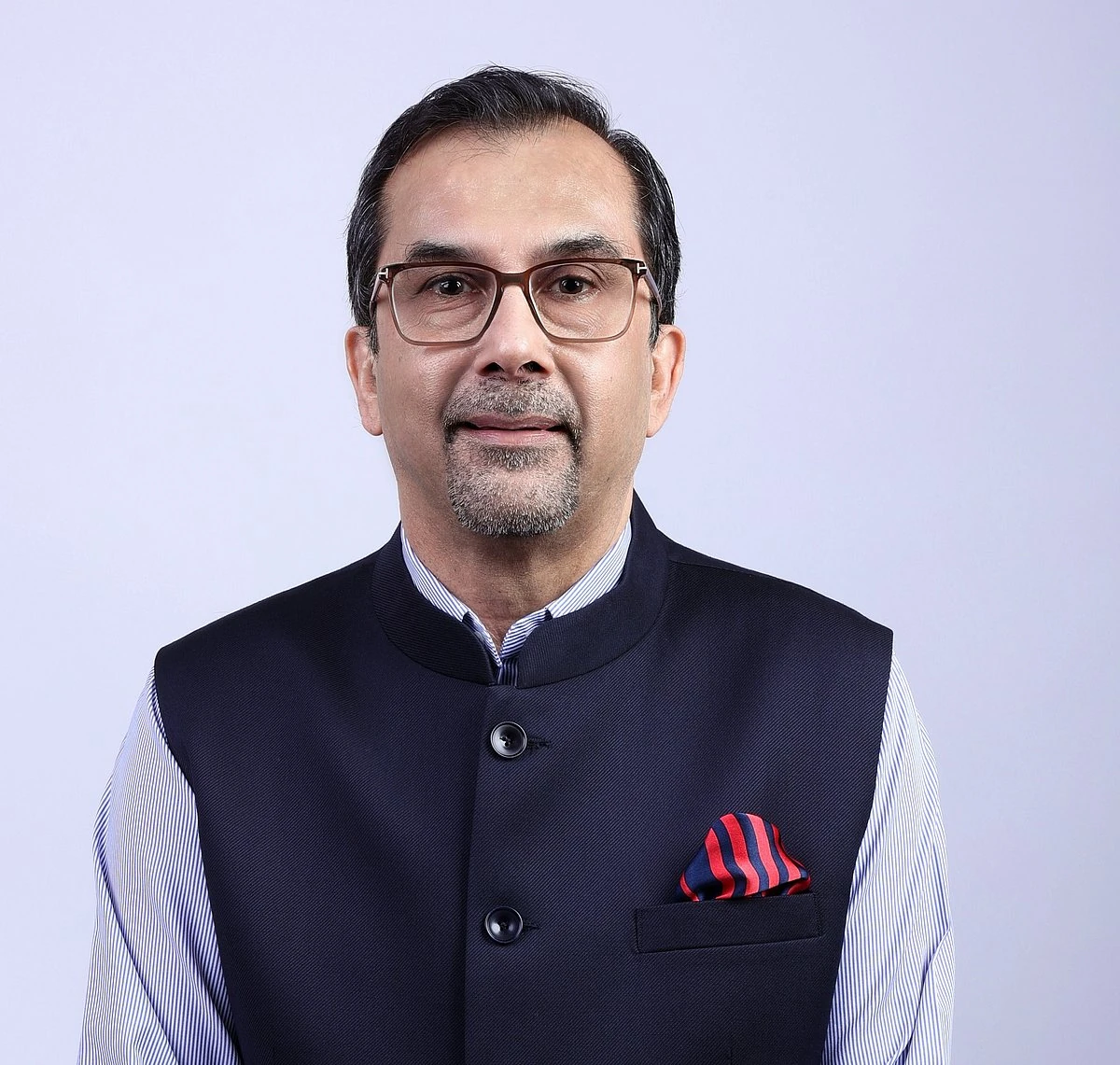
Sanjiv Puri has spent much of his tenure trying to change the centre of gravity at ITC without destabilising the business that finances the transition. The Indian group remains a formidable cigarette company, but it also owns some of the country’s largest packaged-food and personal-care brands, an agricultural sourcing network, paper and packaging operations, and a technology business. Its hotels division became a separately listed company in January 2025.
The separation was an important act of focus. It gave the hotel business its own capital structure and market valuation while allowing ITC to retain a substantial strategic interest. More importantly, it made the next question harder to avoid. Puri, ITC’s chairman and managing director, must show that the consumer-goods portfolio can produce growth, margins and cash returns capable of carrying more of the group’s future.
The year to March 2026 offered progress. Standalone gross revenue rose 10.1 per cent to about Rs 80,867 crore and earnings before interest, tax, depreciation and amortisation increased 4.9 per cent to Rs 25,208 crore. In the final quarter, the non-cigarette consumer segment produced 15 per cent revenue growth and lifted its earnings margin by about 200 basis points to 11 per cent, excluding the recently acquired organic-food business. Full-year consumer revenue grew by double digits and segment results increased 14 per cent.
Those figures show scale and improving economics. They also reveal the distance still to travel. Input costs, competition and marketing investment can compress consumer margins quickly, while a sharp increase in cigarette taxation from February 2026 raises new risks for the group’s largest profit pool. Puri has made ITC more focused; he now has to make the growth engines more self-sustaining.
The hotels demerger changed the capital argument
ITC’s hotels business was demerged into ITC Hotels with effect from 1 January 2025 and listed later that month. ITC retained about 40 per cent, with the remainder distributed proportionately to its shareholders. The structure gave investors a direct holding in the hotel company while preserving strategic links, brand relationships and cross-business expertise.
The decision addressed a long-standing concern about capital allocation. Hotels can require significant investment in land and buildings, while the returns and valuation framework differ from fast-moving consumer goods or tobacco. ITC Hotels had already shifted towards an asset-right model based more heavily on management contracts. Independence allows it to pursue that growth with a balance sheet and investor base suited to hospitality.
For Puri, the transaction created both freedom and accountability. ITC can direct more attention towards consumer brands, agriculture, packaging and technology without funding every hotel expansion. Yet the group can no longer point to a growing hospitality portfolio as evidence of diversification inside the parent. The performance of the remaining businesses must justify the structure.
ITC still benefits from links with the hotel company, including culinary knowledge that supports food development and a continuing equity interest. The relationship needs commercial discipline. Cross-group arrangements should create measurable value rather than preserve the complexity the demerger was intended to reduce.
Consumer scale is becoming visible
ITC has built a broad portfolio across staples, biscuits, snacks, noodles, dairy, personal care, home care, incense and other categories. Aashirvaad, Sunfeast, Bingo and YiPPee are among the brands that give the company household reach. The distribution system connects urban supermarkets, traditional retailers, digital channels and rural markets.
During the 2026 financial year, growth was broad-based across staples, biscuits, snacks, frozen products, noodles, dairy, premium personal wash and home care. The company launched nearly 100 products around health, nutrition, convenience, hygiene and indulgence. Value-added extensions within Aashirvaad, including higher-protein and specialised staples, demonstrate the attempt to move beyond volume towards better mix.
Premiumisation matters because mass-market food categories can be brutally competitive. Local specialists, national consumer groups and digital-native entrants all fight for shelf space and attention. Commodity costs can rise faster than prices, particularly when consumers remain sensitive. Differentiated products, trusted brands and efficient distribution give ITC more room to protect margins.
The fourth-quarter improvement to an 11 per cent consumer margin is encouraging, but one period does not establish a new level. Puri must sustain gains while continuing advertising, innovation and channel investment. Cutting those costs can produce a temporary margin lift and weaken long-term brand health. The objective is operating leverage from scale, not underinvestment.
Acquisitions accelerate the portfolio experiment
Puri has supplemented internal product development with acquisitions in faster-growing and digital-first niches. ITC acquired full ownership of Sresta Natural Bioproducts, owner of 24 Mantra Organic, during the 2026 financial year. The business brings a network of about 27,500 farmers across roughly 140,000 acres, processing capability and access to domestic and international organic-food markets.
Other investments include Yogabar, Mother Sparsh, Prasuma and Meatigo. Together with 24 Mantra, the acquired digital-first and organic portfolio grew about 60 per cent during the year and reached an annual revenue run-rate above Rs 1,350 crore. That growth provides exposure to nutrition, premium baby care, frozen food and direct digital channels where consumer behaviour is changing quickly.
Acquisitions can fill capability gaps and speed entry, but they also create integration risk. Founder-led brands often succeed through focused culture and rapid decisions. A large group can offer procurement, manufacturing and distribution while inadvertently slowing innovation. Puri needs a model that preserves brand identity and entrepreneurial speed while applying ITC’s systems where they genuinely add value.
The financial test should go beyond revenue growth. ITC must show customer retention, repeat purchase, contribution margins and a path to returns above its cost of capital. High growth bought through discounts or marketing can disappear when spending normalises. The group’s distribution reach should reduce customer-acquisition costs over time; if it does not, the strategic synergy is weaker than advertised.
Distribution becomes a data system
ITC’s consumer advantage has traditionally rested on physical reach developed through its cigarette and packaged-goods operations. Puri is turning that network into a more data-driven system. The UNNATI business-to-business platform covered more than 800,000 retail outlets by the end of the 2026 financial year, supporting direct engagement, analytics and hyperlocal recommendations.
Digital interventions can improve assortment, forecasting and sales productivity. A company serving hundreds of thousands of small retailers needs to know which products move in each locality and how quickly to replenish them. Better data can reduce inventory, improve availability and make new launches more targeted. AI and machine learning are also being used in last-mile operations and agriculture sourcing.
Digitally enabled channels and modern trade accounted for 34 per cent of sales in branded packaged foods, personal care, incense and safety matches. Quick commerce is particularly important in Indian cities, where delivery platforms are changing discovery, pack sizes and promotional economics. Products designed for a supermarket shelf may not perform the same way in an app-based basket.
ITC must balance channel growth with bargaining power. Large digital platforms can offer reach while demanding discounts and controlling customer data. Direct retailer relationships and multiple routes to market reduce dependence. Puri’s objective should be an omnichannel system in which data improves execution without allowing any one intermediary to capture most of the value.
Cigarettes remain the financial engine and the strategic risk
ITC’s legal cigarette business continues to generate the cash and profit that support dividends and investment. Its brands, distribution, manufacturing and leaf-tobacco integration create a strong competitive position. The business also faces structural regulatory and social risk that cannot be diversified away through consumer acquisitions.
A significant change in cigarette taxation took effect in February 2026, making revenue comparisons less straightforward and increasing the pressure on legal manufacturers. ITC warned that the year ahead would test the industry because excessive tax increases can widen the price gap with illicit products. The company is using staggered pricing and portfolio adjustments to protect market position.
Puri must manage two conflicting obligations. He needs to defend a legal business that contributes heavily to shareholder returns, while reducing the group’s dependence on it over time. Abruptly starving the cigarette operation would destroy value and could cede share to illicit trade. Allowing its cash generation to reduce urgency elsewhere would leave ITC exposed to policy changes beyond management control.
The most credible route is to allocate tobacco cash with a high hurdle. Consumer investments should earn returns rather than serve as diversification symbols. Dividends should return surplus capital when opportunities do not meet that threshold. Transparent segment performance helps investors judge whether the transition is creating value.
Agriculture links supply security and new revenue
ITC’s agricultural business gives the group access to crops, farmers and export markets while supporting input requirements for food and tobacco. It also faces climate, trade and government-policy volatility. During the 2026 financial year, US tariff measures, supply disruptions and the West Asia conflict affected timing and logistics, while domestic restrictions on some commodities limited opportunities.
Puri is trying to move the business towards more value-added products and digital services. The ITCMAARS platform connects farmers with information, inputs and markets, while traceable sourcing supports premium and export categories. The value-added agricultural portfolio, including spices, coffee, marine and horticultural products, expanded to about 1.4 times its size over two years.
These capabilities can strengthen the consumer business by improving quality, traceability and supply resilience. The 24 Mantra farmer network adds organic sourcing. Data can help forecast crops, manage prices and match inputs with demand. Yet agriculture remains vulnerable to weather and policy, and digital tools cannot eliminate physical risk.
The strategic test is whether the integrated model produces advantages competitors cannot replicate at reasonable cost. If better sourcing improves product quality, reduces volatility and supports premium claims, the link creates value. If agriculture and consumer teams operate as separate empires, integration merely adds complexity.
Paper and packaging must earn through specialisation
ITC’s paperboards, paper and packaging segment experienced margin pressure from low-priced imports, weak demand and high wood costs before improving late in the year. Fourth-quarter segment profit rose 21 per cent from a year earlier and 24 per cent sequentially, helped by better realisations and moderating input pressure.
The long-term case rests less on commodity volume than on value-added and sustainable packaging. ITC’s portfolio of sustainable paperboard and packaging solutions has grown to more than twice its level four years earlier. Consumer companies need recyclable materials, traceability and formats that protect products while reducing environmental impact.
Vertical links with ITC’s own brands can support testing and scale, but internal demand should not shield the segment from external competitiveness. Speciality products must command margins and win third-party customers. Puri should be willing to allocate less capital to commodity capacity if imports or structural costs make returns unattractive.
Sustainability must support competitiveness
ITC has maintained water-positive, carbon-positive and solid-waste-recycling-positive status for many years and integrates sustainability with farmer livelihoods, forestry and manufacturing. By March 2026, nine facilities had achieved the highest level under an international water-stewardship standard. These achievements matter in a country exposed to water stress and climate variability.
The commercial relevance is growing. Efficient water and energy use can lower cost and reduce disruption. Traceable supply chains support export access and premium products. Farm interventions can improve yields and input security. Sustainable packaging can become a growth category rather than a compliance burden.
Puri must keep the link to economics clear. Sustainability claims should be supported by measurable operating outcomes and capital decisions. Physical climate risk may require investment before returns are visible, but the avoided cost of failure is real. The strongest projects improve resilience and competitiveness simultaneously.
What Puri must prove next
Puri has already changed ITC’s structure and strategic vocabulary. The hotels demerger sharpened capital allocation, consumer acquisitions broadened the growth portfolio, digital platforms expanded distribution intelligence and value-added agriculture connected more closely with brands. The 2026 results showed double-digit group revenue growth and an improving consumer margin.
The next phase is about conversion. Consumer revenue growth must produce sustained margin and cash returns after marketing. Acquired brands must retain speed while benefiting from ITC’s scale. The cigarette business must absorb a tax shock without encouraging greater dependence on its profits. Agricultural and packaging operations must prove that integration creates unique commercial advantage.
ITC remains capable of paying substantial dividends; the total distribution for the 2026 financial year was Rs 14.50 per share. That cash return gives Puri discipline as well as flexibility. Every rupee retained for diversification competes with a rupee that could be returned to shareholders. New growth must therefore clear a visible return threshold.
Puri’s strategic success will not be measured by whether ITC owns businesses outside tobacco. It will be measured by whether those businesses can compound independently, command their own capital and make the group less vulnerable to a single regulatory decision. The portfolio is more focused than it was. Now the consumer engine has to prove that focus can carry weight.