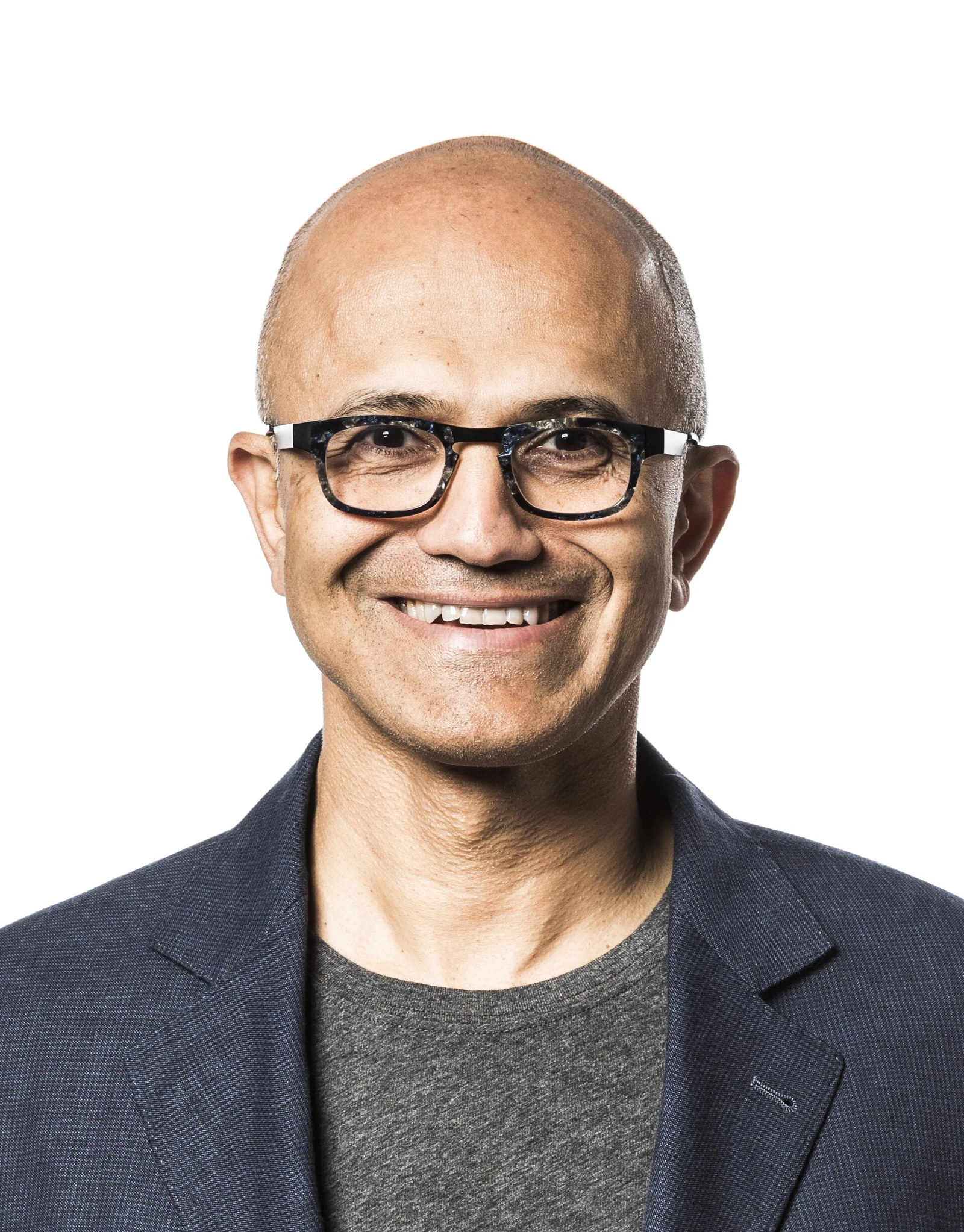
Satya Nadella is running Microsoft as if artificial intelligence were becoming a utility, but one whose power plants depreciate much faster than conventional infrastructure. The company expects to commit about $190 billion to capital expenditure in calendar 2026, including roughly $25 billion attributed to higher component prices. Even after that outlay, management expects cloud capacity to remain constrained through the year.
The shortage is evidence that customers want what Microsoft is building. It is also a warning about execution. Accelerators, processors and storage must be installed, connected and made revenue-ready quickly enough to earn a return before a new generation changes the cost curve. Data-centre sites and power connections can serve for decades; much of the equipment placed inside them has a far shorter economic life. Nadella must manage both clocks at once.
Microsoft’s fiscal third-quarter results suggest the strategy is gaining commercial traction. Revenue reached $82.9 billion, 18 per cent higher than a year earlier, while operating income rose 20 per cent to $38.4 billion. Microsoft Cloud revenue was $54.5 billion, up 29 per cent, and Azure grew 40 per cent, or 39 per cent in constant currencies. The company’s AI business passed a $37 billion annual revenue run rate, more than double its level a year earlier.
Capital has become a product decision
The scale of the build changes the chief executive’s job. Microsoft can no longer treat infrastructure as a support function that expands behind software demand. Capacity determines which products can grow, which customers receive scarce resources and how quickly research reaches the market. Incoming supply must be divided among Azure clients, Microsoft’s own Copilot products, model development and replacement of ageing servers.
That allocation carries an opportunity cost visible in every choice. A GPU assigned to an external Azure workload can generate consumption revenue and deepen a customer contract. The same GPU might support Microsoft 365 Copilot, GitHub or security products where the company controls the application and may capture higher long-term value. Research capacity can create future differentiation but no immediate bill. Nadella and finance chief Amy Hood have to compare returns across businesses with different time horizons and pricing models.
Third-quarter capital expenditure was $31.9 billion, with roughly two-thirds directed to short-lived assets, primarily GPUs and CPUs. Microsoft expects quarterly spending to exceed $40 billion as more capacity arrives. The company says it has improved the time required to bring new GPUs into service and that a Wisconsin facility opened six weeks early. Such operating gains matter because equipment waiting on a loading dock or incomplete electrical connection earns nothing while its useful life continues to shorten.
Free cash flow shows the pressure. Cash from operations was $46.7 billion in the quarter, up 26 per cent, but free cash flow was $15.8 billion after capital investment. Those are still exceptional resources. The gap illustrates why revenue growth alone cannot settle the argument over AI economics. Investors need to see utilisation, gross profit and cash conversion improve as the fleet expands.
Margins have begun to absorb the build. Company gross margin was 68 per cent and Microsoft Cloud gross margin 66 per cent, both affected by infrastructure investment and greater usage of AI products. Efficiency gains in Azure and Microsoft 365 partly offset the cost. Nadella’s task is to make those gains repeatable: better model routing, custom silicon, higher server utilisation and software optimisation must reduce the cost of each useful output faster than customer prices fall.
Agents need business models, not demonstrations
Nadella describes agents as the next dominant workload, changing the software stack from applications that wait for commands to systems that can plan and execute. Microsoft is building at both ends of that transition. Azure supplies infrastructure, model access and tools for developers. Microsoft 365, GitHub, Dynamics and security products turn those capabilities into applications for knowledge work, coding, sales and operations.
Paid Microsoft 365 Copilot seats exceeded 20 million in the third quarter, with additions accelerating. The number is meaningful because it shows enterprises moving beyond small trials, yet it remains a fraction of Microsoft’s commercial installed base. The more important measure will be sustained use. Companies will renew and expand only if Copilot saves time, improves output or enables work worth more than the subscription and consumption charges.
Microsoft is shifting towards a combination of per-user and usage-based pricing. That model can capture value from intensive agent activity, but it can also make bills harder for customers to predict. An autonomous system that performs hundreds of model calls may create substantial value or merely consume credits. Administrators will demand controls, audit logs and evidence of return. Nadella must make usage expansion feel like productive investment rather than an uncontrolled cloud expense.
The company’s commercial remaining performance obligation reached $627 billion, up 99 per cent when commitments involving OpenAI are included. About a quarter is expected to be recognised within a year. The backlog provides confidence for infrastructure planning, but its composition and duration matter. Large commitments do not become revenue until customers consume services, and concentrated contracts can complicate comparisons. Microsoft needs broad enterprise demand across applications and Azure, not dependence on a small number of frontier-model builders.
Its custom chips are part of that diversification. The Maia 200 accelerator is operating in US data centres, while Cobalt processors are deployed across many regions. Microsoft says Maia can improve tokens per dollar relative to other silicon in its fleet for selected workloads. It will continue to buy Nvidia and AMD systems because customers require choice and leading performance. The strategic objective is not complete independence, but enough architectural control to improve cost, supply and bargaining power.
Asia turns cloud expansion into national policy
Asia is a central destination for the capital programme and a test of whether Microsoft can operate as global infrastructure while satisfying national priorities. In India, the company has committed $17.5 billion from 2026 through 2029, its largest investment in Asia, on top of an earlier $3 billion programme. A new Hyderabad region, Microsoft’s largest in the country, is due to open in mid-2026 with three availability zones.
India provides engineering talent, enormous potential usage and demanding price points. Microsoft employs more than 22,000 people across several Indian cities, contributing to products from Azure AI Search to speech and agent systems. The company is also integrating AI into public employment platforms intended to reach hundreds of millions of informal workers. Success there would demonstrate population-scale diffusion; failure would show that infrastructure investment and headline access do not automatically produce useful adoption.
Japan and Australia add a sovereignty dimension. Microsoft announced a $10 billion Japanese programme through 2029 covering infrastructure, security and skills. It is collaborating with Sakura Internet and SoftBank so domestic providers can offer GPU-based compute through Azure while keeping data in Japan. In Australia, a commitment of A$25 billion, equivalent to about $18 billion when announced, will expand local capacity and deepen cyber-defence and training partnerships.
These structures recognise that governments increasingly view AI infrastructure as part of economic security. They want local data residency, domestic suppliers, workforce development and continuity during geopolitical disruption. A uniform global cloud is efficient; sovereign configurations are politically durable. Supporting both increases technical and contractual complexity, potentially fragmenting capacity and reducing the flexibility to shift workloads across borders.
The regional build also intensifies competition for power, land and advanced equipment. Amazon, Google, Oracle and local providers are investing in many of the same markets. Utilities and communities will ask whether data centres raise electricity prices or crowd out other uses. Microsoft must connect investment promises to local economic output, not only construction spending and imported servers. Training commitments and partnerships help, but enduring legitimacy will come from productive businesses built on the capacity.
Operating austerity beside physical expansion
Nadella is pairing record capital spending with a leaner organisation. Microsoft expects headcount to decline year on year while continuing to hire for critical AI work. The combination reflects a belief that automation and organisational simplification can fund technical investment. It also creates tension. Building and operating a larger global infrastructure footprint requires engineering, security and customer support even as management demands greater productivity.
Workforce reductions may improve near-term operating leverage, but poorly targeted cuts can weaken product quality or institutional knowledge. Agents themselves are not a substitute for accountable teams. Enterprise customers expect reliable support when automated workflows touch sensitive data or business processes. Nadella needs to show that a smaller workforce can operate with greater speed without transferring hidden costs to customers and remaining employees.
Competition leaves little room for hesitation. Amazon retains a larger cloud infrastructure base, Google has custom silicon and frontier models, and software start-ups can build focused agent products without protecting a broad legacy portfolio. Microsoft’s advantage is the connection among cloud, identity, productivity software, developer tools and security. The risk is that those assets become a bundle customers must buy rather than a set of products they actively prefer.
The $190 billion figure will ultimately be judged through ordinary operating evidence. Azure growth must remain strong as new capacity comes online. Copilot seats must translate into frequent, valuable use. Gross margins need to stabilise, and free cash flow must recover relative to investment. National projects in Asia must attract local workloads that persist after political announcements fade.
Nadella has positioned Microsoft to supply both the foundation and the applications of agentic computing. Scarcity suggests that the opportunity is real, but it cannot remain the explanation for every constraint. The strongest proof will arrive when capacity is abundant enough to reveal true demand and pricing. At that point, Microsoft’s AI build will either resemble a utility with durable returns or a technology cycle in which extraordinary capital raced ahead of customer value.