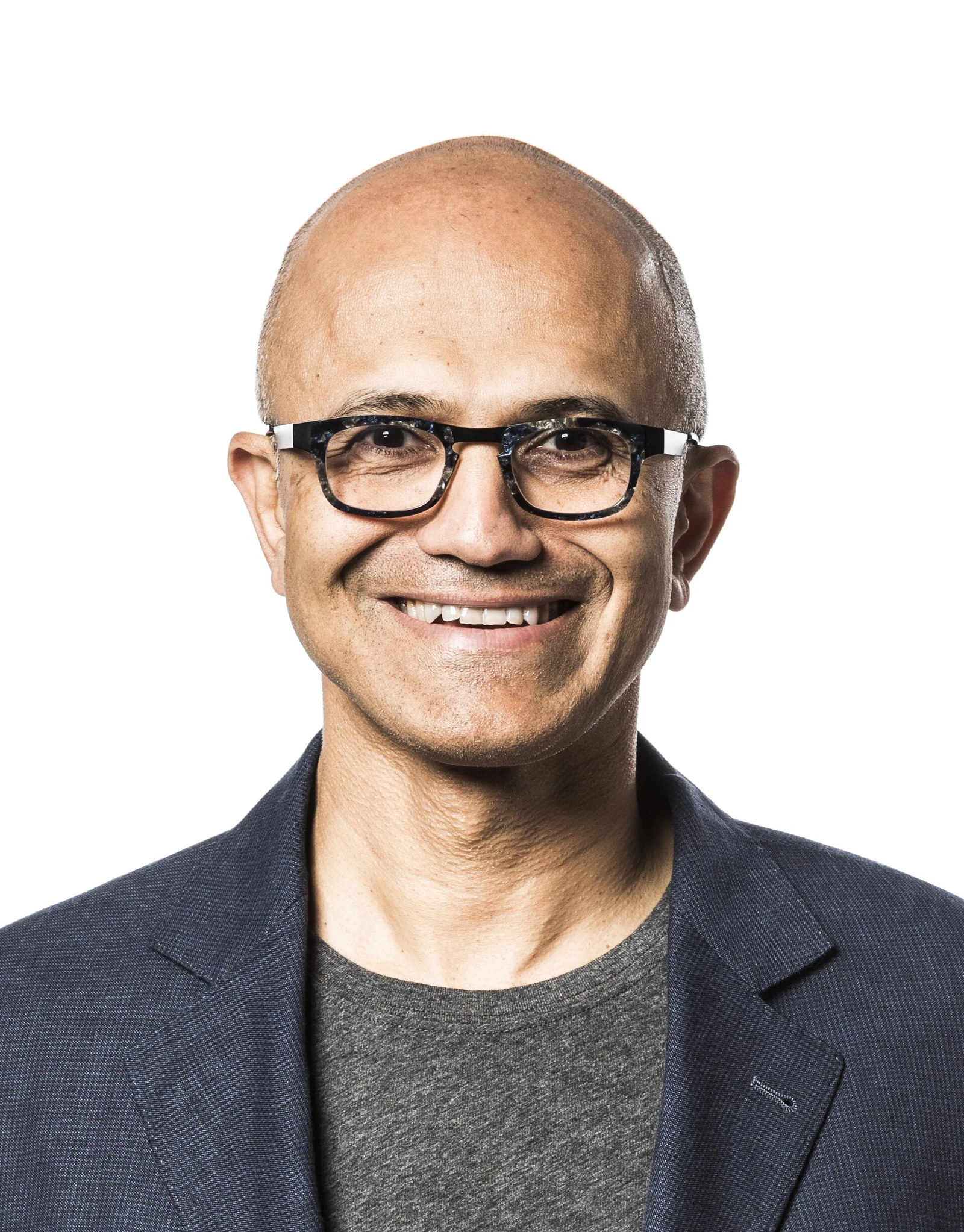
The contest to dominate artificial intelligence is usually narrated as a race among model builders. Satya Nadella’s advantage is different. He runs the company that already sits inside the daily machinery of the corporate world: its documents, email, meetings, code repositories, identity systems, databases, security controls and cloud contracts. Microsoft does not need every customer to begin again. It needs them to take one more step inside an environment they already use.
That distinction explains why Nadella has become one of the decisive executives of the AI era without behaving like its most theatrical protagonist. His power is institutional. He has turned a mature software company into the distribution system through which boards, governments and chief information officers are learning to buy intelligence as a service. Microsoft’s reach lets it move a new capability from a research demonstration into an approved budget line with remarkable speed.
The achievement is substantial, but it is not settled. Distribution can win an early market and still fail to create durable value. The same scale that gives Microsoft an advantage also makes every weakness consequential: a security lapse becomes a national concern, a product decision can reshape an entire software category, and a data-centre plan can alter local demand for power, water and land. Nadella’s next test is therefore larger than AI adoption. It is whether Microsoft can remain trusted while becoming more deeply embedded in how institutions think and act.
The first strategic act was subtraction
When Nadella became chief executive in February 2014, Microsoft was profitable, powerful and strategically defensive. Windows still generated enormous economic gravity, yet the company had allowed the smartphone era to form around other operating systems. Its habit was to protect the centre: make products serve Windows, preserve old licensing logic and treat competing platforms as threats to be contained. The result was not collapse. It was something more dangerous for a technology company—relevance that was beginning to narrow.
Nadella’s earliest moves were revealing because they reduced the number of things Microsoft needed to defend. Office arrived on Apple’s iPad during his first weeks as chief executive. The company opened more of its developer stack, embraced Linux inside Azure and accepted that Microsoft software had to succeed on devices Microsoft did not control. He also absorbed the cost and embarrassment of dismantling most of the phone-hardware ambition inherited from the Nokia acquisition. Rather than force the future to validate an old bet, he redirected attention toward cloud infrastructure, subscriptions and tools that could travel across platforms.
This was not a retreat from platform power. It was a more sophisticated definition of it. Windows remained important, but it no longer had to be the tollbooth through which every Microsoft product passed. By loosening that requirement, Nadella expanded the company’s addressable market and made Azure more credible to developers who had no intention of joining a closed Microsoft world. The lesson was simple and difficult: a platform becomes weaker when every decision is asked to protect it.
That willingness to subtract is still central to his leadership. Nadella is often described through the language of empathy and cultural renewal, but the harder corporate skill has been his ability to decide which inheritance should stop governing the next allocation of capital. Microsoft’s revival began when it ceased confusing the preservation of a franchise with the preservation of the institution.
He rebuilt Microsoft as a federation
Nadella’s largest acquisitions reveal the operating model he preferred. LinkedIn, acquired in a $26.2 billion transaction, retained its identity and professional network. GitHub, bought for $7.5 billion, continued to present itself as a home for developers across languages, operating systems and clouds. Activision Blizzard, acquired in a $68.7 billion deal, brought communities and intellectual property that could not simply be renamed and folded into Office. These were not conventional product additions. They were networks with their own users, norms and economic systems.
The federation approach allowed Microsoft to own strategically important communities without immediately suffocating them. LinkedIn could deepen Microsoft’s access to professional identity and business-to-business demand. GitHub could become the place where the next generation of software was written, while also feeding Azure and the developer-tool chain. Gaming could extend Microsoft beyond corporate productivity into one of the world’s largest forms of entertainment. The common logic was not visual consistency. It was control of high-value relationships.
There is a cost to this model. A federation can become a collection of empires that share a balance sheet more readily than a purpose. Microsoft’s consumer businesses remain less coherent than its enterprise franchise, and gaming has had to absorb expensive integration, uneven content cycles and repeated questions about hardware strategy. LinkedIn’s commercial strength does not automatically make it feel native inside Microsoft 365. The company’s size can create the appearance of strategic inevitability even when individual products are still searching for a convincing role.
Yet the acquisitions changed Microsoft’s strategic surface area. Nadella did not merely buy revenue; he bought places where work, code, careers and play were already happening. In the AI cycle, those places are now valuable because they provide context. A model can generate text anywhere. An enterprise system becomes useful when it knows which document matters, which permissions apply, which customer is involved and what action is allowed next.
AI became a distribution problem
Many companies can demonstrate an impressive model. Far fewer can move it through procurement, identity, compliance, data residency, security review, deployment, training and renewal across a multinational institution. Nadella understood that enterprise AI would not be won by novelty alone. It would be won by reducing the organizational distance between curiosity and approved use.
Microsoft 365 Copilot placed generative AI inside Word, Excel, PowerPoint, Outlook and Teams. GitHub Copilot put it inside the development workflow. Dynamics brought it into sales and customer service; Security Copilot connected it to threat analysis; Azure and Microsoft Foundry gave technical teams a place to build their own systems. Each product matters, but the larger advantage lies in the connective tissue: Entra identity, Microsoft Graph, Purview governance, Fabric data and the commercial agreements already negotiated with customers.
By the third quarter of fiscal 2026, Microsoft 365 Copilot had passed 20 million paid seats, while nearly 140,000 organizations were using GitHub Copilot. Microsoft said its AI business had exceeded a $37 billion annual revenue run rate, more than double the level a year earlier. Those figures do not prove that every deployment improves productivity, and paid seats can outrun meaningful use. They do show that Nadella has moved AI beyond experimentation and into the operating budgets of large institutions.
He has, in effect, made AI easier to approve than to understand. That is commercially powerful and editorially important. When a new capability arrives through a vendor that already manages email, documents, identity and cloud workloads, the default decision can shift from “Why should we adopt this?” to “Why should we opt out?” Microsoft benefits from that reversal. Customers must still decide whether convenience is producing genuine economic return or merely another layer of licensed complexity.
The next phase will expose that distinction. Early Copilot sales were driven partly by strategic urgency: boards did not want their organizations to appear late to AI. Renewal decisions will be colder. They will be based on usage, task completion, error rates, employee acceptance and the cost of inference. Nadella’s distribution advantage bought Microsoft time and reach. It did not remove the obligation to prove value.
OpenAI was a lever, not a constitution
Microsoft’s partnership with OpenAI was the defining acceleration of Nadella’s second decade. Beginning in 2019 and eventually carrying $13 billion in funding commitments, the relationship gave Microsoft privileged access to frontier models, made Azure central to a new developer ecosystem and allowed the company to move before most large enterprises had formed an AI strategy. The launch of ChatGPT turned that position into one of the most valuable commercial options in technology.
Nadella used the partnership with characteristic urgency. OpenAI technology moved across Microsoft’s product estate, while Azure gained the demand and prestige associated with the fastest-moving company in generative AI. The arrangement also solved an organizational problem: it gave a vast incumbent an external source of speed. Microsoft did not need every internal research group to agree on the timing of the platform shift before acting.
But dependency is not strategy. A supplier that is also an investment, customer, partner and potential competitor creates a relationship too important to leave unhedged. Microsoft has therefore widened model choice across its platform, offering OpenAI, Anthropic and open-source systems while developing its own models and custom silicon. Cobalt processors and Maia accelerators are not side projects; they are attempts to control more of the economics beneath AI. First-party models can lower costs and differentiate Microsoft’s own products, even when frontier partners remain essential.
This is a familiar Nadella pattern: partner aggressively when the market is moving faster than the institution, then build enough internal capability to preserve bargaining power. The balance is delicate. Too much independence can damage the partnership that created the advantage. Too much reliance can allow another company to define Microsoft’s costs, roadmap and customer expectations. Nadella’s skill will be measured in optionality—keeping multiple technical paths open without making any critical partner doubt Microsoft’s commitment.
Asia is no longer a downstream market
Nadella’s connection to Asia is biographical, but its strategic meaning should not be reduced to biography. Born in Hyderabad and educated in India before moving to the United States, he is often presented as a symbol of Asian talent reaching the highest tier of global technology. That matters culturally. From FigureAsia’s perspective, the more consequential measure is what his company is building across the region and how those investments redistribute capability.
Microsoft’s recent commitments make Asia a central theatre of the AI infrastructure race. In India, the company announced a $17.5 billion investment for 2026 through 2029, its largest commitment in Asia, spanning cloud and AI infrastructure, operations and skills. A major Hyderabad cloud region is scheduled to come online in 2026, while the company has doubled its ambition to equip 20 million people in India with AI skills by 2030. Japan has been assigned a $10 billion programme covering infrastructure, cybersecurity and workforce development. Indonesia, Malaysia and Thailand have each received large cloud and AI commitments, including new local regions and national skilling programmes.
These investments are not philanthropy. They respond to some of the world’s fastest-growing digital demand, deep technical talent pools and governments determined to capture more of the AI value chain. They also position Microsoft inside national conversations about data residency, public-sector modernization, industrial policy and digital sovereignty. A data centre is a commercial asset, but at this scale it is also a diplomatic statement about where a company expects future demand and political permission to exist.
Nadella’s Asian background gives him a degree of familiarity and credibility, but capital allocation is the stronger evidence. Microsoft is treating the region’s major economies as architects of AI demand rather than simply destinations for finished Western products. The distinction matters. India’s digital public infrastructure, Japan’s scientific and industrial base, and Southeast Asia’s young online economies will produce requirements that do not look identical to those of the United States.
The risks are equally local. Governments want infrastructure without strategic dependence, skills without permanent vendor lock-in and innovation without surrendering control of sensitive data. Communities want jobs and investment, but they also care about electricity prices, water resilience and land use. Nadella must persuade each market that Microsoft’s global scale can coexist with local agency. The company cannot claim to empower a country if the practical result is merely deeper dependence on a remote commercial architecture.
The economics have become physical
Microsoft’s financial performance under Nadella has been extraordinary. Fiscal 2025 revenue reached $281.7 billion, with operating income of $128.5 billion. Azure crossed $75 billion in annual revenue. In the March quarter of fiscal 2026, company revenue rose to $82.9 billion, Microsoft Cloud revenue reached $54.5 billion and Azure grew 40 per cent year over year. These are not the numbers of a company trying to recover its relevance. They belong to an institution financing the next layer of global computing.
The character of that financing is changing. Microsoft expected to invest roughly $190 billion in capital expenditure during calendar 2026. In a single quarter, capital expenditure reached $31.9 billion, with about two-thirds directed toward shorter-lived assets such as processors and graphics chips. The balance supported assets intended to operate for well over a decade. The software company of popular imagination is becoming an industrial system of data centres, power contracts, fibre networks, cooling technology and specialized silicon.
That transformation alters the leadership equation. Software once promised extraordinary incremental margins because another copy cost almost nothing to distribute. AI inference carries a recurring compute cost, and frontier development requires continuous investment before demand is fully visible. Every token has a balance-sheet consequence. Nadella and chief financial officer Amy Hood must decide how much capacity to build, where to place it and how quickly customer revenue will absorb depreciation, energy and component costs.
The environmental tension is no longer abstract. In fiscal 2025, Microsoft matched its annual global electricity consumption with renewable energy and replenished more water globally than it withdrew for the first time. Total emissions nevertheless rose 25 per cent year over year, driven primarily by the expansion of data-centre infrastructure and a stricter approach to accounting for electricity. The company can improve cooling, recycle servers and contract cleaner power, but it cannot market its way around the physical intensity of the AI build-out.
This is where Nadella increasingly resembles an energy, infrastructure and industrial chief executive. He must secure chips and electricity, negotiate with utilities and governments, manage construction schedules, address community consent and protect long-duration returns. The opportunity may be digital, but the bottlenecks are physical. Microsoft’s ability to convert enormous capital expenditure into useful, affordable intelligence will define the economics of his next act.
Trust is now the core product
Microsoft sells a promise that its systems can hold the sensitive memory of an institution and remain available when that institution needs to act. The 2023 Exchange Online intrusion exposed a harsher reality: a company selling trust at planetary scale had allowed avoidable weaknesses in key management, logging and incident communication. The episode mattered beyond one breach because Microsoft’s software underpins governments, hospitals, banks, manufacturers and national-security systems.
Nadella’s response has been to elevate security and quality into company-wide priorities. The Secure Future Initiative mobilized engineering effort equivalent to 34,000 full-time employees working for eleven months. Security performance was tied more directly to reviews and senior compensation, signing keys were hardened, old infrastructure was removed and new governance structures were introduced. A Quality Excellence Initiative followed, aimed at reliability, change management and service health.
The scale of the response is reassuring and incriminating at the same time. It shows that Microsoft can redirect a vast institution when the chief executive makes a subject non-negotiable. It also reveals how much security debt had accumulated while the company expanded. Customers should judge the programme by fewer incidents, clearer communication and safer defaults, not by the size of the internal mobilization.
AI raises the standard further. An assistant that can read an email is useful; an agent that can send one, change a record, approve a workflow or write production code is powerful in a different category. Identity, permissions, audit trails and containment become part of the product experience. If Microsoft wants to supply the control plane for enterprise agents, trust cannot remain a compliance function behind the interface. It must be visible in how the system limits action, explains decisions and recovers from error.
Empathy meets the efficiency machine
Nadella’s cultural legacy is usually told through the shift from the “know-it-all” organization to the “learn-it-all” organization. The language helped Microsoft move away from internal rivalry and toward collaboration, customer curiosity and a growth mindset. It was not cosmetic. A company hostile to outside platforms could not have embraced open source, and a company organized around defending Windows could not have built the current Azure and AI portfolio.
Culture, however, is tested when capital becomes scarce or skills become obsolete. Microsoft entered fiscal 2026 investing at unprecedented levels while reducing total headcount. It announced a voluntary retirement programme carrying roughly $900 million in expected one-time costs and said employee numbers would decline year over year as teams were pushed to operate with greater pace and agility. The contrast is stark: more capital for machines, fewer positions for people.
That does not make restructuring irrational. A company moving from one technical architecture to another must reallocate talent, remove layers and stop funding products that no longer deserve protection. Nadella’s challenge is whether the language of empathy survives that process. Employees can distinguish between a difficult strategic choice explained with candour and a fashionable management phrase used to sanitize insecurity.
Microsoft is also becoming its own most important AI workplace experiment. The company sells customers a vision in which Copilots and agents remove routine work, accelerate engineering and allow smaller teams to achieve more. Its internal workforce decisions will reveal how that productivity is distributed. Does AI create room for more ambitious human work, or does it primarily become a justification for reducing labour? The employee who built yesterday’s product can easily become the cost line funding tomorrow’s computing cluster.
Nadella’s reputation gives him more credibility on this question than many of his peers, but credibility is a reserve that can be spent. The enduring version of empathetic leadership is not personal warmth. It is designing an institution in which people understand the strategy, can challenge it, and have a credible opportunity to adapt as the work changes.
The harder second act
Nadella’s first act as chief executive was to make Microsoft relevant beyond Windows. His second was to place the company at the centre of cloud computing and enterprise AI. The third will be harder because it is no longer about proving that Microsoft can change. It is about proving that its new scale remains legitimate.
The competitive pressure is broad. Amazon and Google are building their own AI infrastructure and enterprise stacks. Model companies can move up into applications. Chipmakers are capturing a larger share of the economics. Business-software rivals are embedding agents into industry workflows, while open-source models can narrow the technical distance between platforms. Microsoft’s advantage is distribution, but its disadvantage is complexity. The company can offer almost every layer of the stack, which also means customers must work harder to understand pricing, dependencies and where genuine choice ends.
Nadella must keep several promises simultaneously. Copilot needs to produce measurable returns rather than licensed shelfware. Model choice must remain real rather than a temporary hedge. The OpenAI relationship must continue to create value without becoming a single point of strategic dependence. Security and product quality must improve while release cycles accelerate. Data-centre investment must meet demand without locking the company into uneconomic capacity. And governments must believe that Microsoft can support national digital ambitions without making itself the unaccountable governor of them.
This is why Satya Nadella belongs in FigureAsia’s leadership coverage. His significance is not limited to the revival of an American technology company, nor to the symbolism of an Indian-born executive reaching its highest office. It lies in his ability to move capital, technical standards and institutional behaviour across borders. Decisions made in Redmond now influence where Asian data is stored, how regional developers build, what governments buy and which companies can participate in the AI economy.
Nadella made Microsoft the corporate world’s default route into artificial intelligence. His legacy will depend on whether that route remains open, secure and worth the toll.