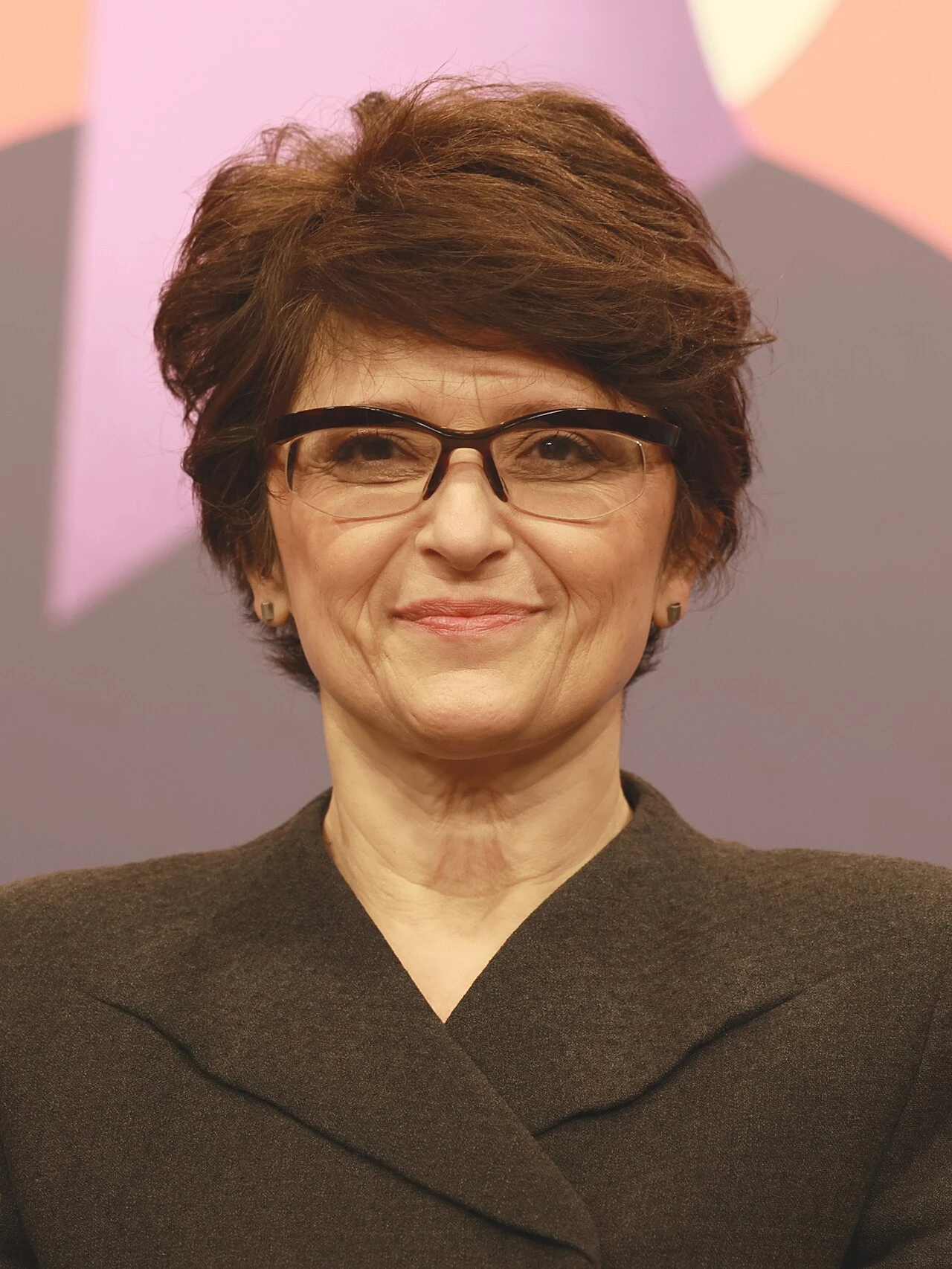
Put Your Soul on Your Hand and Walk entered its 2026 life carrying a burden no ordinary release plan could resolve. Sepideh Farsi had built the film through video conversations with Palestinian photojournalist Fatma Hassona in Gaza. Hassona was killed with members of her family shortly after the film’s Cannes selection was announced. The documentary became an archive of a living collaboration and a record shaped by irreversible loss.
That reality changes the economics of distribution. Festivals, cinemas and platforms can widen access, but every poster, trailer and publicity event makes a decision about how testimony is used. The film needs revenue and reach to survive; it also needs governance that prevents grief from becoming a promotional asset detached from Hassona’s authorship.
The rights around testimony
Documentary contracts usually allocate footage, music, territory and platform rights. Here, ethical responsibility extends further: attribution, context, family interests, archive preservation and control over excerpts. A distributor’s obligation is not only to sell the film but to maintain the relationship between the images and the person who made them possible.
A ranking can make influence look clean. Sepideh Farsi’s 2025 was anything but.
Put Your Soul on Your Hand and Walk made Palestinian testimony and image-making urgent in 2025 cinema. Behind that concise annual record sits a more revealing contest over who gets to define the work, which audience is imagined first, and how much specificity can survive the machinery of international circulation. That is where this story begins, because visibility alone is a poor measure of cultural leadership. For Sepideh Farsi, that is the question the No. 32 profile must answer.
Making public memory
FigureAsia’s annual signal is deliberately specific: Put Your Soul on Your Hand and Walk made Palestinian testimony and image-making urgent in 2025 cinema. The moment also reveals timing, because audiences, platforms and institutions were newly prepared to receive an idea that might have been marginalized in another season. A strong annual record has a before and an after: the field understood one set of possibilities before Sepideh Farsi, and a wider or more difficult set once the work arrived. The relevant change was a movement from presence to consequence, when the work began altering expectations around documentary filmmaking rather than merely satisfying them.
A serious business reading asks who owns the underlying work, who controls the next use, where value accumulates and whether the artist’s bargaining position improves after success. For rights holders and partners, a distinctive creative identity lowers one kind of market risk—indifference—while increasing another: the work may resist easy categorization. The durable asset is not a single spike of visibility. It is the leverage to choose collaborators, protect development time and reach audiences without accepting every available intermediary. The economics of documentary practice are often discussed after the art, as though finance, rights and release strategy were external forces rather than part of the conditions of possibility. For Sepideh Farsi, this economic equation helps explain the No. 32 record without turning the ranking into its own argument.
Translation is broader than language here. It includes format, publicity, genre expectation, platform interface and the critical vocabulary through which a new audience first encounters the work. International reach is built through access, safety, verification, editing, legal review, festival selection and distribution, a chain in which each participant can widen the audience or quietly redefine the work for convenience. The achievement is that partial readings did not empty the work; they generated enough curiosity for the work’s own structure to recover authority. Sepideh Farsi’s year demonstrates that circulation is creative strategy, because the order, place and framing of encounters affect what audiences believe they have received.
The infrastructure of nonfiction
The work gains force from proportion: spectacle and quiet, intimacy and distance, familiarity and surprise are calibrated rather than piled together. The signature remains recognizable because it is made from decisions, not surface branding, and decisions can adapt when format, budget or collaborator changes. Craft at this level is less about ornament than control—knowing where to place pressure, where to remove explanation and where to trust an audience to complete the work. In documentary filmmaking, technique is inseparable from judgment; every visible choice carries a chain of discarded alternatives that the audience will never see. For Sepideh Farsi, this craft question helps explain the No. 32 record without turning the ranking into its own argument.
No nonfiction work reaches the public through individual will alone, and the mythology of the lone genius can hide the management problem at the center of ambitious culture. That balance is a form of organizational design, requiring enough hierarchy to keep direction and enough permeability for an unexpected contribution to improve the whole. Sepideh Farsi’s case is instructive because the public result still reads as authored even though authorship was carried through many hands and institutions. At scale, clarity is generous: collaborators need to understand what cannot be compromised, what remains open and where their expertise should change the original plan.
The base in Iran / France matters without becoming destiny, shaping access, language and reference while leaving room for collaboration and reception elsewhere. A conventional profile would march through biography until success appears inevitable; Sepideh Farsi’s record is more useful when read as a sequence of changing creative problems. The 2025 chapter feels earned precisely because it does not erase the uncertainty, detours and less visible labor that made the present range possible. The important milestones are therefore not only debuts and prizes, but the moments when a creative method survived a larger team, a wider public or a more exposed failure.
The cost of being believed
The word auteur can become a decorative label, but authorship has practical meaning when it helps a large network make consistent choices under pressure. That recognition creates responsibility, since a familiar signature can open doors for harder ideas or become a shield against honest evaluation. Sepideh Farsi has leverage because audiences recognize a standard before they can always name its components, giving the work continuity across changing formats. Authority also depends on listening. A leader who cannot be changed by collaborators eventually converts a living practice into an expensive imitation of earlier confidence.
This is also a regional industry story, since one visible breakthrough can change what commissioners, publishers, studios, venues or investors consider capable of crossing borders. The work’s international life matters partly because it changes the direction of reference: audiences do not encounter Asia only as subject matter, but as a source of form and standards. FigureAsia’s perspective treats Asia as a network of languages, industries, histories and diasporas whose exchanges are as consequential as their movement toward Western institutions. Cultural influence becomes structural when the next artist enters a field with one fewer assumption to disprove, and that is the larger regional stake in Sepideh Farsi’s year.
The 2025 response suggests that recognition deepened because the work offered both an immediate point of contact and enough density to support argument, memory and return. Audience is often rendered as a number, yet the more consequential question is what kind of attention Sepideh Farsi asked people to practice. The strongest evidence of durability will be whether the audience keeps using the work—to think, argue, imitate, teach or make something the original artist did not predict. The relationship is not one-way. Audiences reinterpret, translate, circulate and sometimes resist a work, exposing meanings that production and marketing could not fully control.
That sequence matters. When recognition follows substance, it can provide time and bargaining power; when recognition leads, it often produces a brittle career organized around external approval. For partners, the lesson is equally demanding: supporting a distinctive voice requires patience with development, disagreement and outcomes that may not fit a familiar performance dashboard. The artist’s task is not to reject infrastructure but to understand its incentives well enough to use reach without allowing the institution to become the subject of the work. Institutions entered Sepideh Farsi’s 2025 story as amplifiers and gatekeepers, conferring resources and legitimacy while bringing their own preferences about what can be named, sold and celebrated. The 2025 response suggests that recognition deepened because the work offered both an immediate point of contact and enough density to support argument, memory and return. Audience is often rendered as a number, yet the more consequential question is what kind of attention Sepideh Farsi asked people to practice. The strongest evidence of durability will be whether the audience keeps using the work—to think, argue, imitate, teach or make something the original artist did not predict. The relationship is not one-way. Audiences reinterpret, translate, circulate and sometimes resist a work, exposing meanings that production and marketing could not fully control.
What remains on the record
Every profile of success is vulnerable to hindsight, which removes the credible possibility that the work could have been ignored, misunderstood, delayed or reduced to a safer version. Sepideh Farsi’s year remains interesting because the work preserved a productive instability instead of resolving every tension into a marketable message. The wiser lesson is to separate method from formula: keep the seriousness of preparation, the quality threshold and the courage to edit, but do not reproduce the visible outcome. There is also the risk of representation, especially when one artist is asked to stand for a country, diaspora or entire field that contains far more disagreement than a global market prefers.
Awards, festivals, platforms, publishers, museums, labels and studios are not neutral pipes; each builds a different public around the same creative act. The 2025 case shows how infrastructure can serve authorship when prestige is treated as a resource to deploy, not a destination at which creative risk should stop. The most useful institution is one that makes itself less visible in the final experience while remaining rigorous about labor, access, rights and public accountability. Sepideh Farsi gained authority because institutional recognition met an already coherent practice, rather than manufacturing importance from an empty campaign.
The third measure is artistic. The next work must be allowed to complicate the story told here, because a career that merely confirms a profile has already begun to narrow. For the surrounding field, Sepideh Farsi’s influence will be meaningful if resources move toward original practitioners instead of only toward copies of the most visible result. The opportunity is to use scale selectively, expanding the conditions of work rather than allowing new demand to shrink the range of acceptable choices. By 2026, durability should be visible in more than residual publicity: stronger terms, wider creative options, deeper collaboration and a public willing to follow beyond the familiar signal.
The profile is ultimately less about prominence than consequence: what became newly possible, newly visible or newly difficult to dismiss after the work entered public life. What remains is the harder form of influence—the work other people make differently because Sepideh Farsi demonstrated that a different choice could hold the center. The 2025 signal will eventually recede into a longer career, but the shift it recorded has already entered the expectations of audiences and institutions. The business value follows from that distinction rather than replacing it, because singular work creates the kind of attention that platforms can distribute but rarely manufacture on command.
Beyond the news cycle
Farsi has already taken a fragile connection across a closed border and given it cinematic form. The next test is whether the film can remain accessible in classrooms, archives, cinemas and public discussion after immediate attention fades. Its value cannot be measured only in admissions or awards. It lies in keeping Hassona’s work visible without allowing the market to claim ownership over her loss.