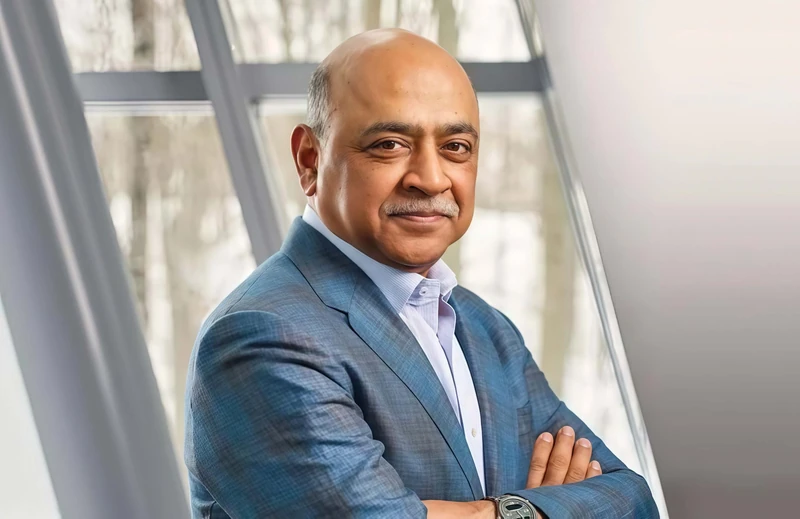
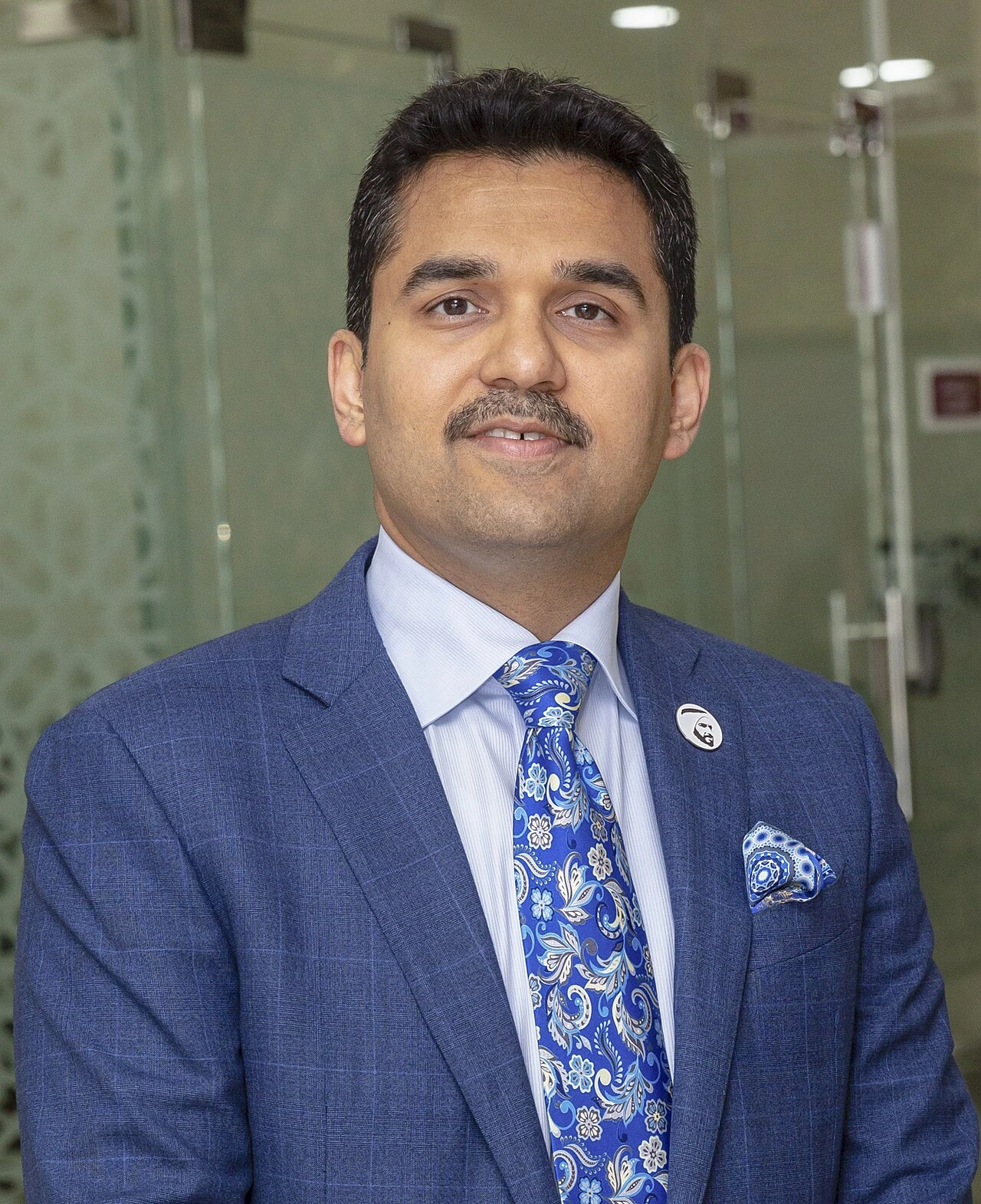
Shamsheer Vayalil's return to operational control at Burjeel Holdings has quickly acquired a financial price tag. Four months after he formally became chief executive in addition to chairman, the Abu Dhabi-listed hospital group issued a $500 million five-year sukuk. Demand reached $1.6 billion, but the paper carries a 7 per cent profit rate. Investors have given Burjeel capital and time, not cheap money. Vayalil must now earn a return above that cost while restructuring a Saudi expansion that has already produced one retreat.
The sequence matters. Burjeel delivered its strongest profit growth as a listed company in 2025, with revenue up 9.5 per cent to AED5.49 billion, EBITDA rising 19.9 per cent to AED1.09 billion and net profit increasing 39.5 per cent to AED503 million. Free cash flow reached AED451 million. Those results supported the credit story behind the sukuk and explain why creditors were willing to fund a non-investment-grade healthcare issuer at scale.
They also set a demanding baseline. The founder's appointment as chief executive took effect on 24 February 2026, replacing a co-chief-executive structure. Bringing strategic and operational authority together can speed decisions. It concentrates accountability as well. Vayalil is no longer only the controlling vision behind Burjeel's expansion; he is directly responsible for converting recently opened assets, clinical programmes and borrowed capital into cash.
A debut in global debt markets
The sukuk is the first issue under a $1.5 billion programme and matures in 2031. It was admitted to trading in London after pricing at a 7.125 per cent yield. The order book, more than three times the issue size, shows appetite for a scarce healthcare credit from the Gulf. It does not remove the significance of Burjeel's BB+ rating from S&P and Ba2 rating from Moody's: lenders are being paid for expansion, execution and concentration risks.
Burjeel has said the financing will refinance existing obligations and support strategic investment. Replacing bank debt with a public instrument can lengthen maturities, diversify funding and establish a reference price for future issuance. It also makes performance more visible. Bond investors monitor leverage and cash coverage with less patience for a long hospital ramp-up than equity holders may show. The fixed profit payment persists through weak quarters, reimbursement disputes and geopolitical disruption.
At the end of 2025, net debt to pre-lease EBITDA stood at 1.8 times. That is manageable for a profitable hospital operator, but it had risen as Burjeel funded growth and bought the Medeor Hospital Dubai building for AED186 million. The property transaction converted a lease exposure into ownership and produced an accounting gain from derecognising the lease liability. The economic benefit will emerge over years; the one-off gain should not be mistaken for recurring operating performance.
The financing therefore sharpens the capital-allocation question. Burjeel can invest in owned hospitals, day-surgery centres, clinics, physiotherapy, cancer care, digital systems or management contracts. Each has a different return profile. The group should favour assets that deepen referrals into high-acuity care without committing excessive fixed capital before demand is visible. The sukuk offers flexibility, but the 7 per cent rate makes idle cash and slow projects expensive.
The UAE profit pool remains decisive
Burjeel's hospitals generated 88 per cent of group revenue in 2025. Segment revenue rose 7.1 per cent to AED4.84 billion and EBITDA increased 17.9 per cent to AED1.17 billion, lifting the margin to 24.1 per cent. That operating leverage came from higher volumes, better mix and cost control. Total patient visits exceeded seven million, while inpatient volumes advanced 11.7 per cent and the group performed more than 89,700 surgeries.
Burjeel Medical City is central to the investment case. Its revenue reached AED1.29 billion and EBITDA rose 26.1 per cent to AED241 million, an 18.7 per cent margin. Patient volumes grew faster than revenue, partly because regulatory procurement changes affected realisation. The facility's opportunity lies in complex oncology, transplant, haematology and other specialties that can attract referrals across the Gulf. Its risk is that specialised capacity and senior clinicians are costly before utilisation becomes consistent.
Average group bed occupancy was 67 per cent in 2025 across 1,784 beds. Management considers 80 to 85 per cent a normalised peak for mature assets, suggesting substantial capacity without equivalent new construction. Filling that capacity is financially attractive because incremental revenue can carry high contribution margins. It must be achieved through genuine clinical demand, not indiscriminate pricing or unnecessary utilisation. Hospital economics are strongest when case complexity and outcomes reinforce reputation.
Insurance access remains a structural vulnerability. Restrictions involving selected plans from a major Abu Dhabi insurer reduced basic-segment volumes for part of 2025 before being resolved in November. Premium and self-pay demand held up, and volumes recovered. The episode showed how quickly a payor dispute can affect a provider even in a growing market. Burjeel needs a diversified mix of insurers, government-related purchasers and self-paying patients to support the debt burden.
Saudi Arabia forces a change in method
Saudi Arabia is the largest expansion opportunity in the Gulf, propelled by population scale, health-sector reform and demand for private capacity. It is also where Burjeel has encountered a visible execution problem. In the first quarter of 2026, Burjeel and its joint-venture partner agreed to wind down PhysioTherabia, closing 28 centres by the end of February. The group's wholly owned physiotherapy centres in Makkah and Riyadh remained open.
The closure does not invalidate the Saudi strategy. It challenges the assumption that a branded network can be rolled out rapidly through a partner and reach attractive utilisation. Physiotherapy depends on local referrals, payer contracts, convenient locations and repeat visits. A large footprint creates rent and staffing costs before patient density develops. Closing underperforming centres can be disciplined capital allocation, but it also carries liquidation costs and reputational consequences.
Vayalil now appears to favour more controlled deployment, including owned facilities and specialised services. That may improve operational consistency, though it places more capital at risk. Day surgery and complex-care partnerships can generate higher revenue per patient than stand-alone rehabilitation, but they require licensing, clinicians and relationships with Saudi payors. Burjeel must decide where ownership creates an advantage and where asset-light management contracts offer better risk-adjusted returns.
The first-quarter figures capture the transition. Group revenue rose 5.1 per cent to about AED1.34 billion and net profit increased 44.5 per cent to AED57 million. Medical-centre revenue grew 9.3 per cent, but newly opened facilities absorbed roughly AED9 million of ramp-up costs. The Saudi joint venture's final financial impact was still being assessed. Growth remained intact, yet the pace was below 2025 and the portfolio was being repaired while expansion continued.
Founder control needs institutional counterweights
Vayalil founded the business in 2007 and remains its defining leader. His return as chief executive can align decisions across clinical investment, acquisitions and international expansion. In a healthcare group, founder attention can be particularly useful because capital and medical quality are inseparable. A chief executive who understands the clinical proposition may resist growth that adds beds without the teams to use them well.
The governance trade-off is equally clear. Combining chairman and chief executive roles reduces the separation between board oversight and management. Burjeel's board conducted a formal review before the appointment, and shareholders approved it. The arrangement still requires strong independent directors, credible succession planning and executives empowered to challenge the founder. Public creditors now join minority shareholders in relying on those controls.
The conclusion of the co-chief-executive structure also risks losing organisational knowledge if authority becomes too centralised. Burjeel operates multiple brands across primary, secondary and quaternary care in the UAE, Oman and Saudi Arabia. Local decisions about clinicians, insurers and regulation cannot all wait for the chairman-chief executive. Vayalil's leadership will be most effective if central capital discipline coexists with clear operating accountability in each market.
Disclosure should improve with the new debt-market constituency. Investors need segment returns, maturity profiles and a transparent distinction between mature assets and ramp-up losses. Saudi investments should be reported with enough detail to judge whether the new model is working. The group already publishes occupancy, patient volumes and margin information; returns on invested capital by project would make the expansion case more measurable.
Regional scale has to become referral power
Burjeel's strongest regional advantage is not the number of sites but the ability to move patients through an integrated network. Community clinics can originate referrals; hospitals can provide acute care; Burjeel Medical City can handle rare and complex cases. Oncology clinics in Al Ain, Sharjah, Dubai and Oman widen access while concentrating some expensive treatment and expertise. If the pathways work, the group can increase utilisation without duplicating every capability in every location.
This hub-and-spoke logic is well suited to the Gulf, where populations are dispersed across cities but travel for advanced care is common. It also supports medical tourism and cross-border referrals. Competition is intensifying, however, as regional hospital groups, government-backed systems and international brands invest in the same specialties. Clinician recruitment is a limiting factor, and wage inflation can absorb the revenue benefit of a richer case mix.
Technology may improve scheduling, diagnostics and clinical workflows, but it should be judged through productivity rather than announcements. Burjeel expanded artificial-intelligence applications in cancer diagnostics, laboratory automation and operations during 2025. The return will appear in faster turnaround, fewer errors, higher capacity or lower cost. Digital investment that does not move those measures is another claim on sukuk proceeds without a clear payback.
The $500 million issue gives Vayalil a larger strategic toolkit and a public cost of capital. Over the next year, Burjeel needs to show sustained free cash flow after expansion spending, improving utilisation at new UAE assets and a Saudi plan that no longer relies on footprint as proof of demand. The founder's return has shortened the chain of command. It has also removed distance between the bold decisions and their financial consequences. Creditors will accept ambition at 7 per cent; they will expect disciplined execution in return.