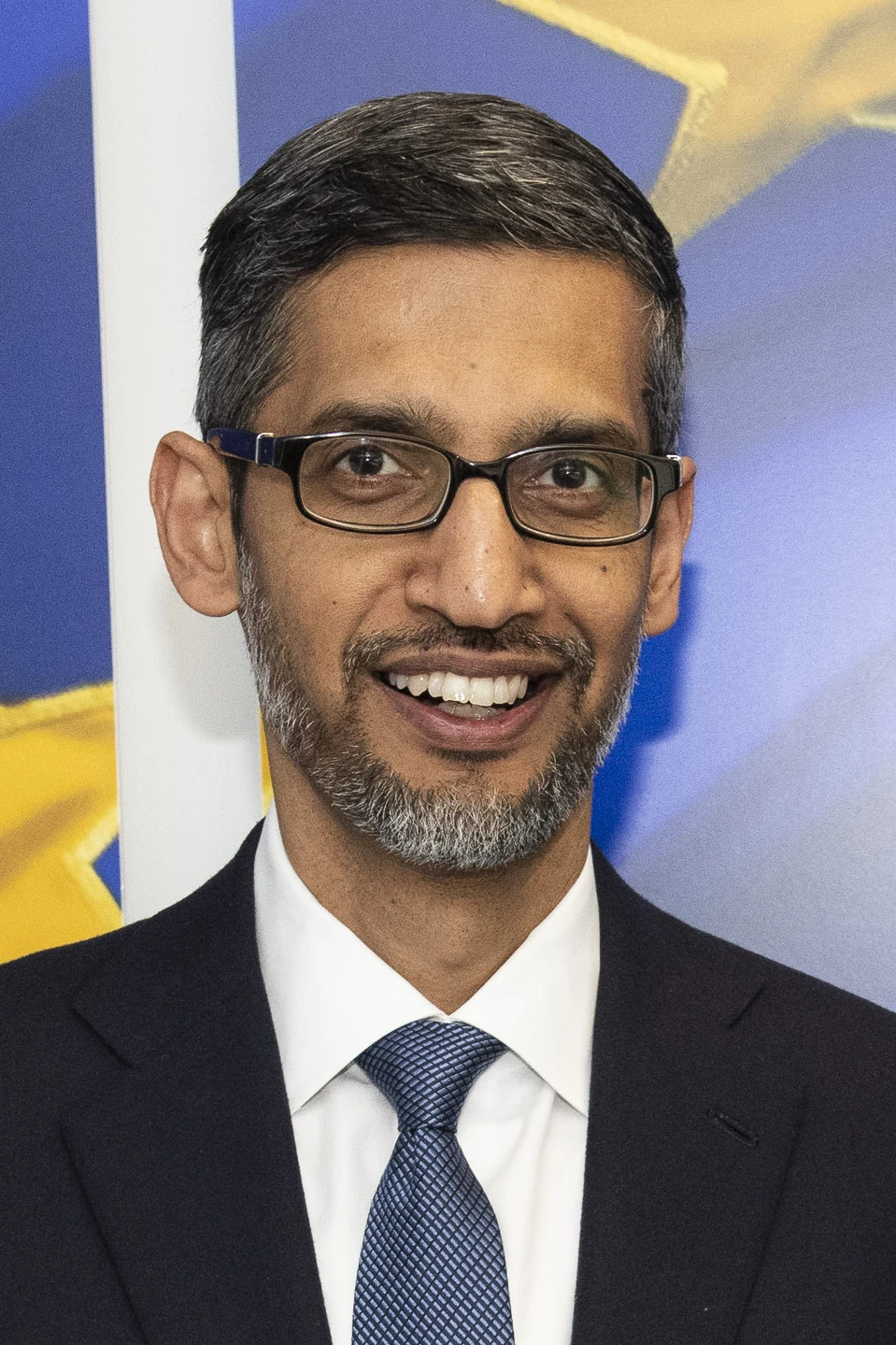
Sundar Pichai has answered the first question hanging over Google since generative AI became a consumer habit: the company can ship at scale. AI Overviews now reaches more than 2.5 billion monthly users. AI Mode, its conversational search experience, passed one billion within a year. The Gemini application has more than 900 million monthly users, and Google says daily requests have grown more than sevenfold over the same period.
The next question is financial. Alphabet expects to spend between $175 billion and $185 billion on capital expenditure in 2026, roughly twice the $91.4 billion deployed last year. Pichai must turn a dramatic increase in servers, data centres, networking and power into stronger cash flows without weakening the advertising franchise that funds it. AI has moved from a defensive response to the centre of Alphabet’s strategy; it now has to earn the economics of a platform transition.
Google’s May developer conference showed how thoroughly Pichai has committed the company. Gemini 3.5 sits behind agents, creative tools, coding systems and new conversational features across Search, Maps, YouTube and Workspace. Google said its products and interfaces process more than 3.2 quadrillion tokens a month, seven times the level a year earlier. That volume demonstrates distribution. It also turns every gain in engagement into demand for expensive inference.
Search changes shape before its business model does
Search remains the central test because it combines Google’s greatest advantage with its greatest exposure. The traditional product matched short queries with ranked links and commercial messages. AI Mode invites longer conversations, synthesises information and allows repeated follow-up. It can answer questions that were previously too complex or inconvenient for a search box. Pichai argues that users search more when they use the AI features, expanding the total opportunity.
More queries do not automatically create more profit. A generated response generally requires more computation than a conventional results page. It may also satisfy a user without producing the same sequence of clicks through which Google and advertisers have learned to measure intent. New advertising formats must feel useful inside a conversation rather than interrupt it. If the experience becomes cluttered too early, users can migrate to specialised assistants; if monetisation arrives too slowly, infrastructure costs rise faster than revenue.
Alphabet’s latest full-year evidence gives Pichai time. Annual revenue exceeded $400 billion in 2025. In the fourth quarter, Search revenue grew 17 per cent, an acceleration that suggests AI features have not yet cannibalised the core. Google has begun giving merchants data on performance across AI Mode, AI Overviews and Gemini, while adding agentic tools for advertisers and commerce. The aim is to preserve the auction and measurement machinery even as discovery moves away from a page of ten links.
The health of the wider web remains part of the economics. Google’s answers depend on material created by publishers, merchants, developers and institutions. If AI summaries reduce valuable referral traffic without creating an adequate commercial exchange, the supply of high-quality open information may deteriorate. That would damage the product’s source base and intensify regulatory hostility. Pichai has to treat ecosystem incentives as infrastructure, not as a public-relations issue separate from Search.
Competition makes the balance more urgent. OpenAI, Perplexity and other assistants have trained users to expect direct, cited and conversational answers. Apple, device makers and browsers can alter defaults or distribute rival services. Google still controls exceptional surfaces through Android, Chrome, Search and its applications, yet that strength attracts antitrust scrutiny in several jurisdictions. The more tightly Gemini is connected to those products, the more closely regulators will examine whether integration improves consumer choice or entrenches distribution power.
Cloud provides the clearest route to a return
Google Cloud offers a more direct commercial model for the capital programme. In the final quarter of 2025, Cloud revenue grew 48 per cent and reached an annual run rate above $70 billion. Backlog increased 55 per cent from the preceding quarter to $240 billion. Google said products built on its generative models grew revenue by nearly 400 per cent over the year, and Gemini Enterprise sold more than eight million paid seats within four months of launch.
Those numbers support the decision to build ahead of demand. Just over half of Alphabet’s machine-learning compute in 2026 is expected to go to Cloud, where capacity can be sold to external customers. Google can offer its own Tensor Processing Units alongside Nvidia accelerators and an integrated model platform. Custom silicon gives it a potential cost advantage, while model choice helps it avoid forcing customers into a single architecture.
Yet capacity remained constrained entering 2026. Data-centre construction has long lead times, power connections are scarce and component prices have risen. Depreciation on prior investment is already accelerating through the income statement. Some assets, particularly accelerators, have shorter economic lives than buildings and networks. Pichai therefore needs high utilisation quickly; an impressive backlog matters less if equipment arrives late or customers defer consumption.
The $32 billion acquisition of Wiz, completed in March, adds another layer to the Cloud thesis. Wiz retains its brand and support for Amazon Web Services, Microsoft Azure and other environments while becoming part of Google Cloud. The deal gives Google a fast-growing security platform and a stronger proposition for enterprises operating across several clouds. It is also the largest acquisition in the company’s history, raising the cost of weak integration.
Keeping Wiz genuinely multi-cloud is strategically sensible and organisationally awkward. Customers value a security product that sees risk across rival infrastructure. Google’s sales force naturally wants the acquisition to strengthen its own cloud. If integration narrows Wiz or compromises perceived neutrality, the premium could destroy the asset’s appeal. If it remains too separate, Alphabet may struggle to produce the revenue synergies used to justify the price. Pichai must preserve independence while connecting data, distribution and AI capabilities behind the scenes.
Asia measures reach, sovereignty and cost
Asia is where Google’s consumer scale and infrastructure ambition meet the sharpest variation in income, language and policy. India was among the first markets outside the United States to receive AI Mode. It is now a major deployment ground for Gemini’s personal features, Indic-language support and public-service applications. In July, Google said Gemini Live could converse in more than 25 Indian languages and dialects, while regulated organisations could run Gemini 3.5 Flash within Indian data centres using distributed cloud controls.
That combination matters commercially. India supplies a vast user and developer base, but revenue per user is lower than in the United States. Efficient models and locally relevant advertising are essential if greater activity is to produce attractive margins. Data-residency and sovereign controls also turn compliance into a product feature. Google has anchored a five-year, $15 billion Indian infrastructure commitment to new connectivity and AI capacity, linking local demand with networks across four continents.
Southeast Asia presents a similar mix of opportunity and constraint. Google Cloud opened a Bangkok region in January as part of a $1 billion Thai infrastructure investment. Singapore hosts a DeepMind laboratory, engineering teams and new national AI partnerships. These investments improve latency and satisfy local-data requirements, but they fragment operations across jurisdictions. Energy availability, water use and grid emissions will increasingly influence where capacity can be built and how governments judge its social value.
Google’s regional advantage is the breadth of its existing products. Android, YouTube, Maps and Search already mediate daily activity for hundreds of millions of Asian users. Gemini can improve those services without requiring a new distribution channel. The risk is that one model failure can propagate across several trusted products, languages and public institutions. Safety evaluation and customer support must therefore scale with adoption rather than follow it.
Discipline inside an investment surge
Pichai’s tenure has often been judged through Google’s ability to make large research bets while protecting margins. The present cycle is less forgiving because capital intensity has changed. The company is committing utility-scale resources before usage patterns and pricing are settled. Alphabet can absorb several years of elevated investment, but shareholders will expect the gap between expenditure and measurable AI revenue to narrow.
Management says it applies a rigorous framework to allocate compute among DeepMind, consumer products and Cloud. That discipline must contend with internal incentives. Research teams want the largest training runs. Product groups want low-latency inference and free features that drive engagement. Cloud wants capacity for paying clients. Each request can appear strategically essential. The chief executive’s most important decisions may be the workloads he declines to fund, not the projects he announces.
Energy and supply-chain exposure complicate the calculus. Google designs TPUs but depends on Asian foundries, packaging and memory suppliers. It also buys Nvidia systems to satisfy customer choice. Power contracts and data-centre approvals can become political issues, particularly where grids are constrained. A $185 billion plan cannot be managed as a collection of technical purchases; it requires judgement about geography, regulation, asset life and the future cost of computation.
Pichai has already achieved what many doubted in 2023: Google is competing at the model frontier while expanding its established businesses. Mass usage, faster Search growth and Cloud backlog are substantial evidence. The decisive result will come later, when depreciation and operating costs reflect the full build-out. If conversational Search creates new commercial intent, Cloud converts backlog efficiently and Wiz strengthens enterprise trust, the capital programme will look like a renewal of Alphabet’s moat. If those connections fail, scale will merely make the mismatch more expensive.