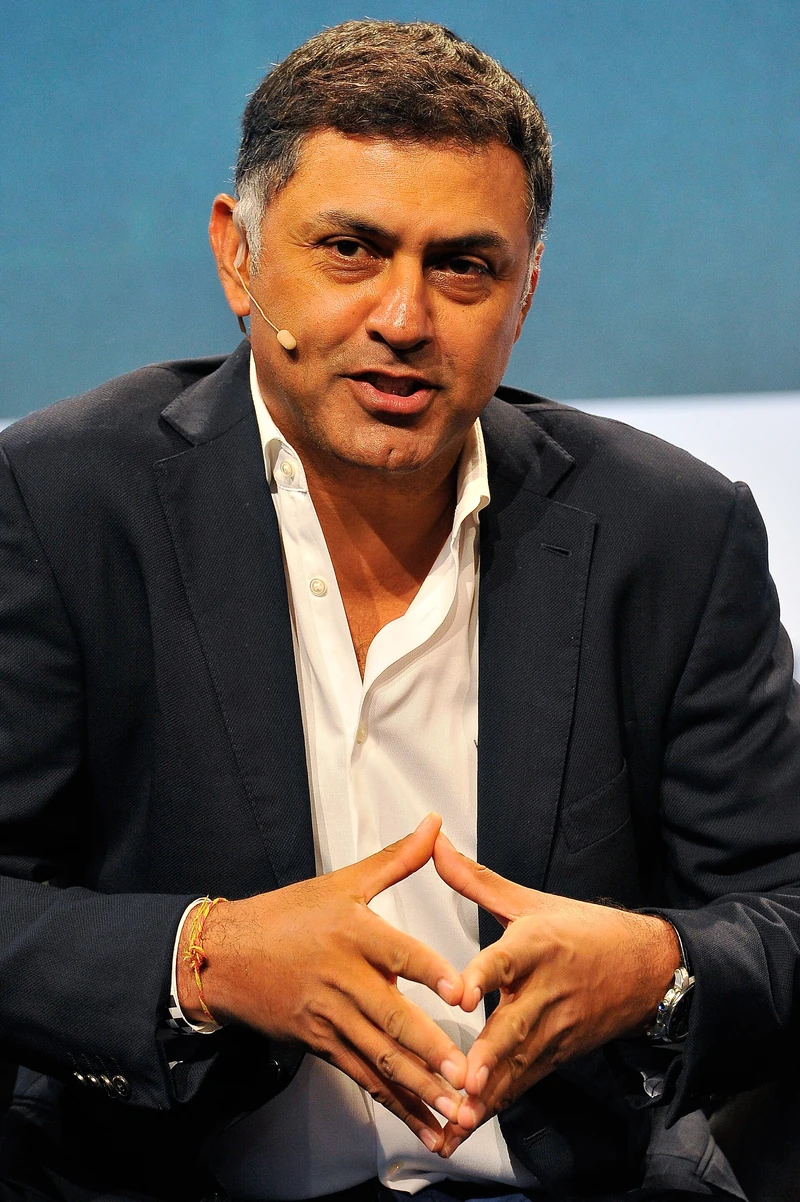
T.V. Narendran enters the second half of 2026 with a stronger operating hand than Tata Steel has held for some time. The group closed the financial year to March with consolidated EBITDA of ₹34,848 crore, up 35 per cent, and profit after tax of ₹10,886 crore. Indian deliveries reached about 22.5 million tonnes, a record, while the Netherlands business improved sharply and losses in the United Kingdom were roughly halved. Those results do not resolve Tata Steel's strategic problem, but they change its starting position. Narendran is no longer managing transition from a posture defined mainly by repair. He is being asked to prove that a global steelmaker can grow in India, restructure in Europe and decarbonise two very different industrial systems without weakening the balance sheet or sacrificing returns.
That combination explains why his leadership matters beyond the company. Steel is simultaneously a foundation material, a trade-exposed commodity and one of the hardest sectors to clean. Decisions taken in Jamshedpur, Kalinganagar, Port Talbot and IJmuiden affect automotive supply chains, construction economics, employment, energy systems and national industrial policy. Narendran must therefore allocate capital through several clocks at once. Indian demand creates an immediate growth opportunity. European regulation creates a fixed timetable for lower-carbon production. Technology creates optionality, but not certainty. Shareholders require evidence that each rupee and pound committed to transition can earn an adequate return. Governments and communities expect investment to protect industrial capability. The role of chief executive in this setting is less about announcing an ambition than sequencing commitments so that the company remains investable throughout a long physical transformation.
A stronger year creates room, not immunity
FY2026 supplied several useful pieces of evidence. Tata Steel India expanded volumes while improving its position in higher-value downstream segments. The company's branded and retail reach continued to broaden, and its Aashiyana and DigECA commerce platforms generated annual gross merchandise value of ₹8,495 crore, 137 per cent higher year on year. The Netherlands operation moved closer to normal performance after earlier disruption, and the UK cost base became lighter following the closure of legacy blast-furnace assets. Group EBITDA per tonne improved to about ₹10,900. These are operational gains with strategic value because they increase internal funding capacity and reduce the amount of managerial attention consumed by acute underperformance.
Yet steel earnings remain cyclical, and one better year cannot be treated as permanent financing. Global markets continue to absorb the effects of Chinese overcapacity, tariff barriers and irregular trade flows. Raw-material and energy prices can move faster than finished-steel realisations. In Europe, carbon costs and policy support are inseparable from plant economics. Narendran's discipline must therefore be visible not only in consolidated profit, but in the quality of each business unit's cash generation. The danger is to read improved conditions as permission to advance every project simultaneously. Tata Steel's own language about prioritising, optimising and sequencing capital is important. Investors will judge that promise by whether the group chooses the right order of operations when political, industrial and financial objectives pull in different directions.
India is the engine and the benchmark
India gives Tata Steel its clearest route to scale. The Kalinganagar expansion has lifted the site's capacity from three million to eight million tonnes a year, while new downstream lines are gaining automotive approvals. The company has also commissioned an electric-arc-furnace operation in Ludhiana, creating a domestic pathway for scrap-based steelmaking. These investments are not merely additions to tonnage. They are a test of whether Tata Steel can combine upstream scale, sophisticated product mix, digital distribution and circular production in a market where per-capita steel consumption still has room to rise.
Narendran's advantage is that India can finance learning. A larger, more profitable home business gives the group a laboratory for process control, predictive maintenance, customer segmentation and scrap ecosystems. Tata Steel has already deployed hundreds of artificial-intelligence models across operations. The managerial task is to convert that technology into measurable improvements in yield, energy intensity, maintenance availability and working capital. Digital tools are valuable only when they change plant economics. The same principle applies to downstream expansion. Higher-value products should reduce commodity exposure and deepen relationships with automotive, infrastructure and engineering customers, but they also require tighter quality control and service reliability. India's performance must become the standard against which every additional unit of capital is assessed.
The home market also contains a policy risk. Rapid capacity growth across the Indian industry can eventually create pressure on utilisation and pricing, especially if export markets become more protected. Narendran cannot assume that structural demand growth eliminates cycles. He must preserve a cost position that remains competitive during weaker periods and build a product portfolio capable of defending margin. That means keeping projects on schedule, integrating acquired assets, improving raw-material security and resisting the temptation to equate market leadership with volume alone.
Port Talbot turns policy into execution
In the United Kingdom, Tata Steel has moved from debate to construction. The Port Talbot transition replaces legacy blast-furnace production with an electric arc furnace designed to use UK-sourced scrap. The project is supported by £500 million from the British government and is intended to reduce site emissions dramatically while preserving domestic steelmaking. Ground was broken in 2025, and the company is working towards EAF-based production in the 2027–28 period. The strategic logic is clear: a smaller, flexible and lower-carbon production system should carry a lower fixed-cost burden and align the plant with Britain's climate policy.
The execution risk is equally clear. During the transition, the UK business relies on imported substrate for downstream processing. Customer continuity, construction timing, workforce restructuring and scrap quality must all be managed together. The new furnace will not create an advantage automatically. Its economics will depend on electricity prices, scrap availability, product capability and the strength of domestic procurement. Narendran must ensure that a successful engineering project becomes a competitive business, rather than a policy-compliant asset with structurally weak returns.
Port Talbot therefore provides a leadership scorecard. Schedule and budget matter, but so do order retention, qualification of products, safety performance and the path to positive cash flow. A chief executive can control only part of the energy and policy environment, yet the company can design commercial agreements, sourcing systems and operating practices that reduce exposure. Transparent milestones would help investors separate unavoidable transition costs from execution slippage. Narendran's credibility will be strengthened if management reports progress in operational terms rather than treating commissioning as the finish line.
The Netherlands requires a different bargain
IJmuiden is larger and technologically more complex. Tata Steel Nederland's phased green-steel plan centres on replacing part of its blast-furnace and coke-oven system with direct-reduced-iron and electric-arc-furnace technology, while also addressing local environmental concerns. Discussions with the Dutch government over tailored support and policy conditions are central to the project's viability. Unlike Port Talbot, this is not primarily a retreat from old capacity into a smaller model. It is an attempt to preserve a major integrated site while changing its emissions profile and improving its local environmental performance.
Narendran must avoid treating government support as a substitute for project economics. Public funding can bridge the gap created by first-mover costs and policy objectives, but Tata Steel will still carry construction, technology, market and operating risks. The company needs clarity on energy and hydrogen availability, carbon regulation, permitting, community obligations and the phasing of old and new assets. Committing too early could lock in expensive assumptions; waiting too long could increase compliance costs and erode trust. The correct decision is not simply to proceed or delay. It is to define the conditions under which each phase creates an acceptable risk-adjusted return.
The improved Dutch earnings in FY2026 provide welcome evidence that the existing operation can contribute rather than drain cash. Narendran should use that improvement to strengthen the transition plan, not to disguise its uncertainties. The market will want to understand which investments are mandatory, which are conditional and which can be stopped if policy or technology changes. A modular plan with explicit decision gates would preserve optionality and impose discipline on negotiations with governments and suppliers.
Safety and communities remain economic variables
Heavy-industry leadership cannot separate social performance from financial performance. Steel plants operate for generations, employ specialised workforces and shape the towns around them. Restructuring in Wales and environmental concerns around IJmuiden show how quickly operational choices become public questions. In India, expansion brings its own responsibilities around land, water, mining, contractors and community development. A weak safety culture or a damaged local relationship can stop production, delay approvals and destroy trust faster than an earnings upgrade can restore it.
Narendran's operating system must therefore make safety, emissions and community commitments part of capital governance. Leading indicators should reach the board alongside volume, cost and cash measures. Contractors require the same standards as employees. Environmental projects must be connected to measurable outcomes. Workforce transitions need credible retraining and redeployment pathways. None of these actions removes conflict, but they improve the quality of decisions and reduce the risk that social obligations appear only after a project is announced.
The next proof is return on transition
The central question for Tata Steel is no longer whether decarbonisation is necessary. It is whether the company can execute it in a way that strengthens rather than dilutes industrial competitiveness. Narendran has several assets: a growing Indian franchise, better European operations, long technical experience, access to group resources and governments that want domestic steel capacity to survive. He also faces hard constraints: volatile commodity markets, large capital requirements, uncertain energy economics and political expectations that do not always align with shareholder returns.
Success through 2026 and beyond should be judged by a small set of outcomes. India must convert new capacity into high utilisation, stronger mix and free cash flow. Port Talbot must move from construction to qualified, competitive production without losing its customer base. The Dutch plan must reach a bankable structure with risks shared credibly between Tata Steel and public stakeholders. Group leverage must remain compatible with the cycle. Cost transformation must continue after the most obvious restructuring gains have been captured. Most importantly, each project must make the connection between carbon reduction and economic value visible.
Narendran has already shown that he can operate through a difficult global portfolio. The higher standard now is to make transition itself an operating capability. If Tata Steel can sequence growth and decarbonisation while protecting returns, it will offer a model for other Asian industrial groups facing the same collision of demand, climate policy and capital scarcity. If it cannot, stronger earnings will have bought only time. The next chapter of Narendran's leadership will be defined by how productively he uses that time.