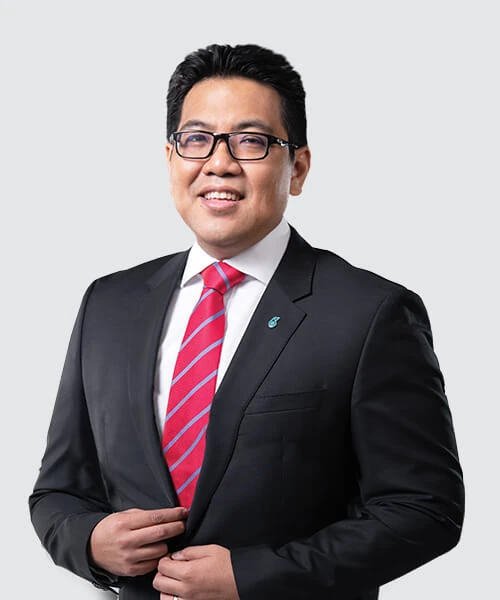
Tengku Muhammad Taufik is leading PETRONAS through a period in which almost every demand on a national energy company is becoming more expensive. Malaysia needs secure fuel, dividends and domestic investment. Global customers want reliable liquefied natural gas and upstream supply. Governments and financiers expect credible decarbonisation, while lower commodity prices reduce the cash available to fund it. For 2025, PETRONAS revenue fell 17% to RM266.1 billion and profit after tax declined 18% to RM45.4 billion. Cash flow from operations was RM85.2 billion and capital investment reached RM41.6 billion. The balance sheet remains strong, but the margin for pursuing every ambition has narrowed.
Tengku Taufik’s central task is capital allocation under political and industrial pressure. PETRONAS is wholly owned by the Malaysian government and contributes directly to public finances. Its investment decisions also shape national reserves, jobs, industrial capability and energy prices. A private oil major can reduce exposure when returns weaken; a national company must consider obligations that do not fit neatly into a discounted cash-flow model. The chief executive must make those obligations explicit enough that commercial discipline survives.
The operating environment in 2026 has reinforced that challenge. Conflict affecting West Asian supply routes drove crude prices and shipping costs higher, while Malaysia remained dependent on imported crude for a significant share of refinery requirements. PETRONAS had to secure domestic petrol and diesel even as global logistics became more expensive. Energy security is no longer a background policy phrase. It is a daily test of inventories, contracts, shipping and the resilience of the integrated system.
Lower profit makes portfolio choices visible
PETRONAS generated RM103.0 billion of EBITDA in 2025, 10% below the previous year, and invested mainly in upstream development and production. The numbers still support a substantial programme, but lower realised prices and volumes show how quickly capacity can tighten. Tengku Taufik must protect high-value projects, retire marginal ones and avoid treating every discovered resource as an obligation to develop.
Upstream investment remains necessary because mature fields decline and LNG commitments require gas. New projects should be tested against lower price assumptions, carbon costs and schedule risk. Exploration successes in Indonesia and Suriname can diversify resources, but appraisal must come before development enthusiasm. The company creates value by commercialising advantaged barrels and molecules, not by maximising the number of countries on a map.
Portfolio high-grading includes divestment and partnership. Selling or reducing interests can recycle capital and share risk, but transactions should not sacrifice strategic infrastructure or future option value for a short-term cash target. PETRONAS needs clear criteria around operatorship, market access and technology. A partner should bring more than financing when the company already has a strong balance sheet.
Impairment discipline is equally important. Energy assets depend on long-term prices and demand assumptions that can be adjusted to protect reported value. The board should challenge them consistently and recognise losses when economics change. Transparency strengthens the case for continued national investment because it separates commercially sound projects from policy support.
LNG is the bridge and the concentration
LNG contributes a large share of PETRONAS revenue and connects Malaysian resources with buyers across Asia. Gas can replace more carbon-intensive fuels, support intermittent renewables and provide industrial heat. Demand from Japan, China, South Korea and emerging Southeast Asian economies gives the group a deep market. Yet LNG is also exposed to construction cost, shipping, methane emissions and competition from Qatar, the United States and Australia.
Tengku Taufik must balance long-term contracts with portfolio flexibility. Buyers want security but increasingly resist rigid terms that ignore changing power markets. PETRONAS can use its shipping and trading capabilities to optimise supply, provided risk limits remain clear. Contract innovation should not turn a production business into an opaque trading exposure.
Five new LNG carriers under long-term charter illustrate the infrastructure required to maintain reach. Vessel efficiency, route security and financing affect delivered economics. The group should prepare for congestion and disruption around critical waterways, including the Strait of Hormuz, while diversifying cargo sources. Resilience will cost more than the just-in-time system that worked in calmer markets.
Methane performance will determine whether gas retains credibility as a transition fuel. PETRONAS needs measurement, leak reduction and independently verifiable reporting across operated and partner assets. Claims based on average emissions are insufficient when individual facilities differ sharply. Customers facing carbon rules will increasingly pay attention to the provenance of each cargo.
Consolidation can improve control or concentrate risk
PETRONAS and Eni established Searah in 2026 to combine selected upstream interests in Indonesia and Malaysia. The partnership can create scale, share expertise and accelerate regional gas development. It also introduces governance complexity around investment priorities, operatorship and the treatment of national interests. Tengku Taufik should establish decision rights that allow the venture to act commercially while protecting commitments to host countries.
The agreement to assume full ownership of PRefChem from Saudi Aramco points in the opposite direction: consolidation rather than shared control. The refinery and petrochemical complex in Johor is strategically important but has faced operational and market challenges. Full ownership gives PETRONAS greater freedom to integrate feedstock, products and investment. It also places the entire downside on the group.
Petrochemicals face cyclical oversupply and pressure from large Chinese and Middle Eastern capacity. PRefChem’s value cannot rest on a return to unusually high margins. PETRONAS needs reliable operations, advantaged feedstock and product positioning that serves Asian industrial demand. Capital for expansion should be staged behind utilisation and margin evidence.
Operational safety is non-negotiable. Incidents across energy infrastructure in 2025 and 2026 reinforced the human and supply consequences of failure. Maintenance budgets should be protected when earnings decline, and contractors held to the same standards as employees. Tengku Taufik should ensure that production and schedule incentives never overpower stop-work authority.
The transition portfolio needs a sharper economic spine
PETRONAS is investing in renewable power, hydrogen, carbon capture, biofuels and lower-carbon mobility through Gentari and other businesses. Each may contribute to a future energy system, but they have different customers and economics. Group-level ambition should not conceal weak project returns. Tengku Taufik needs a portfolio framework that compares the value of learning, emissions reduction and financial return without pretending they are interchangeable.
Renewable power can build stable contracted cash flow, particularly in India and Southeast Asia, but competition has reduced returns in some auctions. Development capability, grid access and storage integration matter more than installed-capacity headlines. Gentari should recycle capital where possible and prove that international growth benefits PETRONAS rather than simply making the transition portfolio larger.
Hydrogen and carbon capture require customers, regulation and shared infrastructure. Early projects can establish expertise, yet large investment before demand is contracted would expose the group to policy change. PETRONAS can use depleted reservoirs, gas handling and industrial relationships as advantages. It should require credible offtake and liability frameworks before committing balance-sheet scale.
Artificial intelligence is entering operations through initiatives such as the TriCipta AI collaboration. Predictive maintenance, subsurface analysis and energy optimisation can improve safety and returns. Models used in critical facilities need validated boundaries and human accountability. Technology partnerships should build capability inside PETRONAS rather than create permanent dependence on external vendors.
Malaysia’s needs define the leadership standard
The government’s dividend expectations are a persistent tension. PETRONAS must return value to its owner, but excessive distributions reduce the capital available to replace reserves, maintain infrastructure and fund transition. Tengku Taufik should provide multi-year scenarios showing how dividends interact with prices and investment. Predictability would help public budgeting and protect the company from opportunistic extraction during strong years.
Domestic gas and fuel policy also affects commercial performance. Regulated prices and subsidies support households and industry but can obscure the cost of supply. PETRONAS should work with government on targeted support and transparent compensation rather than carrying open-ended obligations. Reform must protect vulnerable consumers while encouraging efficiency.
The company’s role in local capability extends to suppliers and talent. Cost pressure may encourage rapid cuts across the oil-and-gas services ecosystem, weakening skills needed for future projects. PETRONAS can consolidate procurement while giving credible suppliers visibility into demand and technology requirements. Transition investment should create pathways for engineers rather than divide the workforce between an old and a new energy business.
Governance will determine whether competing mandates remain manageable. The board must challenge investments, related national priorities and international partnerships with equal seriousness. Tengku Taufik needs senior leaders who can make decisions across upstream, LNG, downstream and clean energy without protecting their own portfolios. A strong national champion is not one that avoids difficult trade-offs; it is one that can explain and execute them.
The next twelve to twenty-four months will test PETRONAS against volatile prices, supply disruptions and demanding capital choices. Searah and PRefChem must show that partnership and consolidation improve value. LNG reliability must be preserved while methane performance advances. Transition projects need customers and economic milestones. Malaysia will continue to need cash, fuel and investment from the same company. Tengku Taufik’s defining task is to keep PETRONAS dependable enough to serve the nation today and disciplined enough to remain competitive when the energy system changes.