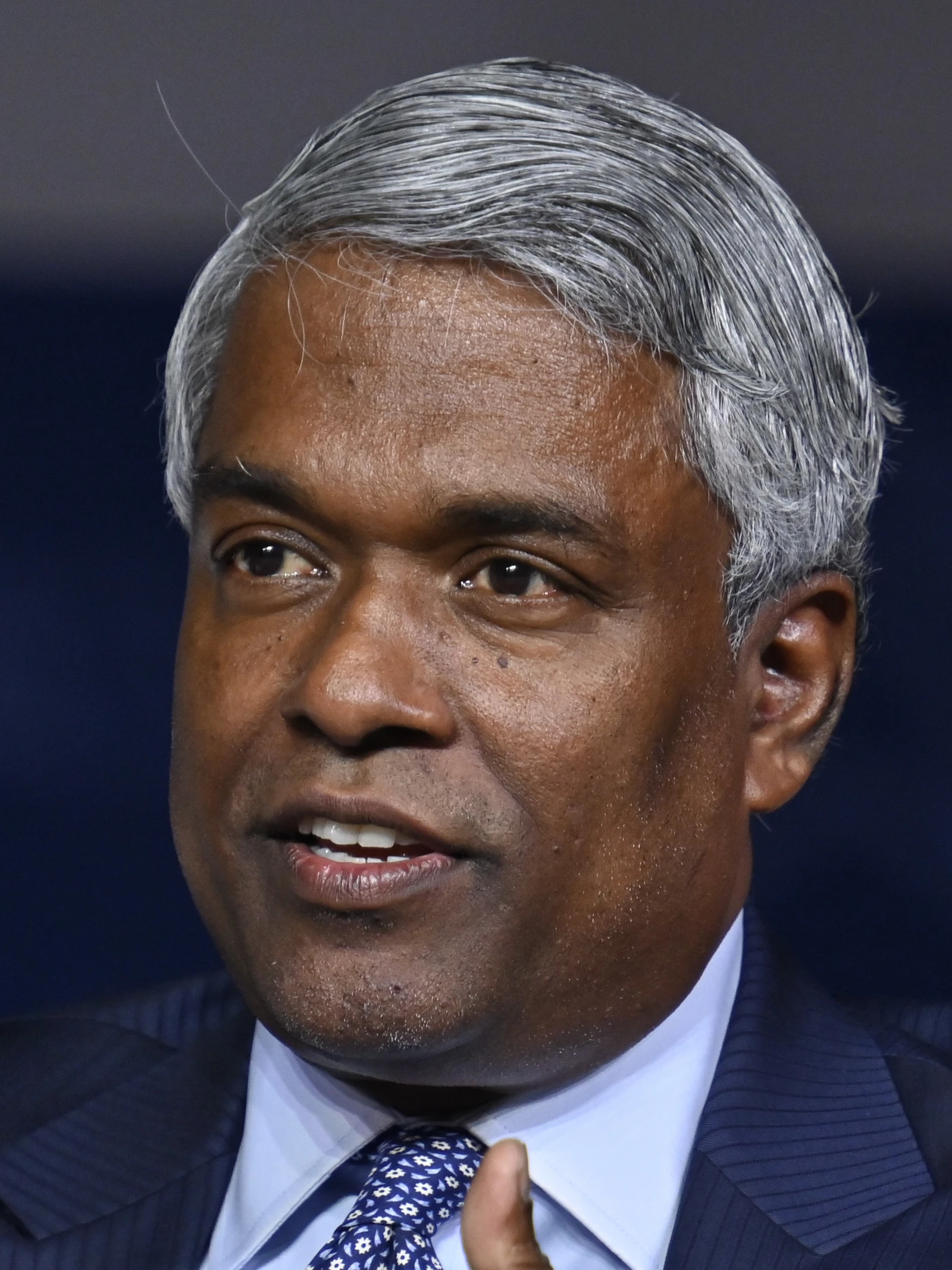
Thomas Kurian spent his first years at Google Cloud proving that a company famous for consumer products and frontier research could also behave like a disciplined enterprise supplier. In 2026, the proposition has changed. Google Cloud is no longer the distant third participant whose progress is measured mainly by narrowing the gap with Amazon Web Services and Microsoft Azure. It is a $20 billion-a-quarter business growing at a pace that has made it one of Alphabet’s most important engines. That success gives Kurian a more demanding assignment: turn exceptional demand for artificial intelligence into durable customer trust while the infrastructure is constrained, the investment bill is rising and Google is absorbing the most consequential security acquisition in its history.
The numbers have moved faster than the old narrative. Google Cloud revenue reached $20.0 billion in the first quarter of 2026, 63% higher than a year earlier, while operating income rose to $6.6 billion from $2.2 billion. The segment’s contract backlog expanded to roughly $460 billion. These figures show that enterprises are not merely experimenting with Gemini models or renting short bursts of computing power. They are making longer commitments to Google’s infrastructure, data tools, productivity software and AI services. They also show why Kurian cannot run the division as a high-growth challenger indefinitely. A backlog of that size is a promise to deliver capacity, reliability, support and economics over years, not a quarterly applause line.
Kurian’s central achievement has been commercial rather than theatrical. Google already possessed leading work in machine learning, custom chips, distributed systems and data analytics when he took charge in 2019. What it lacked was a sufficiently consistent way to sell those assets to large organisations with procurement rules, regulated data and technology estates built across several vendors. Kurian strengthened industry teams, partner channels and account management, while presenting Google’s technical strengths as components of an enterprise platform. Generative AI rewarded that preparation. Customers seeking models also needed governed data, cybersecurity, identity controls, developer tools and someone accountable when a deployment failed. Google Cloud had become organised to sell the whole operating environment.
The Wiz integration is a credibility test
Google’s completion of the Wiz acquisition in March placed the next test directly inside Kurian’s division. Wiz built its position by helping companies understand risk across multiple clouds, connecting software code, cloud configurations and running workloads. That multicloud character is strategically valuable and culturally awkward. Google wants customers to commit more spending to its own infrastructure; Wiz earned trust partly by remaining useful when those customers also relied on AWS, Azure or private systems. Preserving that neutrality will be essential. If the product begins to feel like a funnel into Google Cloud, the acquisition could weaken the quality that made it attractive.
The integration therefore asks more than whether Google can combine sales teams or attach security products to existing contracts. Kurian must demonstrate that an infrastructure provider can own an independent security platform without compromising its judgement. Enterprise buyers will look for evidence in product road maps, data handling, pricing and the freedom to protect workloads on rival clouds. Regulators will examine the concentration of cloud, AI and security power. Engineers at Wiz will judge whether Google gives them speed and autonomy or pulls them into a larger approval system. The purchase can deepen Google’s enterprise relevance, but it also creates a visible measure of whether Kurian’s commercial institution can absorb a major company without flattening its strengths.
Security is becoming inseparable from the AI sale. Models expand the number of applications, identities and data connections inside an organisation, while attackers use the same technology to automate reconnaissance and social engineering. Boards that once treated cloud migration as a technology decision now see it as an operational and geopolitical exposure. For Google, that makes trust a product feature. Its advantage is the ability to combine global threat intelligence, cloud infrastructure, identity, code analysis and AI. Its risk is that one serious failure, opaque integration choice or conflict between product lines could make the stack appear too concentrated to govern.
Demand is outrunning the physical system
Kurian’s second constraint is physical. Alphabet planned capital expenditure of at least $175 billion in 2026 and raised the range as demand continued to accelerate. The company has acknowledged tight supply in cloud and AI infrastructure. That scarcity changes customer relationships. Selling more contracts is not enough when power connections, data-centre construction, networking equipment and advanced chips determine how quickly services can be delivered. Cloud computing once encouraged the idea that capacity was almost abstract. AI has made its industrial base visible again.
Google has useful advantages: custom Tensor Processing Units, its own models, a large global network and decades of experience operating computing-intensive consumer services. The full-stack approach can improve performance and reduce dependence on a single external chip supplier. It can also create more choices for customers that do not want every workload tied to one processor architecture. Yet the economics remain unforgiving. Depreciation rises after facilities and servers are installed, power costs persist, and rapid hardware advances can shorten the useful commercial life of equipment. Kurian has to allocate scarce capacity towards customers and applications that will generate durable usage, not merely impressive demonstrations.
This is where Google Cloud’s profitability matters. The division’s operating margin has expanded dramatically, giving Alphabet evidence that AI infrastructure spending can produce returns rather than simply defend its position. But a quarter of unusually strong growth does not settle the argument. Customers will bargain harder as their commitments grow, rival clouds will subsidise strategic accounts, and open models may reduce the premium attached to any single provider’s technology. Kurian must protect the value of Google’s differentiated stack while supporting customers that insist on portability. The better Google becomes at making Gemini and its data tools essential, the more buyers will demand safeguards against lock-in.
Asia is both growth market and sovereignty test
Asia makes these tensions concrete. The region contains advanced digital economies, fast-growing consumer markets and governments determined to keep strategic data under national control. Japanese manufacturers want AI integrated with industrial systems; Indian companies need cost-efficient capacity at extraordinary scale; Singapore and Gulf states are building regulated regional hubs; Southeast Asian banks and public agencies require clear rules on residency and resilience. A single global product catalogue cannot answer all of these needs. Google must invest locally while maintaining the operational consistency that makes a global cloud valuable.
Kurian’s Indian background is less important than the operating lesson embedded in the market: enterprise technology succeeds through local institutions as much as through technical superiority. Partnerships with telecommunications companies, systems integrators, universities and governments shape distribution and legitimacy. So do language support, energy availability and local cybersecurity capacity. The cloud provider that treats sovereignty as a compliance obstacle will lose ground to one that turns it into architecture. Google’s opportunity is to offer common global tools with credible local controls. Its danger is promising both seamless scale and national separation without fully resolving the tension.
Competition will remain intense. Microsoft can connect Azure AI to a vast installed base of workplace and business software. AWS retains extraordinary infrastructure breadth and deep relationships with developers. Oracle and specialised providers can exploit particular databases, industries or sovereign requirements. Google’s response cannot be to imitate each rival. Its strongest case rests on joining AI models, data analytics, cybersecurity and infrastructure in a system that is technically distinctive but commercially open. Price competition may win individual workloads, but the larger contest concerns which provider can help a customer redesign processes without losing control of data, cost or risk. Kurian’s institution-building has made Google’s argument plausible. The next phase will determine whether it remains believable under the pressure of integration and scale.
There is also an organisational question. Google Cloud benefits from research and capital supplied by Alphabet, but it must give enterprise customers predictable priorities even when the parent company’s attention moves rapidly among models, consumer products and new technical frontiers. Kurian is the translator between those cultures. He has to turn research velocity into product stability, and Alphabet’s willingness to spend into service commitments a chief information officer can defend to a board. That requires saying no to features that are not ready, supporting old systems after the excitement has moved on and measuring success through customer outcomes rather than model benchmarks.
Kurian has already won the first argument: Google belongs in the front rank of enterprise cloud and AI suppliers. The harder test is created by that victory. Customers are committing more money, more data and more operational dependence to the platform. Wiz adds an opportunity to make security the connective tissue of the business, but only if its multicloud credibility survives. Massive infrastructure investment can support growth, but only if capacity arrives where demand is durable and returns outlast the hardware cycle. Over the next twelve to twenty-four months, Kurian must prove that Google Cloud can become larger without becoming less open, more powerful without becoming harder to trust, and more central to enterprise computing without asking customers to surrender control.