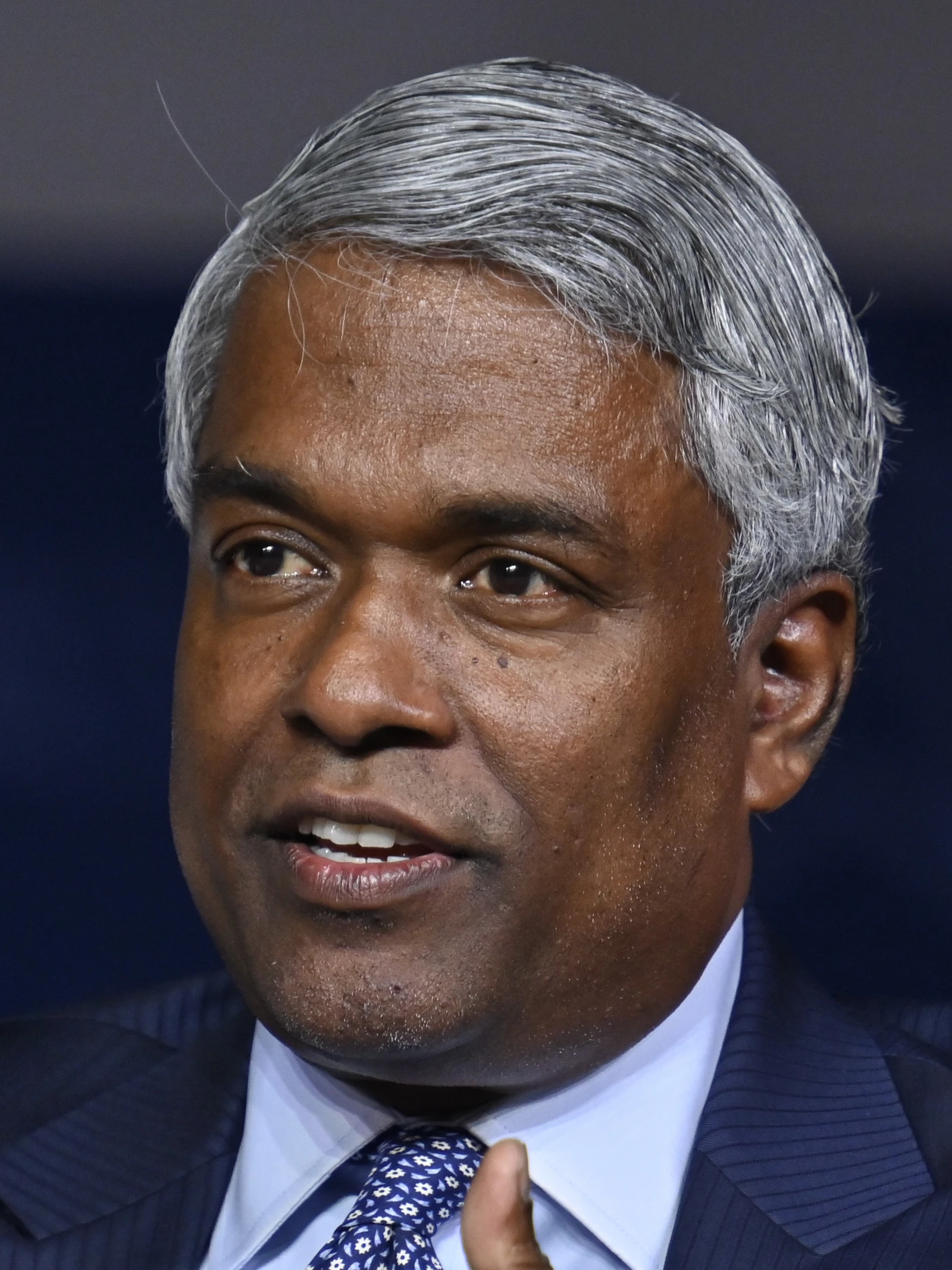
Thomas Kurian has spent seven years turning Google Cloud from an engineering achievement into a commercial institution. The latest numbers suggest that the conversion is working. By the end of 2025, Cloud revenue was growing at 48 per cent and running at more than $70 billion a year. Backlog had reached $240 billion, up 55 per cent in a single quarter, while the number of billion-dollar customer commitments signed during the year exceeded the total from the previous three years combined.
Those figures change the nature of Kurian’s assignment. He no longer needs to prove that Google can compete with Amazon Web Services and Microsoft for large enterprises. He has to show that a business built around scarce computing capacity, custom chips and rapidly changing AI models can convert contractual demand into attractive cash returns. Alphabet plans between $175 billion and $185 billion of capital expenditure in 2026, with just over half of its machine-learning compute expected to serve Cloud. The commercial burden attached to that infrastructure sits heavily on Kurian.
His chosen instrument is the enterprise agent: software that can draw on corporate data, use specialised tools, perform multi-step work and remain under organisational control. Google says it sold more than eight million paid Gemini Enterprise seats in the platform’s first four months, across more than 2,800 companies. That is impressive distribution. It is not yet proof that agents will become a dependable unit of cloud consumption.
The question is whether experimentation matures into workflow. A licence matters only if employees use it, agents trigger sustained model inference, corporate data moves through Google’s platforms and customers renew after the novelty has passed. Kurian has assembled the stack. The harder work is making its economics repeatable.
The cloud turnaround has reached a different stage
Kurian arrived at Google Cloud in 2019 with a reputation for enterprise sales and the practical knowledge that technical superiority does not purchase its own distribution. Google had elite infrastructure, a global network and deep expertise in data and machine learning. It lacked the account discipline, partner coverage and product packaging expected by chief information officers.
He expanded the sales organisation, courted systems integrators, made industry-specific solutions more prominent and treated multi-cloud reality as a customer condition rather than a failure of loyalty. The result is visible not only in revenue but in the composition of the business. Fourteen Cloud product lines now exceed $1 billion in annual revenue. Customers using Google’s AI products consume 1.8 times as many products as those that do not, and existing clients are spending more than 30 per cent above their initial commitments.
That breadth matters because cloud economics can be volatile when concentrated in raw compute. Infrastructure demand is capital-intensive and pricing remains competitive. Databases, security, productivity software, data governance and managed AI services deepen relationships and carry different margin profiles. Kurian’s commercial model aims to make the infrastructure the entry point to a larger software estate.
The progress is substantial. Google Cloud moved from chronic operating losses to a business with rising margins and strategic weight inside Alphabet. Yet rapid growth creates its own distortions. Backlog is not revenue, and revenue is not free cash flow. Contracts can take years to consume. Customers can delay projects, optimise workloads or shift usage when model economics change. Capacity installed ahead of demand can become an expensive reminder that an order book is a promise, not a return.
Agents change what Kurian is selling
Traditional cloud adoption began with infrastructure and migrated upward. Companies rented storage and computing, modernised applications, consolidated data and adopted managed software. Agentic AI reverses some of that sequence. Senior executives may approve an agent programme before the organisation has made its data consistent, permissions legible or processes stable enough for automation.
Gemini Enterprise is designed to absorb that complexity. Google has added tools for designing agents, managing long-running work, governing skills and connecting corporate knowledge. Its Agentic Data Cloud seeks to make information across databases and clouds usable by software that must reason and act. The product proposition is coherent: models, chips, data, security and productivity applications under one operating environment.
The commercial risk is that the word agent outruns the work. Many organisations can demonstrate a system that summarises documents or drafts responses. Fewer can allow software to change a customer record, approve a payment, alter a supply plan or interact with regulated information. The last mile is not model intelligence. It is control design, process ownership and accountability when the system is wrong.
Kurian therefore needs adoption measures that go beyond seats. Google disclosed that Gemini Enterprise managed more than five billion customer interactions in the fourth quarter, up 65 per cent from a year earlier. The next useful evidence will be deeper: how many agents complete economically valuable tasks, what share require human correction, how usage changes labour or cycle time, and whether customers expand after measuring the result.
There is also a pricing question. Per-seat subscriptions are familiar to buyers but can understate the cost of heavy agent activity. Consumption pricing reflects compute more accurately but makes budgets uncertain. Outcome-based pricing is attractive in theory and difficult to audit. Kurian must find a structure that rewards use without making successful automation financially punitive.
Capacity is both the advantage and the constraint
Google enters this phase with infrastructure few rivals can match. It designs its own Tensor Processing Units, buys Nvidia systems, operates a global fibre network and can coordinate research from DeepMind with commercial delivery through Cloud. Its eighth-generation TPUs and new storage and networking products are intended to reduce the cost of large-scale training and inference.
That vertical integration gives Kurian more ways to serve a customer and more responsibility for the capital behind the service. An enterprise can select Google’s own models, third-party models and a range of accelerator hardware. Choice reduces dependence on a single technology cycle. It also increases the operational burden of forecasting which configurations customers will need and where.
Power is the binding variable. Data centres require electricity, transmission capacity, cooling equipment, land and long procurement schedules. Asian markets make the trade-off especially visible. Japan, Singapore, India, Malaysia and Indonesia all want a larger role in digital infrastructure, but grid constraints, water use and local regulation shape where capacity can be built. Sovereign AI programmes add demand while insisting that data and compute remain within national boundaries.
Kurian must sell global scale through increasingly local architecture. A financial institution in Singapore may want access to frontier models while keeping sensitive data in-country. An Indian conglomerate may seek low-cost inference across a vast customer base. A Japanese manufacturer may require integration with decades of industrial data and strict reliability. The platform must be common enough to preserve efficiency and regional enough to satisfy law, latency and trust.
Capital discipline will be judged against those commitments. If compute remains constrained, customers may sign contracts that Google cannot fulfil quickly. If supply catches up while model efficiency improves, utilisation could disappoint. The company’s research success raises the stakes: each more capable or more efficient Gemini generation changes the hardware needed to deliver a unit of intelligence.
Security and openness have to coexist
Enterprise agents expand the attack surface of a company. They touch data, identities, applications and external tools. A compromised employee account is dangerous; a compromised agent with permission to act can move faster and across more systems. Google’s security portfolio is therefore central to Kurian’s agent strategy, even when the customer uses rival clouds.
The commercial logic favours openness. Most large organisations will not place every workload on Google Cloud. They expect security, data and management products to function across Amazon, Microsoft and on-premise systems. Kurian has repeatedly positioned multi-cloud support as a strength. That stance widens the market and earns trust, but it can conflict with Alphabet’s desire to pull more workloads onto its own infrastructure.
A credible agent platform must respect that boundary. Customers will resist a control layer that quietly becomes a migration mechanism. They also need assurance that Google will not use proprietary advantages in models or telemetry to disadvantage partners. The more central the platform becomes, the more important neutral governance appears.
This is where Kurian’s enterprise discipline matters. Cloud buyers remember road maps, support commitments and contract terms. They are slower than consumers to adopt and much slower to forgive unexpected change. Google’s culture has historically rewarded rapid product iteration. Enterprise AI requires continuity alongside invention.
Asia is a proving ground for the operating model
Kurian’s Indian upbringing is incidental to the financial test but relevant to the region’s diversity. Asia is not a single cloud market. It combines advanced manufacturing economies, global financial centres, enormous mobile-first populations and governments seeking domestic control of strategic technology.
Google Cloud can use that diversity as a proving ground. Retailers in Southeast Asia need models that work across languages and thin margins. Indian businesses need inference economics that survive extreme volume. South Korean and Japanese companies bring complex supply chains and demanding security standards. Governments want local skills and infrastructure rather than a remote service sold under the label of partnership.
Kurian must demonstrate that investment produces local capability as well as contracted consumption. Data-centre construction creates assets, but the more durable ecosystem includes developers, integrators, universities and software companies able to build on the platform. Without that layer, sovereign AI becomes another form of dependency.
The same argument applies to energy. A hyperscale facility that strains a constrained grid can become politically vulnerable even when customer demand is strong. Procurement of renewable power, efficiency of accelerators and transparency about resource use will affect Cloud’s licence to expand. Cost and sustainability are no longer separate conversations because electricity increasingly determines the price of inference.
The next proof is measured use
Kurian has already delivered the institutional change Google Cloud once needed. It sells to boards, supports complex accounts and can point to profits rather than strategic potential. AI has accelerated that progress by placing Google’s research and infrastructure inside the most urgent technology budget of the decade.
Acceleration can hide weak foundations. Enterprises may overcommit because they fear being left behind. Vendors may count seats that employees barely use. Pilot programmes can generate tokens without generating savings. Backlog can grow faster than the organisational capacity required to deploy it.
The decisive indicators will be less theatrical than model launches. Cloud must convert backlog on schedule, keep margins rising while capacity expands, show that agent customers use more of the platform for good reasons and retain them when procurement departments demand evidence. The workload should become indispensable without making the buyer captive.
Thomas Kurian has made Google Cloud large enough that it no longer receives credit simply for catching up. A $70 billion run rate, $240 billion of backlog and eight million enterprise seats create a higher standard. The infrastructure behind them must produce trusted work, not just impressive demonstrations.
If agents become a durable layer of enterprise operations, Kurian will have linked Google’s research advantage to a compounding commercial system. If they remain expensive assistants in search of authority, the capital intensity will be impossible to disguise. The next stage of Google Cloud will be judged one completed workflow at a time.