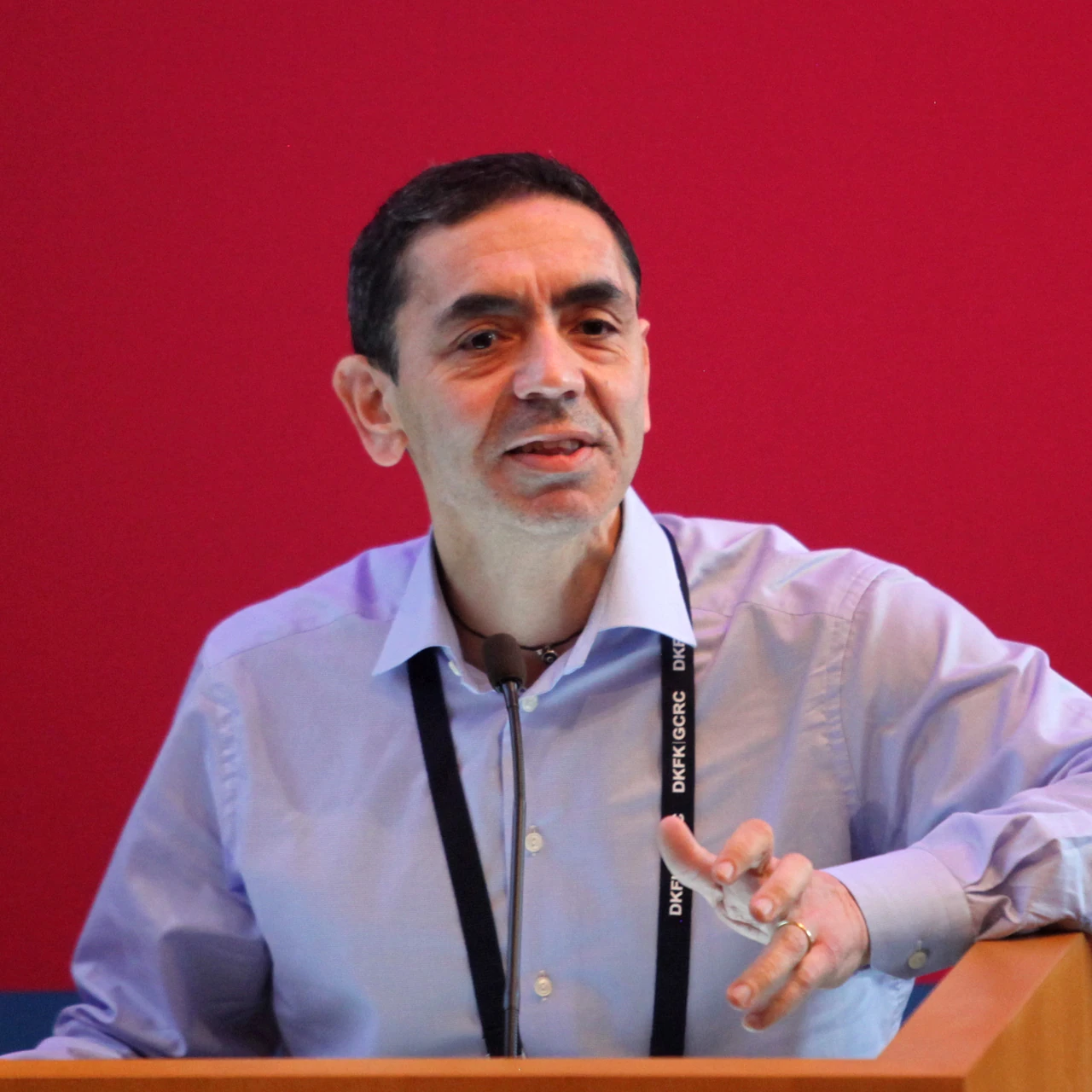
Uğur Şahin’s final year as BioNTech’s chief executive is becoming a test of whether a founder’s scientific vision can be converted into an enduring institution. The company announced that Şahin and co-founder Özlem Türeci intend to transition to a new enterprise by the end of 2026 after their service agreements conclude. BioNTech, meanwhile, is in the costly middle of its transformation from a Covid-19 vaccine success into a multi-platform oncology company. First-quarter revenue was €118.1 million and the net loss was €531.9 million. The cash accumulated during the pandemic provides time, but succession has shortened the period in which leadership ambiguity can be tolerated.
Şahin’s achievement is unusual. BioNTech’s messenger-RNA platform helped produce a vaccine at historic speed with Pfizer, generating resources that most biotechnology companies could never assemble. He and Türeci always described cancer as the central mission, and the group has invested across personalised vaccines, antibody-drug conjugates, bispecific antibodies and cell therapies. Breadth creates multiple routes to success. It also risks diluting focus across programmes whose trials, manufacturing and commercial needs differ.
The founder transition changes every capital and pipeline decision. Employees will ask which priorities survive. Partners will assess decision authority. Investors will distinguish scientific enthusiasm from accountable governance. The board must establish a clear leadership structure well before the formal departure, with responsibilities that do not rely on Şahin informally settling disagreements. A successor needs genuine authority while retaining access to founders as advisers under transparent terms.
Oncology must deliver clinical proof, not platform promise
BioNTech’s oncology story contains several modalities because cancer is not one disease and immune response varies among patients. The scientific logic is compelling, but public markets no longer reward platform breadth without decisive data. Management should identify the programmes most likely to change standard care and fund trials capable of answering clinically important questions. Small signals across many studies will not substitute for survival, durable response and comparative evidence.
Personalised cancer vaccines remain closest to BioNTech’s founding concept. They require sequencing a patient’s tumour, selecting relevant antigens and manufacturing an individual treatment quickly. The operating chain is as important as the algorithm. Delays can make a therapy unusable for someone with progressing disease. BioNTech needs automated, redundant manufacturing and logistics that work across treatment centres. Each trial should test not only efficacy but the feasibility of routine delivery.
Combination strategy is another leadership decision. Many vaccines or immune therapies may work best with checkpoint inhibitors or other drugs, creating dependence on partners and complex trial design. BioNTech should choose combinations based on biology rather than commercial convenience. It must also protect its share of value in partnerships while recognising that global development and sales may require capabilities it does not yet possess.
The cash reserve needs a disciplined purpose
Scientific concentration risk should be explicit. Several BioNTech programmes depend on related assumptions about immune activation and tumour response. A portfolio may contain many assets while remaining exposed to one biological thesis. The board should map these correlations and maintain programmes that test genuinely different routes to benefit, without turning diversification into indiscriminate spending.
Milestone-based partnerships can share risk, but headline deal values often include payments that may never occur. BioNTech should explain committed cash and decision gates separately from theoretical totals. That clarity will help shareholders judge whether external innovation complements internal science and whether management remains willing to stop after disappointing data.
Covid vaccine earnings gave BioNTech the ability to fund long programmes without repeated capital raises. That advantage can become a liability if abundance weakens prioritisation. The company is reporting large losses as vaccine demand normalises and research expands. Şahin and the board should define a minimum financial buffer, expected investment by platform and decision points for stopping. Cash is patient capital only when it is governed by evidence.
Acquisitions and licensing can add assets, but the company should avoid buying late-stage certainty at any price. Its comparative advantage lies in immunology, computation and rapid development. Deals should strengthen those capabilities or bring programmes where BioNTech can create more value than another owner. Post-deal performance should be measured against the alternatives available when capital was committed.
Manufacturing is a strategic asset that also consumes fixed cost. Pandemic capacity may be repurposed for seasonal Covid products, other infectious diseases or oncology, but the processes are not interchangeable. Management should be transparent about utilisation and investment requirements. Partnerships may reduce risk where BioNTech lacks commercial scale. Owning every step is not necessary if quality and intellectual property remain protected.
The Covid franchise still carries responsibility
Although oncology dominates the future, BioNTech cannot treat Covid as an expired chapter. Updated vaccines may continue to protect vulnerable populations, and preparedness for new variants remains valuable. Demand will be seasonal and politically contested. The company should communicate evidence carefully, avoid overstating need and work with public-health authorities on supply that matches realistic use.
The pandemic also shaped public trust in mRNA technology. Misinformation, legitimate questions about safety and disputes over access coexist. BioNTech should support independent research and publish safety data with context. It should acknowledge uncertainty rather than allowing political polarisation to define the technology. That trust will affect acceptance of future mRNA cancer treatments.
Global access remains part of the legacy. The vaccine reached extraordinary volume, but distribution and pricing were unequal. Plans to build capacity in Africa and other regions should be assessed by sustainable production, skills and demand rather than announcements. Technology transfer is difficult, yet a company that benefited from public research and procurement should contribute to a more resilient global system.
Succession is a scientific operating problem
BioNTech’s commercial design will need to evolve with the pipeline. Oncology products may require specialist field teams, companion diagnostics and market-access evidence that a vaccine partnership did not build internally. The company should decide early which launches it can lead and which require partners. Creating a global sales organisation before pivotal proof would consume cash; waiting until approval could sacrifice readiness. Scenario plans can preserve both speed and discipline.
Regulators will also evaluate novel combinations and manufacturing platforms with caution. BioNTech should engage them early and support standards that clarify potency, comparability and long-term follow-up. Shared industry methods can expand confidence without giving away proprietary science. A company that benefited from regulatory collaboration during the pandemic has a strong interest in improving the system for advanced oncology.
Patient engagement must go beyond recruitment. Cancer trials ask people to accept uncertainty at vulnerable moments. Protocols should reduce travel and unnecessary procedures, include diverse populations and return meaningful information. Patient advocates can identify burdens that laboratory teams miss. This approach improves ethics and may produce better retention and data.
The founders’ new enterprise will inevitably attract attention. BioNTech’s leaders should keep the current workforce focused by communicating what remains distinctive about the company: capital, platforms, manufacturing and partnerships assembled over years. Retention packages alone will not preserve commitment if employees believe the intellectual centre has moved. The successor needs a scientific and organisational vision that is clearly their own.
Founder-led biotechnology often concentrates tacit knowledge: why a target matters, which data are persuasive and when to take risk. BioNTech must make those decision principles explicit. Portfolio committees need diverse scientific and commercial challenge. Negative results should travel quickly, and programme leaders should understand capital constraints. The institution cannot preserve Şahin’s intuition, but it can preserve a culture that interrogates evidence with similar seriousness.
The relationship with Türeci, BioNTech’s chief medical officer, adds complexity because both founders plan to move. Their new venture may operate in adjacent science, creating questions about intellectual property, talent and collaboration. Agreements should protect shareholders and employees while enabling constructive research relationships. Independent directors must oversee conflicts. Ambiguity would damage both organisations.
Germany and Europe view BioNTech as a strategic technology champion. That support can provide research networks and manufacturing partnerships, but national expectations should not distort scientific choices. The company must recruit globally and run trials across diverse populations. It can strengthen Europe’s biotechnology ecosystem by training talent and partnering with universities while remaining accountable to patients worldwide.
Şahin’s final months should therefore be devoted less to adding programmes and more to defining decision rights, clinical priorities and financial boundaries. He can give the successor room to lead before departure, allowing the board to observe where responsibilities remain unclear. Compensation and reporting should reward durable evidence, not the preservation of a founder narrative. A graceful transition is one in which the organisation begins functioning independently while the founder is still present.
The next twelve to twenty-four months will deliver clinical readouts, regulatory interactions and a new leadership structure. BioNTech may still experience setbacks; oncology development guarantees them. The measure of Şahin’s legacy will be whether the company can absorb those failures, concentrate resources and advance the strongest medicines after he leaves. The Covid vaccine proved that founder-led science could act at global scale. His final test is different: building a system that can make difficult choices without his constant authority. If BioNTech’s oncology pipeline and culture outlast their founder, the transition will be an extension of his achievement rather than its end.