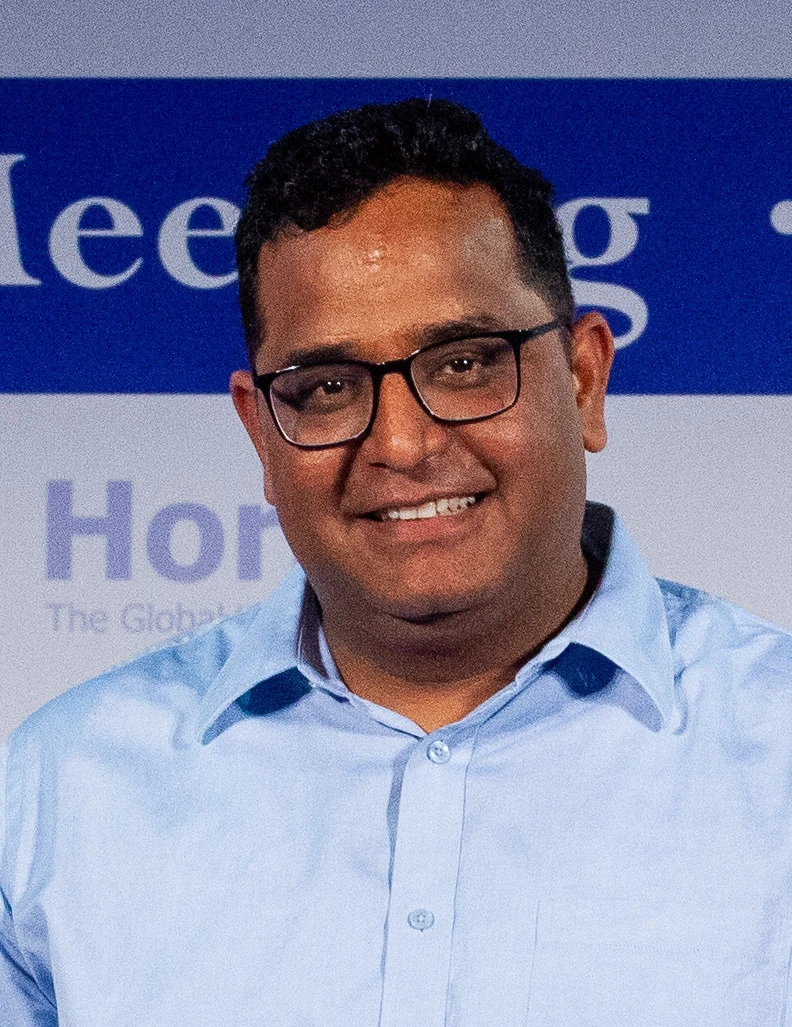
Vijay Shekhar Sharma reaches mid-2026 with the financial milestone Paytm had spent years promising and investors had repeatedly deferred. One 97 Communications reported its first profitable full year, with FY2026 revenue of ₹8,437 crore, 22 per cent higher year on year, EBITDA of ₹502 crore and profit after tax of ₹552 crore. In the March quarter, revenue reached ₹2,264 crore and profit after tax was about ₹183 crore. Merchant gross merchandise value rose to ₹6.5 lakh crore, subscription merchants reached 1.51 crore, and consumer UPI gross transaction value grew 46 per cent year on year. These numbers establish that the business can produce operating leverage after a period defined by regulatory disruption and strategic retrenchment.
They do not establish that Paytm has completed its recovery. Sharma, who remains chairman, managing director and chief executive, now faces a harder phase. Loss reduction can be driven by cost action, portfolio simplification and a favourable comparison base. Durable value requires the company to keep growing while improving controls, product quality, partner economics and regulatory confidence. In a financial platform, trust is not a reputational accessory. It is the infrastructure that allows payment volume, merchant subscriptions and credit distribution to scale. Paytm's 2026 leadership test is therefore institutional: can a company built around founder speed operate with the predictability expected of a listed, systemically visible financial-technology group?
Profit changes the burden of proof
Paytm's recovery has several credible components. Contribution profit in the fourth quarter was ₹1,254 crore, representing a 55 per cent margin. Financial-services distribution revenue reached ₹750 crore in the quarter and ₹2,593 crore for the year, up 52 per cent annually. Monthly transacting users rose to 7.7 crore. The merchant device estate continued to expand, creating recurring subscription income and a physical distribution channel for software and financial products. These gains suggest that Paytm is no longer relying on a single payments narrative. It is building a mix of processing, device subscriptions, lending distribution and wealth-related services.
Profitability also removes an excuse. When a company is consuming cash, management can argue that scale and product investment must come before steady earnings. Once profit arrives, shareholders begin asking how repeatable it is and how much capital is required to sustain it. Some payments economics remain influenced by policy incentives and by the discontinuation of the Payments Infrastructure Development Fund scheme. Credit distribution is sensitive to lender appetite, customer quality and regulation. Device growth creates service and replacement costs. Sharma must distinguish structural margin improvement from temporary benefits and show that Paytm can generate cash through different policy and credit cycles.
The right response is not to maximise near-term margin at the expense of resilience. Paytm needs investment in compliance, fraud systems, customer support, product reliability and security. It must also protect the merchant network that gives the platform its reach. The leadership skill lies in funding those capabilities while preventing costs from returning to the undisciplined pattern associated with an earlier growth phase. Investors should see a company that knows which expenses create a moat and which merely create activity.
The regulatory reset must become cultural
Paytm's recent history demonstrated the danger of allowing a complex corporate structure and fast product expansion to outrun control systems. Regulatory action against Paytm Payments Bank disrupted customer activity and forced the broader group to reconfigure important payment relationships. One 97 Communications subsequently shifted towards a partner-led model involving established banks and payments institutions. That transition enabled continuity, but it also changed the nature of Paytm's role. The company now succeeds through orchestration and distribution rather than through ownership of every regulated layer.
Sharma must treat that shift as a permanent operating design, not a temporary workaround. Partner banks need confidence in Paytm's data quality, onboarding, monitoring and incident response. Regulators need timely disclosure and evidence that controls work in practice. Customers need continuity when products or policies change. The board needs clear accountability across One 97, its subsidiaries and strategic partners. In each case, the standard is not whether the company can respond to a crisis. It is whether systems identify and contain problems before they become crises.
This requires cultural change at the top. Founder-led companies often reward speed, loyalty and persistence. Those qualities helped Paytm build one of India's most recognised payments brands. A mature financial platform must add challenge, documentation and independent escalation. Senior risk and compliance executives need authority that does not depend on the founder's immediate preferences. Product teams must regard control requirements as design inputs. The board must receive information that is both candid and complete. Sharma will remain central to Paytm's identity, but his leadership will be stronger if the institution can disagree with him safely and act without waiting for him.
Merchant payments are the economic centre
Paytm's merchant franchise is the most tangible expression of its competitive position. QR acceptance and Soundbox devices have placed the brand at millions of small businesses. The device does more than confirm a payment. It creates a recurring subscription relationship, a service touchpoint and a base from which Paytm can offer working-capital products and business software. With 1.51 crore subscription merchants at the end of the March quarter, this network can produce durable economics if retention, uptime and merchant value remain strong.
The next phase should focus on depth rather than raw device count. Sharma needs to know how many merchants actively use each device, how much payment volume passes through it, what it costs to acquire and serve that merchant, and which additional products improve rather than complicate the relationship. Device additions that generate low activity or high churn can flatter scale while weakening returns. Better segmentation would allow Paytm to tailor pricing, settlement, software and credit referrals to different merchant needs.
International interest in Soundbox-style technology creates another option. Paytm has secured a payment-institution licence for a Luxembourg subsidiary and has explored partnerships beyond India. Expansion could diversify revenue and turn product engineering into an exportable capability. It also introduces new regulation, localisation and execution risk. Sharma should prefer licensing and partnership models that limit capital exposure until the economics are proven. The domestic merchant franchise remains the foundation; international activity should reinforce it, not distract management from service quality in India.
Credit growth must remain distribution, not disguised risk
Financial-services distribution is Paytm's fastest-growing profit pool. The company connects customers and merchants with lending partners, earning fees without presenting itself as the principal balance-sheet lender. Key financial-services customers increased from 5.5 lakh to 7.5 lakh year on year in the fourth quarter, while repeat borrowers accounted for more than half of merchant-loan disbursements. This model can be attractive because Paytm contributes data, engagement and distribution while regulated lenders hold and price the credit exposure.
Yet risk does not disappear when loans sit elsewhere. Poor customer selection can damage partner relationships, trigger regulatory scrutiny and erode consumer trust. Aggressive marketing can create conduct problems. A downturn can reveal that fee income was tied to weak underwriting or high repeat borrowing. Sharma should make portfolio quality, customer outcomes and lender concentration as important as disbursement growth. Paytm's incentives need to reward sustainable repayment and appropriate products, not simply completed loans.
The same standard applies to wealth and consumer-credit products. Paytm can use its large base to distribute broking, gold, post-paid and other services, but each addition raises the complexity of customer communication. Interfaces must make costs, risks and provider roles clear. Artificial intelligence can improve personalisation and support, but it must not turn financial recommendations into opaque sales optimisation. The platform's long-term advantage will come from being the trusted starting point for a range of services, not from extracting the maximum immediate revenue from every user.
AI needs a measurable operating thesis
Paytm describes itself as increasingly AI-first. It is using artificial intelligence to improve merchant insight, consumer personalisation, productivity, fraud detection and monetisation. Those are plausible applications because the company operates at high transaction volume and supports a wide mix of customer interactions. AI can help classify service requests, identify abnormal patterns, guide merchants and reduce manual work. It can also make product discovery more relevant across payments, credit and wealth.
Sharma should resist using AI as a general explanation for every efficiency gain. The leadership question is which models improve which outcomes. Investors need to see reductions in service time, fraud losses or operating cost, alongside improvements in conversion and engagement. Risk teams need to understand model inputs and failure modes. Customers need escalation paths when automated decisions are wrong. Sensitive financial data requires strict governance, access controls and vendor management. As Paytm deploys AI more widely, assurance and auditability must expand at the same pace.
A rigorous approach would strengthen the economic story. If AI enables Paytm to serve more merchants without proportional headcount, contribution margin can improve. If it reduces fraud and false positives, trust and transaction activity can rise together. If it simply generates more marketing messages, the value will be limited. Sharma's role is to impose a hierarchy of use cases and demand evidence before scale.
Governance now determines the valuation ceiling
Paytm's board has evolved, with independent directors and formal committees covering audit, risk, remuneration and investment. Structure, however, is only the beginning. The company must show that these bodies have the information and authority to influence strategy. Related-party relationships, subsidiary transfers, senior appointments and international expansion all require scrutiny. The board should test whether management's growth assumptions incorporate regulatory and operational risk, not simply review compliance after decisions have been made.
Sharma can set the tone by making disclosure more consistent and less promotional. Paytm's operating metrics are useful, but the market also needs cohort quality, unit economics, credit outcomes and cash conversion. Clear explanations of incentive effects would improve comparability. Prompt acknowledgement of setbacks would reduce the risk that every regulatory development becomes a referendum on management credibility. A founder does not lose authority by creating a stronger institution; he converts personal influence into organisational durability.
From comeback to compounding
The next twelve to twenty-four months should be assessed against four outcomes. First, Paytm must sustain profitable growth after adjusting for policy incentives and one-off items. Second, the merchant device base must produce higher activity, retention and recurring value. Third, financial-services distribution must grow without deterioration in customer outcomes or partner confidence. Fourth, governance and compliance must become visible competitive capabilities.
Sharma has earned the right to say that Paytm can make money. He has not yet earned the assumption that the business can compound without another institutional shock. That distinction matters because India's digital-payments market remains enormous but intensely competitive. Banks, specialist fintechs and global technology companies can all provide payment and financial products. Paytm's advantage is the combination of consumer recognition, merchant reach and product breadth. Its disadvantage is the trust deficit created when ambition outran control.
The most important leadership move now is restraint with purpose. Sharma should expand where Paytm has evidence, partner where regulation or capital makes ownership unattractive, and invest heavily in the invisible systems that keep a financial platform dependable. If he does so, FY2026 will be remembered as the beginning of a durable business model. If growth again receives priority over institutional quality, the profit milestone will look like a recovery peak rather than a new base. Paytm's scarce asset is no longer capital. It is confidence, and Sharma must make every strategic decision compound it.