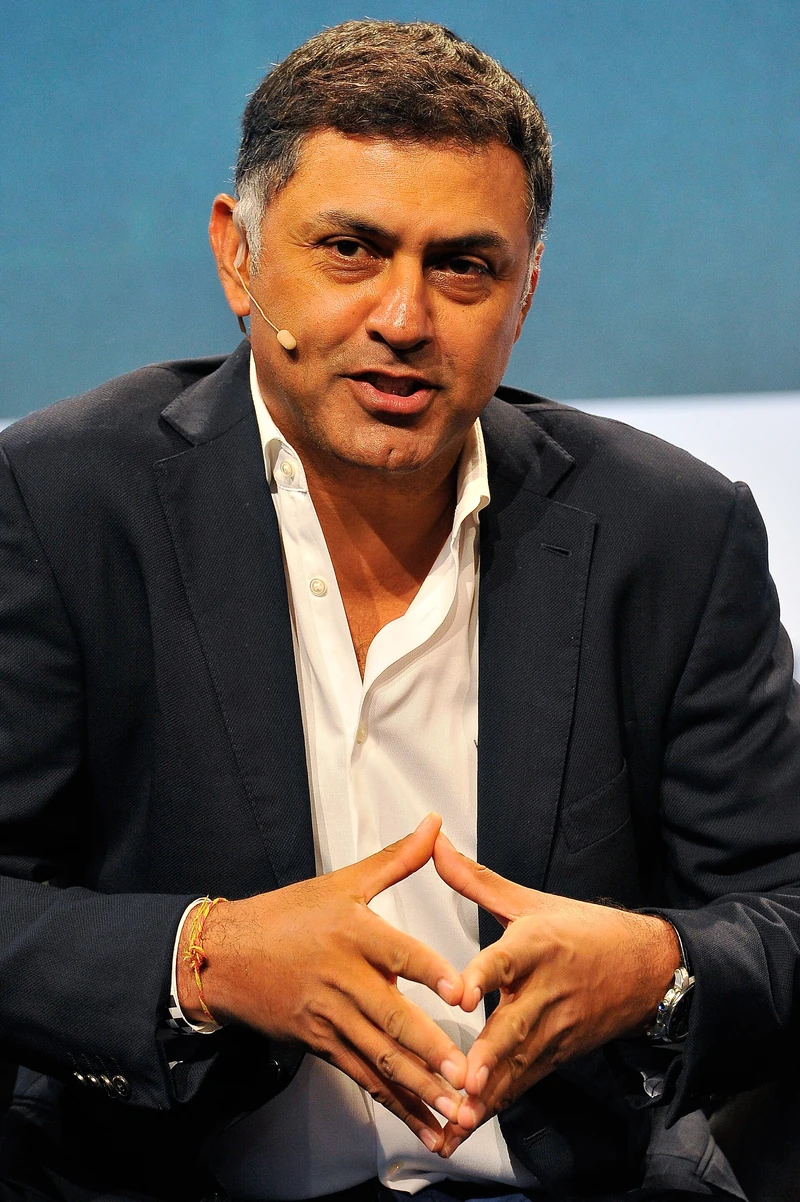
For most chief executives, breaking up the company would be the defining event of a tenure. For Vimal Kapur, it is better understood as the end of the preface.
On 29 June 2026, Honeywell completed the separation of its aerospace business, bringing to a close one of the most consequential portfolio restructurings in modern American industry. Solstice Advanced Materials had already been spun out eight months earlier. Honeywell Aerospace began life as an independent public company. The enterprise that retained the Honeywell name emerged as Honeywell Technologies, a roughly $20 billion automation group built around buildings, industrial systems, process controls and the technologies that keep complex physical operations running.
The transaction gave investors three cleaner propositions. It also removed the shelter of conglomerate scale. Kapur can no longer ask the market to value Honeywell as an ingenious collection of good businesses. He must prove that the remaining company is coherent enough to grow faster, disciplined enough to expand margins and technically credible enough to lead industrial customers from conventional automation towards increasingly autonomous operations.
That is a harder assignment than completing the separation. Corporate break-ups create an immediate sense of motion: new names, new boards, new tickers and targets that can be presented with the precision of engineering drawings. The enduring value comes later, in thousands of less visible decisions about product development, pricing, sales incentives, integration, working capital and which markets deserve the next dollar of investment.
Kapur has made Honeywell smaller. His reputation will now rest on whether he can make it faster.
The break-up was the strategy
Honeywell had spent years presenting diversity as resilience. Aerospace components, building controls, warehouse systems, industrial software, refining technology and advanced materials did not move in perfect economic synchrony. The portfolio offered different cycles, attractive cash generation and many opportunities to apply a common operating system across businesses.
But resilience can become an argument against making choices. The larger Honeywell became, the more difficult it was to explain why its best assets belonged together. Aerospace required long-cycle research, exacting certification and deep relationships with aircraft manufacturers, airlines and defence customers. Advanced materials carried its own technology, regulatory and capital demands. Automation depended on installed equipment, software, service intensity and the ability to make existing industrial environments more productive without asking customers to rebuild them from scratch.
Each business could be excellent while the combination still imposed a cost. Capital allocation had to reconcile dissimilar investment horizons. Management attention travelled across unrelated operating problems. Investors applied a discount not necessarily because they disliked the assets, but because they struggled to see which economic engine should define the group.
Kapur’s answer was not a cosmetic reorganisation. It was to accept that Honeywell’s name had become broader than its strategic logic.
The separation of Solstice in October 2025 removed a specialty-materials portfolio spanning refrigerants, semiconductor materials and other engineered products. The aerospace spin-off in June 2026 then detached the largest and most historically resonant part of the group. Alongside those transactions, Honeywell agreed to sell its productivity-solutions and warehouse-workflow operations, further narrowing the industrial automation portfolio.
This was a rejection of the idea that every respectable business had to remain inside the company. Kapur was drawing a sharper boundary around what the surviving Honeywell should own: technologies that control, monitor, secure and improve mission-critical physical environments.
The distinction matters. A conglomerate can allocate capital among industries. A focused company must earn its advantage within one.
An insider with an outsider’s mandate
Kapur is an unlikely figure for a dramatic corporate dismantling because his authority comes from continuity. He joined a Honeywell joint venture in 1989 and spent more than three decades moving through the machinery of the organisation. He ran process solutions during an oil-and-gas downturn, led the building-technologies business after the separation of Resideo, took charge of performance materials and technologies, became chief operating officer in 2022 and succeeded Darius Adamczyk as chief executive in June 2023. He added the chairmanship a year later.
His route to the top was operational rather than promotional. Born and educated in India, he trained as an engineer and eventually became managing director of Honeywell Automation India. That period matters because it placed him close to the conditions in which industrial technology proves its worth: customers managing expensive assets, uneven infrastructure, skilled-labour constraints and an unforgiving need for reliability.
Executives who rise inside diversified industrial groups can become custodians of inherited complexity. Kapur used his familiarity differently. He knew which businesses shared customers, data and engineering capabilities, and which connections survived mainly in presentation slides. He understood the internal difficulty of a separation, but also the operating friction created by refusing to separate.
This helps explain the speed of the portfolio reset. Kapur did not require a long apprenticeship in Honeywell’s economics after becoming chief executive. He had already managed businesses on several sides of the company. When he began the strategic review, he was not examining an abstract corporate map. He was revisiting decisions, systems and market assumptions he had encountered throughout his career.
The decision did not emerge in a vacuum. Activist pressure reinforced the case for a cleaner structure and ensured that the board’s review would be judged against a visible alternative. Yet outside pressure alone cannot execute a break-up of this scale. The task required an insider capable of separating shared systems, allocating liabilities, preparing management teams, protecting customer relationships and removing costs without allowing the organisation to become consumed by its own reconstruction.
Kapur’s most important leadership attribute during this period was not charisma. It was organisational memory combined with a willingness to invalidate the organisation he had inherited.
He bought before he cut
The story of Kapur’s Honeywell is not simply one of subtraction. During his tenure as chief executive, the company committed roughly $14 billion to acquisitions. The sequencing is revealing: he used Honeywell’s balance sheet to strengthen the businesses he intended to keep or prepare for independence, then removed the corporate structure that had obscured them.
The $4.95 billion purchase of Carrier’s global access-solutions business expanded Honeywell’s position in building security, bringing in electronic access, hospitality locks, mobile credentials and cloud-connected systems. The attraction was not merely hardware. Access control produces recurring software and service opportunities and sits at the intersection of physical security, identity and building management.
The $1.81 billion acquisition of Air Products’ liquefied-natural-gas process technology added specialised heat-exchanger capabilities and a larger installed base in an industry where reliability, efficiency and aftermarket support carry long economic lives. The $2.16 billion purchase of Sundyne brought highly engineered pumps, compressors and service revenue into Honeywell’s process portfolio.
Viewed separately, these transactions can look like conventional industrial bolt-ons. Viewed together, they describe Kapur’s preferred business model. He is buying critical equipment, proprietary know-how and installed positions from which Honeywell can sell controls, software, maintenance and optimisation over many years.
This is a more durable proposition than chasing industrial software as a detached category. Factory operators, building owners and energy companies rarely buy digital transformation in the abstract. They buy lower downtime, safer operations, reduced energy consumption, better throughput and fewer failures. Software matters when it is attached to a physical system whose economics the supplier understands.
The risk is that acquisition logic can become self-validating. Every installed base appears capable of generating services; every hardware product can be described as a software platform in waiting. Kapur must demonstrate that the assets genuinely reinforce one another, that integration does not consume the promised margin expansion and that Honeywell can grow organically rather than relying on a continuous programme of purchases.
A smaller company does not automatically become a simpler company if it keeps adding businesses faster than it integrates them.
The economics of the installed base
Honeywell Technologies begins its independent life with an advantage that many technology companies spend years trying to create: it is already embedded in the customer’s operations.
Its systems sit inside buildings, refineries, chemical plants, factories, warehouses, data centres and other environments where equipment must work continuously and changes are introduced cautiously. The relationship is reinforced by engineering standards, service contracts, safety requirements, employee training and years of operational data. Replacing a control system is not equivalent to changing a consumer application. The disruption can be costly, and failure can be dangerous.
That creates pricing power and recurring revenue, but it also creates responsibility. An installed base is valuable only if the supplier continues to improve it. Customers will tolerate gradual technological change; they will not tolerate neglect. Honeywell has to make older systems more intelligent without turning every upgrade into a disruptive capital project.
Kapur’s central strategic phrase is the transition from automation to autonomy. The language is ambitious, but the commercial opportunity is practical. Traditional automation follows programmed rules. More autonomous systems can interpret a wider range of conditions, identify anomalies, recommend or execute responses and improve decisions using data gathered across operations.
In a process plant, that can mean detecting equipment deterioration before a shutdown. In a building, it can mean coordinating access, energy use, air quality and maintenance. In manufacturing, it can mean reducing the dependence on scarce technical labour while improving consistency. In energy infrastructure, it can mean operating complex assets closer to their optimal limits without compromising safety.
The value is not in making a factory sound futuristic. It is in making the economics of the factory more predictable.
This is where Honeywell’s physical heritage can become an advantage over software companies entering industry from the outside. Industrial customers do not begin with a blank digital environment. They begin with equipment of different ages, multiple vendors, regulatory obligations and operational teams that know the cost of an elegant system that fails under real conditions. Honeywell can connect new intelligence to assets it already understands.
It can also become trapped by that heritage. Legacy systems are difficult to modernise. Product organisations protect their own architectures. Data can remain fragmented across business lines. If the company cannot make its technologies work together more naturally, the installed base becomes a collection of defended territories rather than a platform.
Industrial intelligence without the theatre
The public conversation about artificial intelligence is dominated by models, consumer interfaces and the speed with which software can generate text, images or code. Kapur is pursuing a less theatrical market. Honeywell’s opportunity lies in systems where intelligence must be bounded by engineering, cybersecurity and accountability.
An autonomous industrial environment cannot improvise in the way a consumer chatbot can. The acceptable error rate is lower, the cost of interruption is higher and decisions often sit inside regulated processes. That changes the nature of competition. The winning technology will not necessarily be the model that appears most capable in a demonstration. It will be the system that can be trusted to operate repeatedly, explain its interventions and remain secure across equipment that may stay in service for decades.
Honeywell has introduced AI-assisted tools for industrial cybersecurity, process operations and other specialised tasks. The strategic question is whether these products can be combined into a coherent architecture rather than sold as isolated features. Kapur needs Honeywell Forge, its controls, its sensors and its acquired equipment businesses to function as parts of one economic system.
That requires a different innovation culture from the one traditionally associated with a diversified manufacturer. Industrial companies are skilled at incremental improvement, certification and product reliability. Software development rewards faster iteration, common platforms and a willingness to retire old approaches. Honeywell must preserve the discipline that makes customers trust it while reducing the organisational barriers that slow digital products.
The company’s three-year framework sets a demanding financial test: annual organic growth of 4% to 6%, more than 60 basis points of margin expansion each year, annual earnings growth above 10% and free-cash-flow conversion exceeding 90%. For 2026, the newly configured company expects sales of $19.9 billion to $20.2 billion, with organic growth of 2% to 3% as it moves through separation and portfolio changes.
Those numbers expose the central tension. Honeywell is promising to invest behind autonomy while also expanding profitability at a pace investors can measure every quarter. The easiest way to improve margins is often to control spending. The most durable way is to create products customers value more highly. Kapur will be judged on whether Honeywell can do the latter without falling back too heavily on the former.
Asia is not a footnote to the strategy
Kapur’s connection to Asia is more than biographical. The region contains many of the industrial conditions Honeywell is built to address: rapidly expanding data-centre capacity, semiconductor manufacturing, energy-security investments, dense commercial cities, ageing infrastructure and factories under pressure to produce more with fewer specialised workers.
Asia is also where the limits of generic automation strategies become visible. A mature Japanese production facility, an Indian refinery, a Singapore data centre and a new battery plant in Southeast Asia may share a need for reliability, but they do not share the same labour costs, energy constraints, regulatory regimes or installed equipment. Honeywell’s scale is useful only if the company can adapt its systems without rebuilding every solution market by market.
Kapur’s years in Honeywell Automation India gave him direct exposure to that tension between global technology and local execution. India offered growth, engineering talent and large infrastructure needs, but it also demanded price discipline and products capable of operating across varied customer conditions. Those lessons travel well across emerging industrial markets.
The next phase of Asian capital spending will not be defined solely by building more capacity. Governments and companies are asking how to make that capacity more secure, energy-efficient and less dependent on scarce expertise. Data centres need power and cooling systems that can respond to volatile loads. Semiconductor plants need extraordinary environmental precision. Energy companies need to improve output while reducing emissions and unplanned shutdowns. Commercial buildings need to manage security and energy as connected systems rather than separate budgets.
These are attractive markets, but they invite formidable competitors. Siemens, Schneider Electric, ABB, Emerson, Rockwell Automation and Japanese industrial groups all bring domain expertise, customer relationships and their own software ambitions. Local competitors can move quickly and price aggressively. Chinese automation suppliers are improving their capabilities while benefiting from the scale of the country’s manufacturing base.
Honeywell cannot approach Asia as a sales extension of an American product strategy. It has to treat the region as a proving ground for the economics of industrial autonomy.
The cost of becoming focused
Conglomerate simplification is often presented as if value appears when the legal documents are signed. In reality, separation creates costs before it creates clarity.
Shared technology systems have to be divided. Corporate functions must be rebuilt. Debt, pensions, tax obligations, intellectual property and long-standing commercial agreements require new boundaries. Customers that once dealt with one Honeywell may now deal with several companies carrying related names. Employees have to understand which organisation owns their future.
The first-quarter results before the aerospace separation showed the strain. Reported operating income was affected by debt restructuring, asset impairments, repositioning and other separation-related charges. Cash flow was pressured by spin-off payments and timing effects. Some of these costs are temporary, but the risk of distraction is not.
Kapur must also manage the psychological consequence of removing aerospace. The business supplied scale, technical prestige and a powerful growth story during a period of exceptional demand in commercial aviation and defence. The remaining Honeywell will be more focused, but it will have to establish its own centre of gravity. Automation cannot feel like the portion left behind after the most visible asset departed.
The name Honeywell Technologies is meant to answer that concern. It signals that the surviving company is not simply a collection of controls businesses but an industrial technology platform. Names, however, do not create internal coherence. Customers will decide whether the proposition is real when sales teams can combine products across divisions, when software works across equipment and when a single deployment produces measurable operating gains.
Investors will decide through a narrower set of evidence: organic growth, margin progression, cash conversion, returns on acquisitions and the quality of recurring revenue. The new structure has made those measures easier to see. It has also made underperformance harder to explain away.
The operator’s second act
Kapur’s first act as chief executive was unusually decisive. He reviewed Honeywell’s portfolio, acquired capabilities around the businesses he wanted to strengthen, separated two major companies and put additional operations up for sale. In three years, he changed the answer to the basic question of what Honeywell is.
His second act will be less dramatic and more revealing.
He must turn a collection of automation assets into a company that behaves as one. He must make industrial software a source of customer value rather than a layer of corporate vocabulary. He must protect engineering reliability while increasing development speed. He must show that the acquisitions created stronger platforms, not simply a larger goodwill balance. And he must persuade customers that greater autonomy can be introduced without weakening safety, security or human control.
The advantages are substantial. Honeywell has deep technical knowledge, a global installed base, trusted positions in mission-critical environments and the cash generation to keep investing. It operates in markets supported by durable pressures: labour scarcity, energy efficiency, infrastructure expansion, reshoring, data-centre construction and the need to modernise ageing industrial assets.
But focus removes excuses. The new Honeywell cannot rely on aerospace demand to offset a slow industrial quarter or on portfolio breadth to make modest growth appear more resilient. Kapur has asked investors to judge the company as an automation specialist. They will.
That is why the separation should not be mistaken for the achievement itself. It created the conditions under which achievement can be measured.
Kapur spent most of his career learning how Honeywell worked. He has now taken it apart with the confidence of someone who understood where the connections were real and where they were inherited. The next test is whether he can use that same knowledge to build an institution with fewer businesses, clearer economics and a stronger claim on the industrial future.