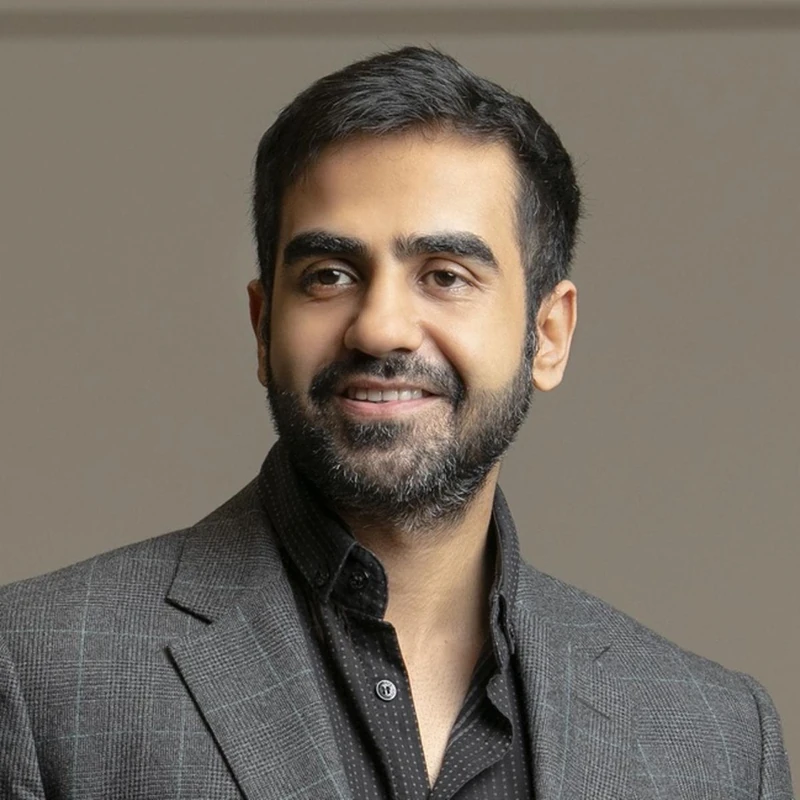
Yejin Choi is pressing on the most consequential assumption in artificial intelligence: that progress requires ever-larger models, more computing power and a handful of companies able to finance both. Her research at Stanford explores a different path—smaller but capable systems, better reasoning algorithms, orchestration among specialised models and alignment that recognises genuine differences in human values.
The argument is scientific, but its implications are economic. Frontier-model development now requires extraordinary spending on chips, data centres and energy. That concentrates power among providers with large balance sheets and privileged access to hardware. Most businesses then rent access through an application programming interface or cloud platform, accepting a price structure and technical road map they do not control.
Choi, the Dieter Schwarz Foundation HAI Professor at Stanford University, is not trying to prove that scale has no value. Larger systems have delivered important gains. Her contribution is to make efficiency, diversity and reasoning quality serious dimensions of progress rather than secondary constraints. In 2026, the relevance extends beyond the laboratory: companies and governments are looking for ways to deploy AI without making every decision dependent on the most expensive general-purpose model.
Compute efficiency is a question of market structure
The frontier race rewards scale twice. Large training runs can improve capability, and the cost of those runs creates a barrier that protects the organisations able to afford them. Once deployed, the same providers benefit from distribution through cloud services, office software, search and consumer applications. This can create a self-reinforcing cycle of usage data, revenue and further investment.
Smaller models could loosen that cycle. A system designed for a defined task may run on cheaper hardware, respond faster and keep sensitive data within an organisation or device. A bank might use one model for document extraction, another for code and a more powerful system only for complex reasoning. The business does not need a single model to know everything; it needs a reliable service at an acceptable cost.
Choi’s interest in model orchestration addresses this architecture. Instead of forcing one network to handle every request, an orchestration layer can route work, combine outputs and invoke tools. The approach resembles a well-designed organisation: specialists handle familiar problems, while difficult cases escalate. If routing is accurate, the system can improve performance per unit of compute.
Orchestration adds its own failure modes. A wrong routing decision may send sensitive information to an unsuitable model or produce an answer that no component fully owns. Latency can increase as systems call one another. Security teams must track more dependencies, versions and vendors. The cost saved on inference can reappear as integration and monitoring. Research will influence industry only when it yields architectures that operators can audit and maintain.
The same standard applies to reasoning. Benchmarks often reward a final answer without measuring the resources consumed, the stability of the result or whether the model used a shortcut. A smaller system that performs well under laboratory conditions may fail when instructions are ambiguous or data drift. Choi’s challenge to scale will be strongest when evaluations include total cost, calibration, robustness and the ability to abstain.
Pluralistic alignment confronts a global product problem
AI alignment is frequently framed as finding a single set of values that a model should follow. Choi’s work emphasises pluralism: people and societies can disagree legitimately, and an AI system should represent that complexity rather than collapse it into one cultural default. This is particularly important as a small number of models are deployed across countries with different languages, laws and social norms.
For technology companies, pluralism creates product and governance questions. A global model must comply with non-negotiable safety boundaries while adapting to local context. It must distinguish harmful discrimination from genuine variation in preferences. Users should understand when a response reflects a configured policy, a model’s learned distribution or uncertainty. These decisions cannot be left entirely to an opaque optimisation process.
The commercial temptation is to treat localisation as translation. Yet multilingual studies repeatedly show that model quality varies by language, especially where digital training material is limited. A fluent sentence can conceal weak factual understanding. In a briefing to the United Nations Security Council, Choi highlighted unequal performance and argued for systems that are accessible, robust and efficient. That warning has practical force in Asia, where hundreds of languages coexist with rapid adoption of digital services.
A hospital, public agency or financial institution cannot assume an English benchmark predicts performance in Hindi, Korean, Bahasa Indonesia or a regional language. It needs representative evaluation data, local experts and mechanisms for appeal. Smaller specialised models may help because they can be adapted to a domain and run under local control. They may also entrench bias if the available local data are poor. Size is not a substitute for governance, and efficiency is not evidence of fairness.
AI for science provides a demanding proving ground
Choi’s current research also extends into scientific reasoning, including systems intended to help with proteins, experiments and complex problem solving. Science is a valuable test because plausible language is insufficient. A model’s claim must correspond to physical evidence, mathematical consistency or reproducible results. Errors can waste laboratory time and, in health-related work, create material risk.
Specialised systems may have an advantage. They can combine domain data, retrieval, simulation and tools rather than relying on parameters to memorise every relevant fact. A compact model trained to use a verified database or execute code can outperform a larger conversational system on a narrow task. Its reasoning process may also be easier to constrain.
However, scientific discovery resists simple benchmarking. Published literature contains positive-result bias, and experimental conditions differ. Models can reproduce consensus while missing an unconventional but correct hypothesis. They can also exploit leakage when test questions resemble training data. Choi’s emphasis on smarter algorithms must be matched by prospective evaluation: predictions made before experiments and judged against outcomes the system could not have seen.
Commercialisation creates another boundary. Universities can release papers and models; companies need support, security, liability arrangements and stable performance. If efficient research systems are to challenge frontier providers, they require tooling and distribution. Open-source communities, cloud vendors and start-ups may translate the work, but the path from a prototype to a regulated deployment remains long.
Academic leadership operates through people and standards
Choi’s influence does not come from controlling a large corporate budget. It comes through research agendas, students, public institutions and the criteria by which the field judges progress. As a Stanford computer-science professor and senior fellow at the Stanford Institute for Human-Centered Artificial Intelligence, she can connect technical work with policy and social-science questions. That position gives her reach, but not direct authority over how companies deploy the ideas.
The distinction matters in a leadership ranking. An academic can identify a better direction while industry incentives still favour scale. Frontier capability attracts customers, talent and headlines; efficiency gains are often used to serve more queries rather than reduce total computing demand. Investors may prefer a central platform with recurring revenue to a fragmented ecosystem of specialised models. Changing the trajectory requires evidence strong enough to alter procurement and capital allocation.
Choi can help by insisting on evaluation that reports energy, latency and cost alongside accuracy. Benchmarks should test multiple languages and value systems, disclose uncertainty and resist contamination. Public funders can support shared computing resources so that efficiency research is not confined to laboratories already close to major technology companies. Students trained in this framework can carry the methods into industry.
There is also a risk of creating a false opposition between small and large. Some problems will justify frontier-scale systems, and smaller models may be distilled from expensive larger ones. The more practical objective is a layered market in which users choose the least costly system that meets a defined standard. That would make compute intensity an engineering decision rather than a default.
The alternative must be operational
By the second half of 2026, AI buyers are asking more disciplined questions. What is the cost per completed workflow? Can a model run in a private environment? How does performance vary by language and user group? Who is accountable when several systems contribute to an answer? Choi’s research agenda speaks directly to those questions.
Procurement can become a lever. Governments, universities and large companies can require vendors to disclose task-level performance, inference cost and language coverage. Such requirements would reward genuine efficiency and make room for regional providers. They would also expose when a supposedly general model depends on expensive human review or performs unevenly outside dominant markets.
Success will not be measured by showing that a compact model wins one benchmark. It will require deployments that remain reliable under changing data, deliver measurable savings and support governance that non-specialists can understand. It will also require institutions willing to compare systems by outcomes rather than brand or parameter count.
Yejin Choi has made the case that intelligence should not be confused with scale and that alignment should not be confused with cultural uniformity. Those ideas challenge both the technical habits and the concentration economics of the AI industry. If smaller, orchestrated and pluralistic systems become credible production choices, organisations across Asia and beyond will gain more control over cost, language and values. If they remain research demonstrations, the largest model providers will continue to set the architecture of access. Choi’s influence now depends on turning a compelling alternative into an operational one.