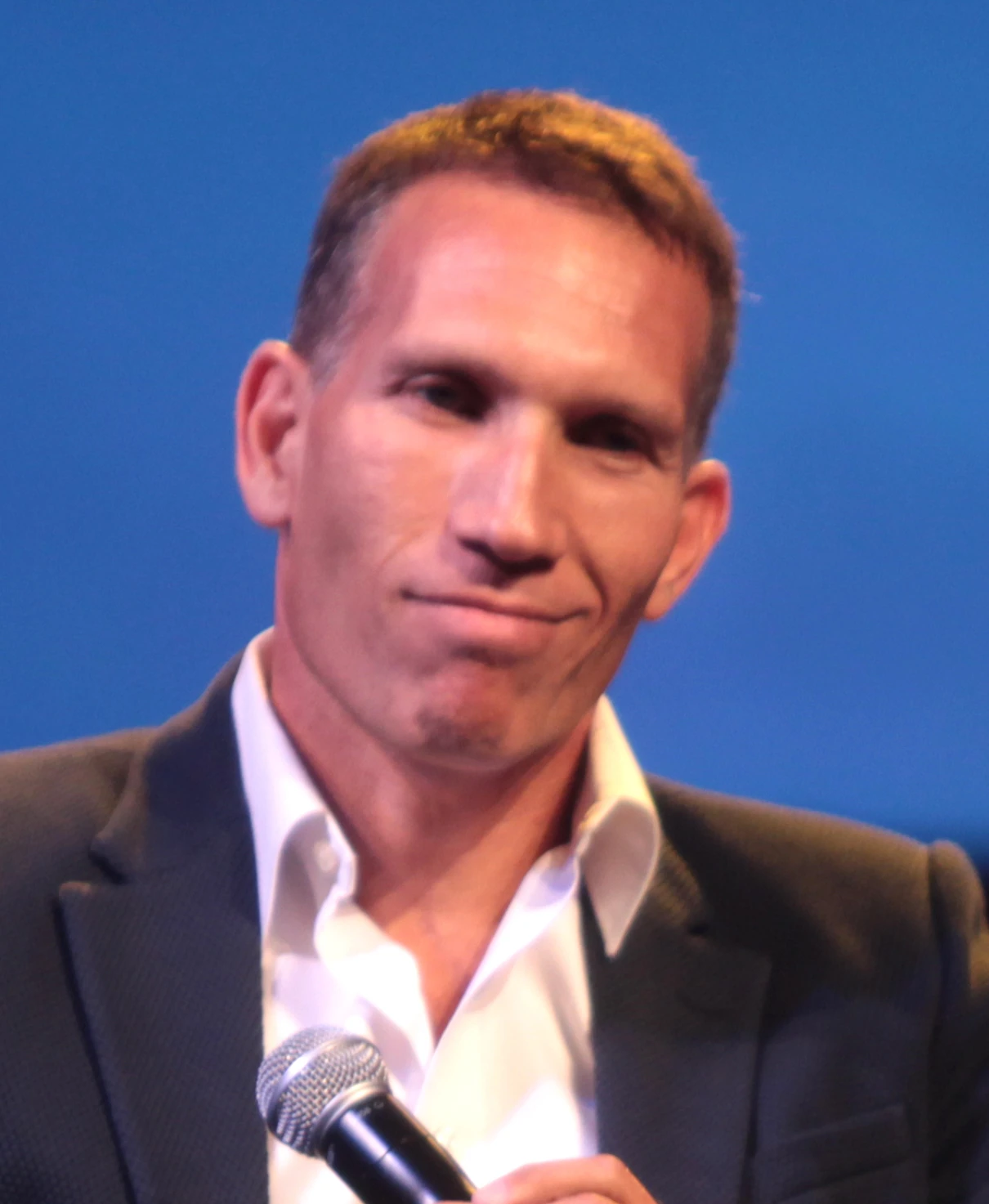
Mattel has reached the point at which Ynon Kreiz can no longer define success by the rescue of a famous toy company. The balance sheet is stronger, the operating structure is leaner and Barbie has demonstrated that a toy brand can command global cultural attention far beyond the aisle. Kreiz, Mattel’s chairman and chief executive, is now trying to convert that recovery into something more ambitious: an intellectual-property business spanning physical play, film, television, digital games, consumer products and experiences.
The transition is entering its financially awkward stage. Investment must come before the new revenue streams mature, while the established toy operation remains exposed to tariffs, currencies, retail ordering patterns and shifts in children’s tastes. Mattel’s first-quarter 2026 sales rose 4 per cent as reported to $862 million, yet adjusted gross margin fell 450 basis points to 45.1 per cent. Tariff costs, foreign exchange and inflation outweighed mitigation and savings. The contrast captures Kreiz’s immediate problem: demand can improve while the economics deteriorate.
That tension makes 2026 a more revealing year than the theatrical success of Barbie in 2023. A blockbuster proved the reach of the underlying brands. It did not prove that Mattel can build a repeatable entertainment engine, integrate digital acquisitions and protect the cash generation of toys at the same time. Kreiz has moved the strategic question from whether Mattel owns valuable intellectual property to whether it can compound that value across formats.
From repaired toy maker to brand-centred operator
Kreiz arrived in 2018 with experience in television and digital media rather than traditional toy manufacturing. That background mattered because Mattel’s weakness was not a shortage of recognised names. It was an inability to translate those names into consistent commercial performance. The first phase under Kreiz was operational: simplify the organisation, reduce costs, restore discipline in inventory and improve the balance sheet. Those changes created room for a second phase focused on growth and monetisation.
The company now describes its model in terms of an IP-driven play and family entertainment business. That language is more than corporate repositioning. It changes how capital is allocated and how success should be measured. A conventional toy group depends heavily on new products, retail shelf space and the holiday season. A broader franchise company can earn from licensing, content, games and direct engagement, potentially extending the life and reach of each brand while reducing dependence on any single physical category.
Kreiz has also shifted Mattel towards a brand-centric structure. The aim is to co-ordinate toys, storytelling, digital products and partnerships around the consumer rather than allowing each business line to optimise separately. In theory, a successful film introduces a franchise to new audiences, toys reinforce attachment, games sustain daily engagement and licensing expands distribution without requiring Mattel to own every production asset. In practice, the model demands unusually tight creative and commercial judgement. A weak extension can dilute a brand as easily as a strong one can enlarge it.
The first-quarter warning inside the growth
Mattel’s latest figures show why the core cannot be treated as a funding utility for entertainment ambitions. First-quarter sales growth was led by international markets, where reported net sales increased 15 per cent, while North America declined 3 per cent. The regional mix was useful, but category performance was sharply uneven. Gross billings for vehicles rose 17 per cent, driven by Hot Wheels, while dolls fell 8 per cent, principally because of Barbie. Infant, toddler and preschool products declined 16 per cent, reflecting weakness in Fisher-Price.
Hot Wheels has become an example of the flywheel Kreiz wants to reproduce. Its identity is broad enough to accommodate entry-price toys, premium collectibles, games, live experiences and entertainment. Barbie carries even greater recognition, but the decline in doll billings after the film-related surge demonstrates the difficulty of converting cultural visibility into a smooth sales curve. Fisher-Price presents a different challenge: rebuilding relevance in a category shaped by birth rates, safety expectations and intense price competition.
The margin compression is more consequential than one quarter’s category volatility. Mattel recorded an adjusted operating loss of $70 million, compared with a much smaller loss a year earlier. Higher advertising, reduced gross profit and higher administrative expenses all played a part. The company maintained its full-year outlook for constant-currency sales growth of 3 to 6 per cent and an adjusted gross margin of about 50 per cent, but reaching those targets requires a substantial improvement as the year progresses.
Kreiz is therefore asking investors to accept near-term pressure in exchange for a broader growth base. Mattel is making about $150 million of strategic investments intended to accelerate organic growth, while continuing a share repurchase programme. That combination conveys confidence, but it also raises the standard of execution. Buybacks create value only if the underlying business generates returns above the opportunity cost of the cash, and growth spending must become self-funding rather than a permanent drag.
Digital games become an ownership test
The acquisition of full ownership of Mattel163, completed in March 2026, is a practical test of the new strategy. The mobile studio was established as a joint venture and has developed games connected to brands including UNO and Phase 10. Full ownership gives Mattel greater control over product development, data and economics, while adding a partial-quarter contribution to the games category in the first quarter.
Games can deliver something toys cannot: recurring interaction with consumers and a direct view of behaviour. A physical product may be sold through a retailer, leaving the manufacturer with limited information about the end user. A digital game can reveal engagement patterns, support regular content updates and create an ongoing commercial relationship. For a company rich in recognisable characters and play systems, that is strategically attractive.
But owning a studio also transfers the risks. Mobile gaming is hit-driven, customer-acquisition costs can be high and platform owners control important distribution channels. Mattel must retain specialist talent, maintain a release cadence and resist treating digital products as advertisements for toys. The best outcome is a game that stands on its own economics while deepening a franchise. The weaker outcome is an expensive extension that depends on brand recognition but cannot hold attention.
Mattel’s plan to self-publish additional mobile titles pushes the company further into those operating demands. Kreiz’s media background gives the strategic move credibility, yet integration will be judged through retention, monetisation and cash returns rather than through downloads alone. The $148 million accounting gain recorded on remeasuring Mattel’s prior interest in the studio lifted reported first-quarter earnings, but it did not improve adjusted operating performance. That distinction is a useful reminder that ownership creates financial noise before it proves commercial value.
Film needs a slate, not another isolated phenomenon
Barbie altered how Hollywood and investors viewed Mattel’s catalogue. It showed that a familiar property could support a distinctive creative treatment without functioning as a two-hour product demonstration. Kreiz’s challenge is to preserve that willingness to use outside creative partners while building a pipeline reliable enough to matter financially.
The release of Masters of the Universe in June 2026 gives Mattel another prominent test. The property appeals to an established fan base and supports toys, collectibles and digital extensions, but it does not carry Barbie’s universal recognition. That difference is important. A genuine studio strategy cannot depend only on the company’s single strongest brand. It must find the appropriate scale, audience and partner for properties of varying reach.
Mattel’s asset-light approach to filmed entertainment limits production risk because partners generally provide the capital and distribution. It also limits the share of upside. The value may arrive through licensing, brand renewal and toy demand rather than a large direct claim on box-office receipts. Investors must therefore assess the entire franchise effect rather than viewing each film as a standalone studio result. That can make the economics harder to observe and the timing less predictable.
Creative failure is unavoidable in entertainment; portfolio discipline determines whether it becomes financially damaging. Kreiz needs enough projects to create learning and recurring activity, but not so many that Mattel dilutes management attention or accepts weak concepts merely to fill a slate. The strongest brands can survive an underperforming release, but repeated disappointments would undermine the premise that Mattel has a privileged route from toys to screen.
Asia is both market and margin exposure
Asia sits on both sides of Mattel’s strategy. It is a source of consumers, digital engagement and entertainment partners, and it remains central to global toy manufacturing. That combination makes the region essential to growth and a source of geopolitical and cost risk. The first-quarter strength of international sales illustrates the value of geographic diversification, while tariff pressure illustrates its limits.
Mattel has spent years diversifying its manufacturing footprint, but toys still involve complex networks of suppliers, tooling, safety checks and seasonal logistics. Production cannot be relocated instantly without affecting cost, quality or delivery. Tariff mitigation can include sourcing changes, productivity measures and selective pricing, yet each option has constraints. Passing costs to consumers can weaken demand, especially for lower-priced products; absorbing them reduces margins; moving capacity requires time and capital.
Asia also matters to digital expansion. Mobile-first consumer behaviour, sophisticated game development ecosystems and large fan communities create opportunities that differ from North American retail. Mattel163 gives the company an operating platform with roots in the region rather than merely a licensing relationship. The strategic benefit will be greater if Mattel can develop products for global audiences while learning from Asian usage patterns and distribution channels.
The company must avoid treating Asia as a uniform market. Japan’s collector culture, India’s price sensitivity, Southeast Asia’s mobile engagement and China’s regulatory environment require different commercial approaches. A brand-centred organisation should make local adaptation easier by allowing the underlying franchise to travel while products and channels vary. Excessive centralisation would produce the opposite result.
The capital-allocation contradiction
Mattel ended 2025 with more than $1.2 billion in cash after repurchasing $600 million of shares, and its board authorised a further $1.5 billion programme expected to run through 2028. The company repurchased another $200 million in the first quarter of 2026 and maintained a $400 million target for the year. Returning capital after a long turnaround is a sign of financial recovery. Doing so while funding acquisitions, content and organic investment requires clear priorities.
The contradiction is not that a company cannot invest and repurchase shares simultaneously. It is that the value of each decision rests on assumptions about the durability of the core business. If tariffs remain costly, Barbie softness persists or entertainment spending takes longer to mature, financial flexibility becomes more valuable. An aggressive buyback completed at the wrong point in the cycle could narrow Kreiz’s options.
There is also a strategic question about ownership. Mattel can license intellectual property and collect high-margin royalties, finance projects directly for more upside, or acquire capabilities such as Mattel163. Each route offers a different balance of risk and control. Kreiz’s best decisions so far have often used partnerships to expand reach without reconstructing a capital-heavy studio. Full ownership should be reserved for capabilities where data, talent or economics justify the additional exposure.
What Kreiz must prove next
Mattel’s turnaround gave Kreiz the right to pursue a larger idea. It did not remove the obligation to deliver toy-company fundamentals. Inventory, retailer relationships, product innovation and gross margin still determine how much strategic freedom the company possesses. The new entertainment and digital activities are valuable only if they add durable earnings rather than complexity.
Over the next twelve to twenty-four months, three measures will reveal whether the transformation is working. First, Mattel must restore margin after the tariff shock without sacrificing consumer demand or brand investment. Second, the entertainment slate must show repeatability beyond Barbie, even if success arrives through franchise engagement rather than direct film profit. Third, Mattel163 and the self-published games pipeline must establish that digital ownership can generate attractive returns and useful consumer relationships.
Kreiz has already changed what Mattel believes it can be. The harder task is to align the rhythms of businesses that operate very differently: seasonal toys, long-cycle films, continuously updated games and licensing agreements. If those activities reinforce one another, Mattel can earn more from its catalogue with less dependence on any single format. If they compete for capital and attention, the company risks obscuring a repaired toy business beneath an expensive entertainment ambition.
The next chapter will therefore be judged less by cultural visibility than by conversion. Mattel has attention, brands and a stronger organisation. Kreiz now has to turn those assets into recurring growth while protecting the economics that made the expansion possible.