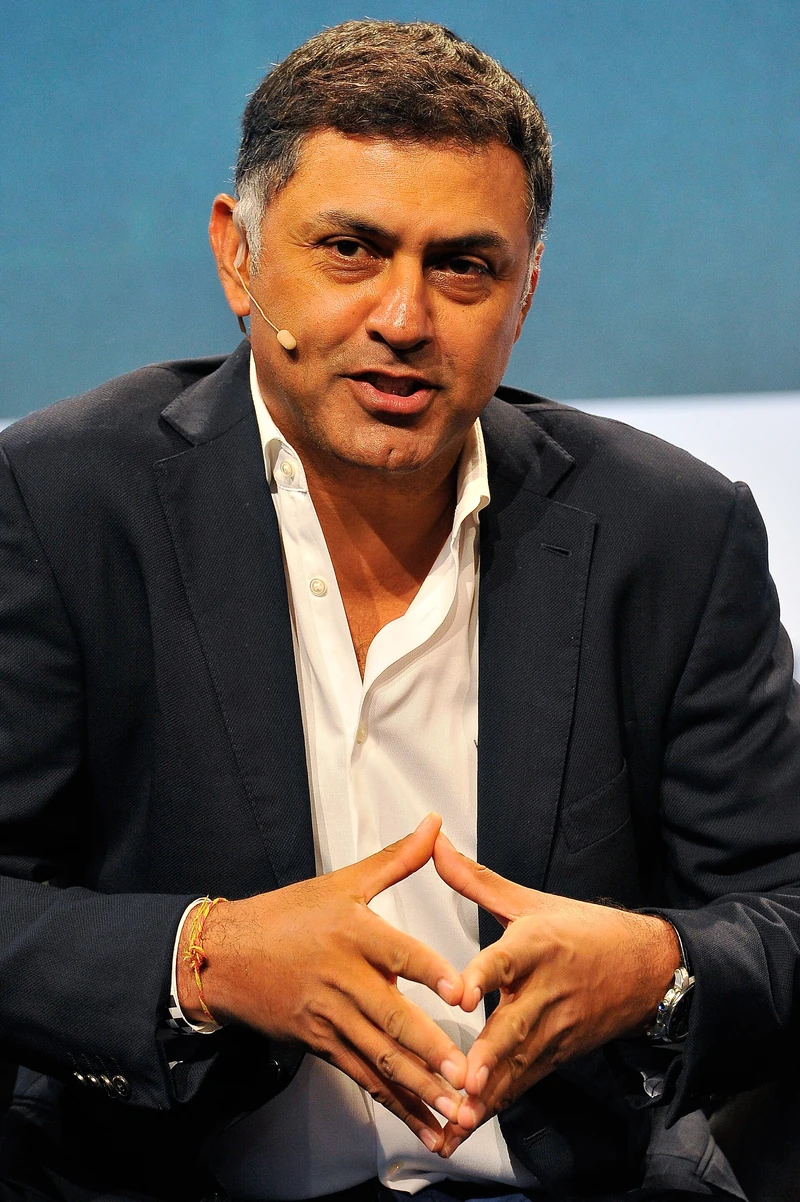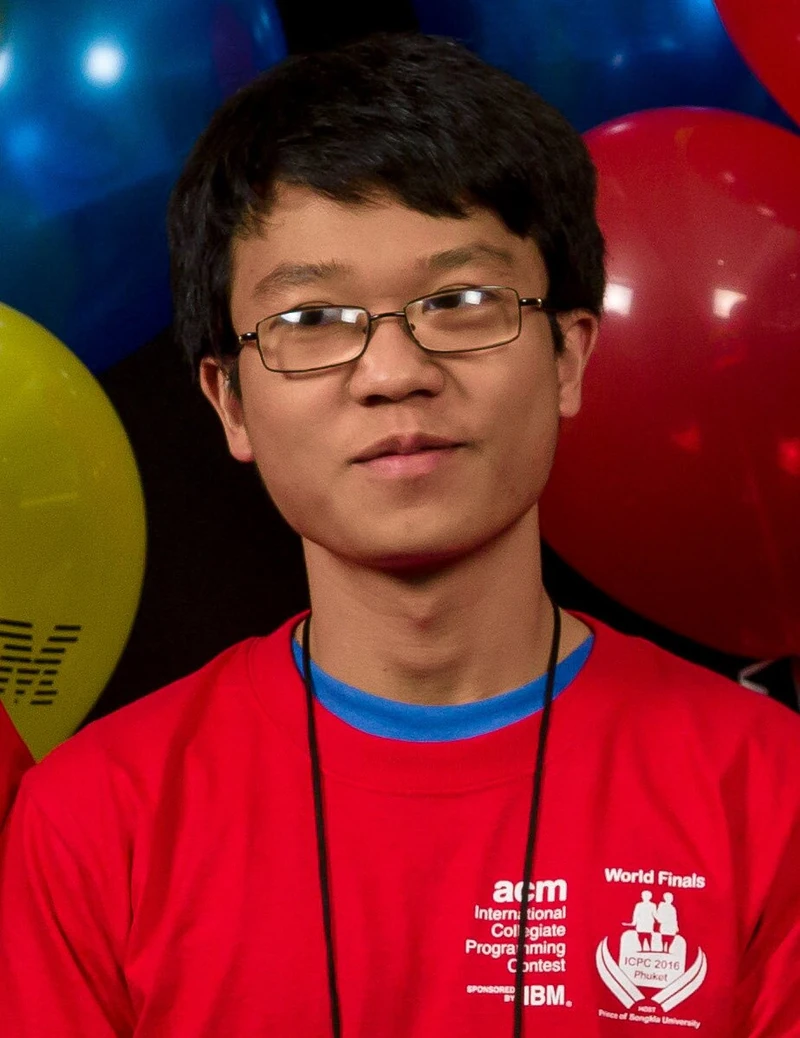
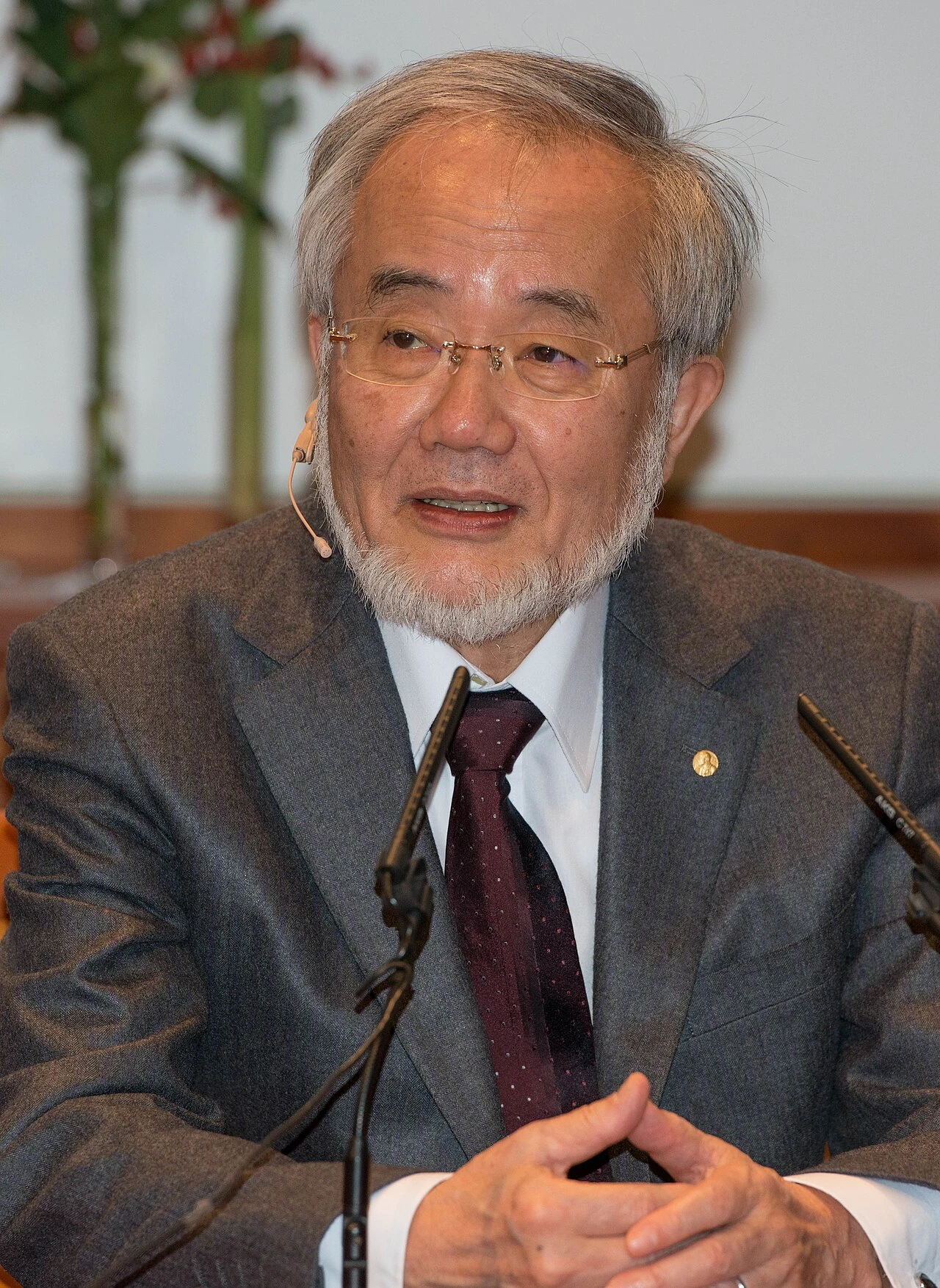
In February 2026, Yoshinori Ohsumi stood with three researchers selected for an award carrying his name at the Institute of Science Tokyo. The programme had received 36 applications for its eighth cycle. It chose three scientists under 40 whose fundamental work requires a long perspective, and for the first time its remit included medicine and dentistry.
The ceremony looked modest beside the capital deployed in pharmaceutical research, but its allocation logic was consequential. Ohsumi used part of the value created by a Nobel Prize to support questions that conventional markets struggle to finance. His fund backs students, early-career scientists and research environments before a patent, product or addressable market can be forecast with confidence.
That is an appropriate second act for the scientist whose yeast experiments revealed the machinery of autophagy. Ohsumi's work made a previously opaque cellular recycling process experimentally tractable and created tools used across cancer, neurodegeneration, infection and metabolism. Yet more than three decades after the original experiments, commercial translation remains selective, early and technically difficult.
The contrast matters for Asian capital allocators. Basic science can generate enormous spillover value, but the original investigator, university and funder rarely capture all of it. Drug developers can spend hundreds of millions turning one mechanism into a medicine and still fail. Ohsumi's influence in 2026 therefore lies in two linked systems: the biological platform he uncovered and the patient research capital he is helping to institutionalise.
A discovery platform is not a product platform
Autophagy allows cells to enclose parts of their own contents, deliver them to a degradative compartment and recycle the resulting material. Ohsumi showed in the early 1990s that the process could be studied in yeast, then identified genes essential to its operation. Those genes and their mammalian counterparts gave researchers a map of initiation, membrane formation and cellular clearance.
The economic appeal is obvious. A mechanism involved in energy balance, damaged organelles, protein aggregates, infection and cellular stress could support treatments across several large disease categories. Scientific relevance, however, is not the same as druggability. Autophagy can help a cell survive one context and protect tissue integrity in another. Developers may seek to inhibit it in some tumours and enhance particular clearance pathways in degenerative disease.
Direction is only the first problem. A drug must modulate the right step, in the right tissue, by the right amount and for an acceptable duration. Systemic inhibition may create liabilities because healthy cells also use the machinery. Broad activation may carry different risks and may not clear the disease-causing material that matters. Biomarkers must show that target engagement changes the intended biology, not merely a laboratory proxy.
This makes autophagy less like a single franchise and more like shared infrastructure. Knowledge of the pathway lowers discovery uncertainty, but each disease programme must establish its own target, dose, patient group and benefit-risk profile. Investors should resist counting every company that mentions autophagy as exposure to one validated commercial category.
Japan's acquired pipeline shows the translation risk
A current clinical programme illustrates the distance between mechanism and return. Inlexisertib, also known as DCC-3116, is an oral inhibitor of ULK kinases, which initiate autophagy. It was designed to prevent cancer cells from using the recycling process as a survival response when other signalling pathways are blocked.
The molecule became part of a Japanese balance sheet when Osaka-based Ono Pharmaceutical acquired Deciphera Pharmaceuticals for about $2.4 billion in 2024. Deciphera brought a commercial cancer medicine, a late-stage pipeline and early research assets. The acquisition was not a pure bet on autophagy, but inlexisertib gave Ono a direct test of whether selective pathway inhibition could add value to established cancer drugs.
The evidence in 2026 is mixed rather than conclusive. Ono discontinued a US phase I/II combination with sotorasib in September 2025 for strategic reasons. A separate phase I/II programme combining inlexisertib with ripretinib in advanced gastrointestinal stromal tumours remains in development, with a recruiting study record and an expansion-cohort design presented in March 2026. The public trial record lists no posted results.
Strategic discontinuation does not establish that a mechanism failed, and continued recruitment does not establish efficacy. Together, the decisions show how pharmaceutical owners ration capital. A scientifically plausible combination competes against other pipeline assets for trial slots, management attention and cash. Early safety, pharmacodynamic signals, competitive change and the opportunity cost of development can all stop a programme before a definitive verdict.
For Ono shareholders, the relevant measure is not whether Ohsumi's discovery was important; that question is settled. It is whether an acquired inhibitor can produce a differentiated clinical benefit and earn more than its development and commercial costs. For research funders, the calculation is different. Even if one molecule fails, knowledge about dose, pathway response and patient selection can improve the next attempt, although the company paying for failure may not capture that wider return.
Ohsumi is building capital for the part markets underprice
The Yoshinori Ohsumi Fund was established after his 2016 Nobel Prize through his own donation. It supports scholarships, research grants for early-career scientists and the environment required for fundamental work. The named award began in fiscal 2018, and its 2025 cycle selected projects spanning chemical synthesis, RNA regulation and biomedical questions rather than concentrating money on Ohsumi's own field.
That breadth is strategically sound. The greatest return from a scientific leader is not a queue of imitators pursuing the same fashionable target. It is a funding structure that gives capable younger researchers permission to ask unfashionable questions. Ohsumi's original work succeeded partly because he chose yeast and degradation at a time when the field offered neither a clear human product nor the status of a crowded growth market.
Japan's national numbers reveal why supplementary pools matter even in a high-spending research economy. Fiscal 2024 research and development expenditure reached a record ¥23.79 trillion. Within natural sciences and engineering, however, development accounted for 65.8 per cent and basic research 13.9 per cent. Businesses directed 77.8 per cent of their natural-science and engineering spending to development, while universities allocated 53.1 per cent of theirs to basic research.
The division is economically rational. Companies are designed to capture returns and therefore favour projects with clearer product pathways. Universities hold the questions whose benefits may diffuse across firms, industries and generations. The weakness appears when public and philanthropic capital is too short-term to sustain that role, forcing young scientists to optimise for frequent outputs and fashionable topics rather than difficult evidence.
Competition for public grants is substantial. In Japan's main 2025 Grants-in-Aid categories, 23,109 of 80,146 new applications received allocations in the initial published tally, with ¥76.3 billion distributed to those new projects. Including continuing work, about ¥220 billion supported 78,042 projects. A private fund cannot replace that system, but it can protect unusual work at points where standard selection processes leave gaps.
The 2026 expansion creates a governance test
Adding medical and dental research broadens the potential social return of the Ohsumi award. It also raises the burden on selection. Biomedical projects can present compelling disease narratives long before their mechanisms are strong. An award explicitly devoted to fundamental research must avoid becoming a smaller translational grant judged by near-term clinical promise.
Governance should therefore focus on the quality of the question, the investigator's ability to pursue it and whether conventional funding is structurally unlikely to provide enough time. Review panels need expertise across the expanded fields and must manage conflicts created by close academic networks. Funding terms should preserve independence while requiring clear reporting on methods, data stewardship and research integrity.
Success should not be measured mainly by start-ups, patents or licensing income. Those outcomes are welcome when justified, but they would bias the portfolio towards work that already resembles an investable asset. Better indicators include whether recipients build durable research programmes, train skilled teams, create reusable tools, publish credible negative findings and attract follow-on support without abandoning the original scientific problem.
The fund can also use Ohsumi's reputation to crowd in other donors. Universities often treat named philanthropy as a commemorative exercise; this programme has a sharper proposition. It converts scientific prestige into a diversified pool of research options. Corporate donors can participate without dictating targets, while alumni and individuals can finance the early stages that venture capital cannot price.
Asia needs better bridges, not shorter research clocks
Across Asia, governments want biotechnology industries that retain intellectual property, manufacturing and clinical value. The temptation is to make university funding look more like venture capital, with milestones tied quickly to patents and companies. Ohsumi's example suggests a different architecture: maintain patient capital for discovery, then build professional bridges for translation when evidence supports them.
Those bridges include reproducibility support, medicinal chemistry, disease models, biomarker development, technology transfer and access to regional clinical networks. They also require managers willing to stop weak programmes. The decision to discontinue one inlexisertib combination while continuing another is not inconsistent with long-horizon science; disciplined attrition is how development capital avoids subsidising a mechanism after the evidence changes.
Asian universities should retain fair rights without assuming they can predict the winning application. Ohsumi's discoveries created value across institutions precisely because the underlying knowledge travelled. Overly restrictive licences can narrow experimentation, while weak commercial capability can transfer most of the upside abroad. Non-exclusive research access, transparent conflict policies and staged commercial rights can balance diffusion with the need to fund expensive trials.
Investors, meanwhile, should separate three time horizons. Fundamental discovery creates options over decades. Preclinical and early clinical programmes test whether one option can become an asset. Commercial companies must produce returns within a finite capital cycle. Confusing these clocks leads either to underfunded science or to biotechnology valuations that treat biological importance as clinical proof.
The next return cannot be reduced to one drug
Autophagy's commercial case will strengthen if selective modulators show target engagement, patient benefit and tolerable chronic or combination use. Inlexisertib's remaining programme is one test, not a verdict on the field. Neurodegeneration, rare disease, infection and metabolic research may require different targets and opposite interventions. Failures will be informative only if data are shared well enough for others to learn.
Ohsumi's 2026 leadership is therefore unusually resistant to a simple revenue measure. His original work provided a biological operating system for thousands of studies. His fund now finances researchers before their work can be translated into a discounted cash-flow model. The two contributions reinforce each other because both recognise that valuable science often begins outside a product plan.
The harder test is institutional durability. Science Tokyo must grow the fund, protect its selection standards and show that recipients receive time as well as money. Japanese industry must remain willing to run rigorous translational experiments and to close programmes that do not clear the bar. Public funders must preserve the broad base from which the next unexpected mechanism can emerge.
By 2027, a successful outcome will not necessarily be an approved autophagy medicine. It will be clearer clinical evidence from the programmes still running, transparent learning from those stopped and another cohort of young researchers able to pursue questions that markets cannot yet value. Ohsumi's enduring capital lesson is that discovery and commercial discipline are complements: one creates options that did not exist, and the other determines which deserve the next investment.