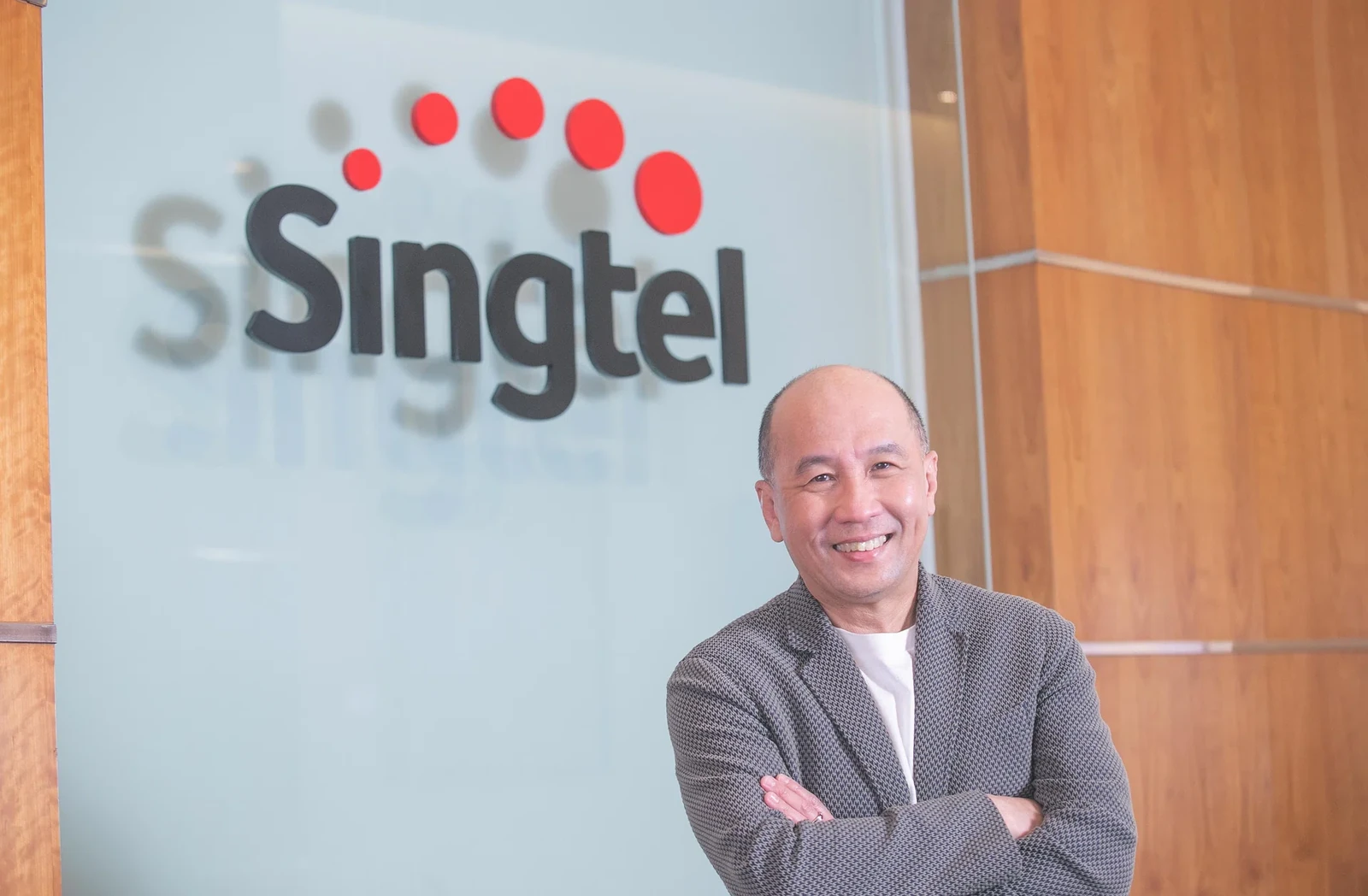
Yuen Kuan Moon’s transformation of Singtel is beginning to show up in the metric that matters most for a capital-heavy network group: the return on the money tied up in the business. Underlying return on invested capital reached 11.1 per cent in the financial year to March 2026, up from 9.8 per cent a year earlier and ahead of the medium-term objective. Underlying net profit rose 12 per cent to S$2.77 billion, while reported net profit increased 40 per cent to S$5.61 billion, helped by exceptional gains from stake sales.
The results validate a large part of Yuen’s strategic reset since becoming group chief executive in 2021. Singtel is no longer presented as a collection of incumbent telecom operators and passive regional holdings. It is being organised around connectivity, digital services and digital infrastructure, with capital recycled from mature assets into businesses that can benefit from cloud adoption, artificial intelligence and rising data demand across Asia.
Yet success has made the next phase more demanding. Singtel is participating with KKR in the full acquisition of ST Telemedia Global Data Centres at an enterprise value of S$13.8 billion, while its own Nxera platform is bringing new capacity online in Singapore, Indonesia and Malaysia. NCS is being recast as an AI-led technology services group. Optus, meanwhile, still requires investment in network resilience and customer trust. Yuen must now show that a broader digital-infrastructure portfolio can produce returns after financing costs, integration demands and the relentless capital needs of data centres.
The reset has changed the earnings mix
Singtel’s operating revenue was broadly stable at S$14.26 billion in the 2026 financial year. The more important movements appeared below the top line. Operating company earnings before interest and tax rose 9 per cent, supported by NCS, Digital InfraCo and Optus. Regional associates Airtel and AIS delivered strong contributions, demonstrating again that Singtel’s economic reach extends far beyond Singapore.
That diversified structure has long been one of the group’s advantages, but it previously created a valuation problem. Investors could see stakes in listed associates, telecom infrastructure and technology operations without being confident that capital would move to its most productive use. Yuen’s answer has been active portfolio management. Singtel generated S$3.9 billion from capital recycling during the year, including partial disposals of Airtel holdings, and reduced net debt to S$8.73 billion from S$9.44 billion.
The proceeds support three competing priorities: investment, balance-sheet strength and shareholder distributions. Singtel declared a record annual dividend of 18.5 Singapore cents, including value-realisation dividends, and began a share buyback programme of up to S$2 billion. The group has also increased its medium-term asset-recycling target to S$9 billion. The framework is intended to make capital release recurring rather than exceptional.
That model works when disposals are paced and reinvestment opportunities offer superior long-term returns. It becomes less persuasive if the company sells liquid stakes to fund assets whose economics are less transparent or more sensitive to power costs and construction risk. Yuen’s task is not merely to unlock value. It is to avoid exchanging easily observed value for complexity.
STT GDC raises the level of ambition
The proposed acquisition of ST Telemedia Global Data Centres is the clearest expression of Singtel’s new scale. A KKR-led consortium with Singtel agreed in February 2026 to acquire the data-centre operator at a S$13.8 billion enterprise value. The transaction follows an earlier consortium investment in the company and places Singtel alongside a global infrastructure investor in one of the most capital-intensive parts of the AI economy.
STT GDC brings a large international footprint, while Nxera remains Singtel’s dedicated regional platform. The companies are intended to operate independently. That separation can preserve commercial neutrality and avoid a difficult operational combination, but it does not remove portfolio-level questions. Singtel will have exposure to two substantial data-centre businesses, each with its own development pipeline, customers, financing arrangements and geographic priorities.
The strategic rationale is strong. AI workloads require power-dense facilities, cloud providers need capacity across jurisdictions, and Southeast Asia benefits from digitalisation, expanding connectivity and constraints on available space in established hubs. Singtel can combine telecommunications networks, enterprise relationships and regional knowledge with infrastructure capital. Few operators in Asia have the same set of assets.
The risk lies in the timing of supply and demand. Data centres are often contracted before completion, yet revenue ramps only after facilities are energised and customer equipment is installed. Construction costs, power availability and regulation vary by market. A pipeline can appear valuable well before it generates cash. If many developers build for the same anticipated AI demand, returns may fall even while utilisation rises.
Nxera moves from pipeline to operating proof
Nxera’s new DC Tuas facility in Singapore shows both the opportunity and the execution burden. Opened in February 2026 with 58 megawatts of AI-ready capacity, the site lifted Nxera’s Singapore capacity to 120 megawatts. More than 90 per cent was committed before launch, giving the group meaningful demand visibility. The facility supports high-density computing and direct-to-chip liquid cooling, with a stated power usage effectiveness of 1.25.
Capacity in Batam and Johor is scheduled to come online in the second half of 2026. Nxera expects operational and pipeline capacity to rise from about 200 megawatts in 2026 to more than 400 megawatts in the medium term. Those figures establish scale, but megawatts are not earnings. Investors will look for utilisation, pricing, development yield and cash conversion as each project moves through construction and ramp-up.
The cross-border footprint could become a competitive advantage. Singapore offers connectivity, institutional trust and a concentration of customers, but land and power are constrained. Johor and Batam provide room for expansion near the city-state, enabling customers to design regional architectures across several locations. Singtel’s networks can help connect those sites, creating commercial links between connectivity and infrastructure.
It also creates operational dependencies. Data-centre reliability depends on electricity, cooling, water, cybersecurity and physical security. AI facilities demand greater power density at a time when governments are scrutinising energy use and sustainability claims. Yuen must ensure that growth targets do not outrun power agreements, engineering capability or the ability to deliver facilities on schedule.
NCS must translate AI demand into service margins
Singtel’s other growth engine is NCS, the technology services operation. It delivered record bookings in the 2026 financial year and improved earnings as organisations sought help deploying AI and modernising critical systems. NCS is reorganising around industry groups and two principal service organisations, seeking to combine applications, communications engineering and digital resilience.
The opportunity differs from data centres. NCS does not simply provide physical capacity; it must supply specialist people, software platforms and delivery discipline. AI can expand demand for consulting and integration, but it can also automate parts of traditional technology-services work. The strongest providers will capture productivity gains while charging for outcomes and proprietary capability. Those that rely on labour-intensive delivery may find that revenue growth does not translate into better margins.
NCS has an advantage in regulated and public-sector environments where security, reliability and local context matter. It is also expanding delivery capacity in India, China, Vietnam and the Philippines, while integrating acquired businesses in Australia. That regional network can support scale, but it raises the difficulty of maintaining consistent quality across markets.
Yuen’s ambition is for NCS and Nxera to account for a larger share of group earnings. The two businesses reinforce each other in theory: infrastructure hosts workloads, networks move data and NCS helps clients implement applications. Commercial synergies, however, must not undermine neutrality. Data-centre customers and enterprise clients often require freedom to choose carriers, clouds and technology partners. Singtel will create more value by making each component competitive independently than by forcing an integrated bundle.
Optus keeps operational trust on the agenda
Australia’s Optus operation improved business momentum during the 2026 financial year while investing in operational resilience. That investment is not optional. Major outages and a cyber incident in earlier years damaged public confidence and exposed weaknesses in governance, systems and crisis response. A telecom network is judged most harshly when it fails, and reputational recovery takes longer than service restoration.
The Optus experience provides a warning for Singtel’s infrastructure expansion. Growth assets attract attention, but the licence to operate rests on resilient core services. Networks and data centres serve critical functions for consumers, businesses and government. Failure in one part of the portfolio can affect confidence in the whole group, particularly when customers are being asked to entrust more sensitive workloads to Singtel-linked platforms.
Yuen has moved accountability closer to operating companies, giving local leaders greater autonomy. The model can improve responsiveness, provided group-level oversight remains strong. Decentralisation cannot mean fragmented standards for cybersecurity, resilience or capital approval. Singtel needs a common risk discipline even as its businesses pursue different markets.
Regional associates remain strategic, not merely financial
Airtel in India and AIS in Thailand continue to supply a large part of Singtel’s underlying value and earnings. Proportionate earnings before interest, tax, depreciation and amortisation from outside Singapore represented 85 per cent of the group total in the 2026 financial year. This geographic exposure gives Singtel access to faster-growing telecommunications markets and digital-finance opportunities that a domestic operator could not replicate.
Partial stake sales can release capital without ending strategic participation. They can also gradually reduce future earnings claims. Yuen must decide how much ownership Singtel needs to preserve influence and capture compounding, and how much can be sold to finance newer growth engines. The correct answer may differ by asset and valuation; a mechanical recycling target would be a poor substitute for judgment.
The associate model also exposes Singtel to currencies, local regulation and partners whose priorities it does not control. Those risks are balanced by diversification and by the operating strength of the underlying businesses. Capital allocation should recognise that an established associate with high returns may be more valuable than a wholly owned project offering greater control but lower certainty.
The return threshold is rising
Reaching an underlying return on invested capital of 11.1 per cent is an important milestone because it suggests that the reset has lifted more than accounting profit. Maintaining that level will be harder as new infrastructure enters the asset base before reaching mature utilisation. The denominator can expand faster than earnings during a development cycle, temporarily depressing returns even if the projects are sound.
Yuen therefore needs to make the bridge between investment and future cash flow unusually clear. Commitments, capacity and enterprise value are not substitutes for operating profit. The group should be judged by development yields, cash returns, leverage and the share of earnings generated by the newer businesses after minority interests and financing costs.
At the same time, shareholder distributions must remain connected to sustainable cash generation. Value-realisation dividends appropriately return part of disposal proceeds, but investors should distinguish them from ordinary dividends supported by recurring earnings. The buyback adds another claim on cash. A disciplined hierarchy would protect the balance sheet and high-return investment before using residual proceeds for capital returns.
What Yuen must prove next
Yuen has already changed the strategic identity of one of Asia’s most established telecom groups. The portfolio is more focused, the capital framework is more active and the growth engines are more visible. Singtel’s 2026 results show that the transformation is producing higher returns rather than only a new narrative.
The next twelve to twenty-four months will test whether that progress survives greater scale. STT GDC must close and settle into a governance structure that protects value. Nxera’s new sites must convert committed capacity into cash earnings. NCS must turn AI demand into durable margins, and Optus must demonstrate that resilience is embedded rather than episodic. Asset sales must continue to improve the portfolio instead of masking its capital intensity.
Singtel’s opportunity is to become an infrastructure and services platform for Asia’s digital economy while retaining the cash flows and trust of a telecommunications incumbent. That combination is rare and potentially powerful. It is also unforgiving: more assets create more points of failure, and high-growth markets can still produce low returns if capital arrives too quickly.
Yuen has shown that Singtel can release trapped value and redeploy it. His harder test is to prove that every new dollar in the system will work at least as hard as the one it replaces.