
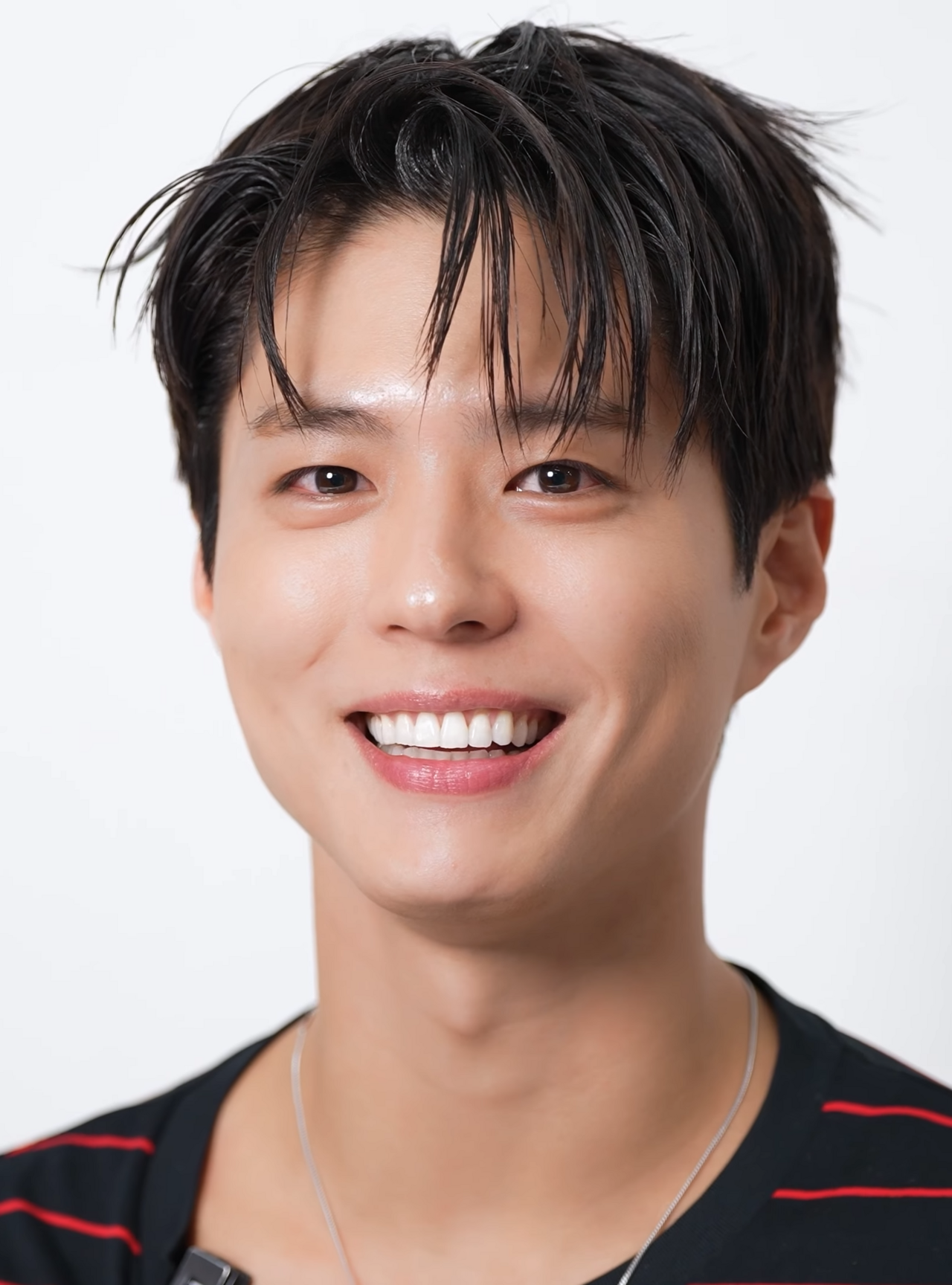
FigureAsia 35 Under 35 · Entertainment
Park Bo-gum
Age 32 · Actor · South Korea
Family-saga younger lead establishing care before a generational handover
- Age at 31 December 2025
- 32
- Field
- Scripted television and streaming performance
- Country or region
- South Korea
- FigureAsia U35 Assessment
- 90.4 / 100
Profile
Career and documented record
Early supporting work in film and television led Park Bo-gum to the reserved Go champion Choi Taek in Reply 1988 and the central historical-romance role in Love in the Moonlight. Born in Seoul in 1993, the South Korean actor extended his contemporary serial experience through Encounter and Record of Youth, while Coin Locker Girl and Seo Bok added darker ensemble and science-fiction settings. His familiar screen qualities—courtesy, attention and emotional openness—have been most effective when used as choices under pressure rather than as substitutes for conflict. The completed 2025 series When Life Gives You Tangerines gave Park a precise generational task.
He plays the younger Yang Gwan-sik during the character’s teenage years and twenties on Jeju: courtship with Ae-sun, poverty, labour, early marriage and parenthood. Park Hae-joon performs Gwan-sik in middle and later life, so Park Bo-gum is not credited with carrying the character through the entire saga. His responsibility is to establish the behavioural foundation that makes the later handover credible.
That foundation is built through routine acts of care, quiet attention, disappointment and compromise. Park’s restraint counterbalances Ae-sun’s sharper outward energy, while fatigue and frustration prevent Gwan-sik’s devotion from becoming an idealised trait. Speech, posture and relational habits must be specific enough to define the younger man yet open enough for another actor to continue.
The work depends on partnership with the performers playing Ae-sun, the older cast and the production’s writing, direction and editing. The completed series became a widely discussed Korean drama across international markets. Its reach is a collective result, but Park’s early-life performance establishes the care and partnership on which its later family history depends.
Park has said he resisted treating the younger Gwan-sik as a passive martyr. He understood the character as someone who takes charge of his life and actively chooses care, an interpretation that lets devotion register as decision and labour rather than idealised self-erasure.
FigureAsia selection
Why Park Bo-gum is on the list
Park is selected for the precision of a generational handover, not for an entire lifespan he did not perform. The verified fact that his role covers Gwan-sik’s courtship, labour, early marriage and parenthood supports substantive 2025–2026 contribution: the early-life movement contains meaningful development rather than a brief prologue. The verified continuity of speech, posture and relational habits before Park Hae-joon assumes the role supports craft or creative execution: Park establishes a recognisable behavioural foundation while respecting the older actor’s separate authorship. The series’ completed international circulation supports audience consequence and global relevance: the performance formed part of a Korean family story encountered across markets, though platform reach is never treated as Park’s individual output.
His agency lies in accumulation. Gwan-sik is defined by what he notices and does for others; forcing the role into constant display would damage the drama. Park allows devotion, exhaustion and disappointment to coexist, making care a changing practice rather than a fixed moral label. The ensemble, writers, director, editors and older cast remain essential to the effect, especially across the temporal handover.
Compared with streaming leads whose cases depend mainly on production popularity, Park retains a stronger claim because his specific construction remains visible after later-life scenes and ensemble success are removed. Good Boy verifies a contrasting completed register in 2025 but is not used to inflate the score. He earns one of 35 places because restraint, partnership and continuity carry substantial narrative weight within a widely circulated completed series, and because the assessment preserves exactly where his responsibility ends.
That interpretation clarifies personal agency inside a restrained role. Park does not ask the audience to admire suffering in the abstract; he gives ordinary acts of care the force of repeated choices made by a young husband and father. The achievement remains bounded to the young-adult span he performs.
Verified work
The 2025–26 record
Completed work
Played the younger Yang Gwan-sik through the completed 2025 early-life movement of When Life Gives You Tangerines, carrying courtship, labour, marriage and young parenthood.
Attributable execution
Established speech, posture and relational habits that made the 2025 drama’s handover to the older Gwan-sik credible without imitating or claiming that later performance.
Documented responsibility
Sustained restrained partnership within the 2025 family ensemble, making routine care, fatigue and frustration the behavioural foundation for the story’s later generations.
Verified consequence
Completed a contrasting action-comedy performance in the separately released 2025 series Good Boy, adding documented range without displacing the family saga as his principal contribution.
Interpretive agency
Rejected a passive-martyr reading of the younger Gwan-sik and performed care as a series of active choices across courtship, work, marriage and early parenthood.
Field context
The work in its field
He also completed a separately released action-comedy performance in Good Boy during 2025, providing a visible contrast in register. That second title supplies context rather than the principal scoring case. Park’s wider significance lies in demonstrating that a younger lead can carry substantial emotional and structural responsibility without claiming the later decades performed by another actor or relying on conspicuous dramatic display.
Park’s performance is assessed within the precise temporal share entrusted to him: the younger Gwan-sik’s courtship, labour, marriage and early parenthood. Keeping that boundary matters because it identifies a complete arc without absorbing the later-life work of another actor, while Good Boy supplies a finished contrast in register rather than a second claim on the same achievement.
The comparison is sharpened by Park’s own interpretive boundary: he plays devotion as active self-direction, not as passive virtue, while leaving the character’s later decades to the older performer.
FigureAsia U35 Assessment
Assessment breakdown
90.4out of 100
Substantive 2025–2026 contribution
20 / 20
Park played the younger Yang Gwan-sik through the early-life movement of When Life Gives You Tangerines, carrying courtship, poverty, early marriage and parenthood before Park Hae-joon continued the character's later years.
Verified impact
13.5 / 15
The completed series became a widely discussed Korean drama across international markets, while Park's early-life performance established the habits of care and partnership on which the later generational handover depended.
Originality and distinction
9 / 10
His restraint gave weight to routine care, disappointment and compromise, creating behavioural continuity for an older actor without pretending to perform the character's entire lifespan himself.
Industry influence
9 / 10
Among streaming performers, he combined substantial early-series responsibility with a precise generational-handover task; a separately released 2025 action-comedy role supplied background evidence of range but did not drive the score.
Individual agency
8 / 10
The assessed responsibility is the person's work as actor on When Life Gives You Tangerines, not the production's entire result.
Durability and demonstrated trajectory
4.5 / 5
The qualifying work was completed and entered public circulation within the evidence window; no announced next project earns credit.
Asian significance and global relevance
4 / 5
The work is situated in South Korea and was compared for meaning within Asian entertainment and for consequence beyond one immediate market.
Craft or creative execution
8 / 8
His restraint gave weight to routine care, disappointment and compromise, creating behavioural continuity for an older actor without pretending to perform the character's entire lifespan himself.
Performance, narrative or production responsibility
5.4 / 6
Park Bo-gum held actor responsibility on When Life Gives You Tangerines; collective production credit was separated from individual agency.
Audience and critical consequence
4.5 / 5
The completed series became a widely discussed Korean drama across international markets, while Park's early-life performance established the habits of care and partnership on which the later generational handover depended.
Cross-market and format achievement
2.4 / 3
The completed work was assessed across its original South Korea context and any verified international or cross-format circulation.
Professional practice and representation
2.1 / 3
The case records a specific south korean actor contribution without treating identity itself as an achievement.