
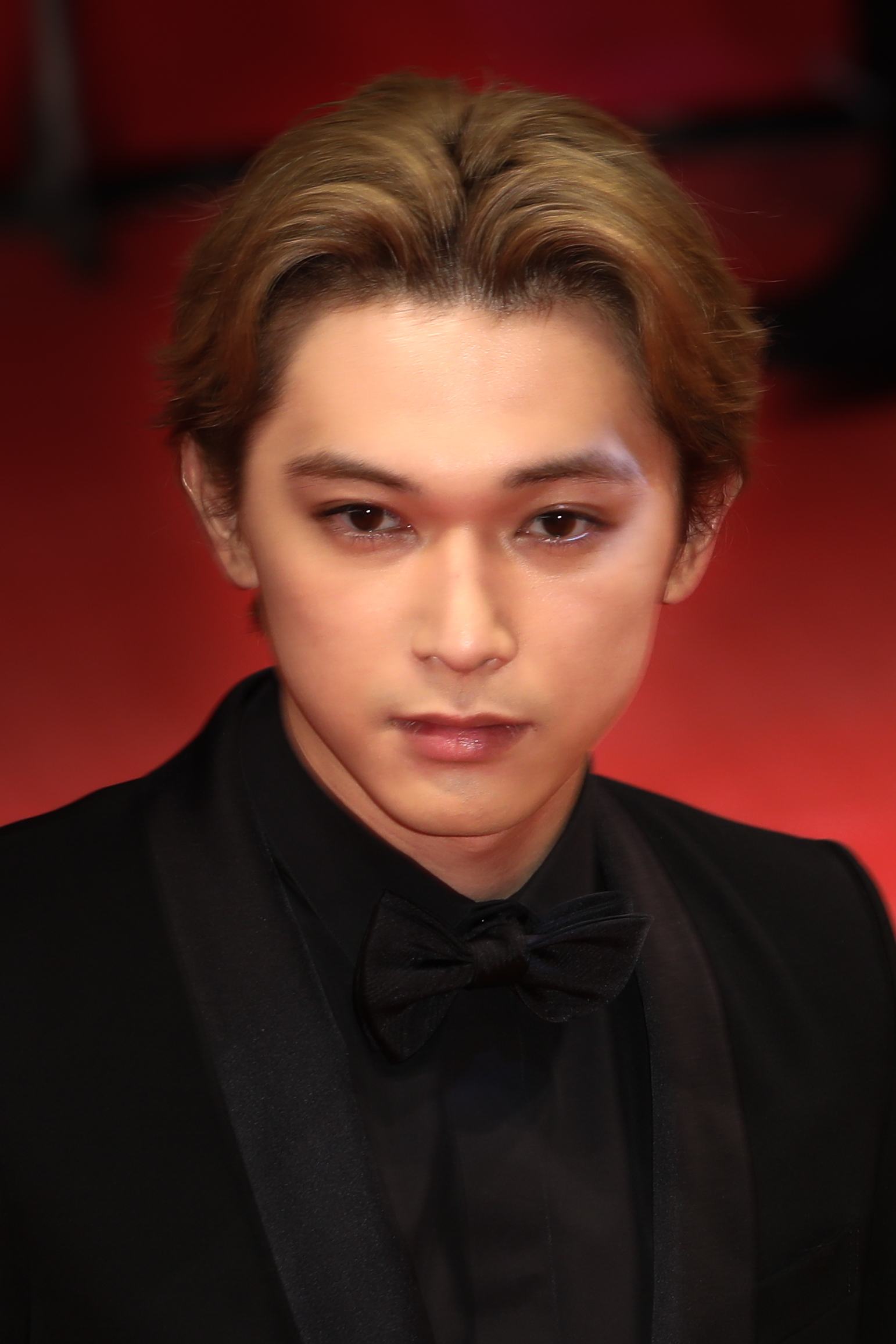
FigureAsia 35 Under 35 · Entertainment
Ryo Yoshizawa
Age 31 · Actor · Japan
Kabuki epic lead making artistic transformation legible across decades
- Age at 31 December 2025
- 31
- Field
- Film performance
- Country or region
- Japan
- FigureAsia U35 Assessment
- 92.9 / 100
Profile
Career and documented record
Ryo Yoshizawa is a Japanese actor born in Tokyo in 1994. Since entering the profession as a teenager, he has moved between television, franchise entertainment, youth drama, literary adaptation and historical spectacle. His early public recognition came through Kamen Rider Fourze. The live-action Gintama films, River’s Edge and the Kingdom series later established his ability to give ensemble characters a distinct physical and emotional outline, while the 2021 historical serial Reach Beyond the Blue Sky tested his command of development across a long broadcast run.
The completed 2025 feature Kokuho placed a different scale of responsibility on him. Yoshizawa plays Kikuo Tachibana, the son of a yakuza family who enters a kabuki household after his father’s death. Over the film’s three-hour span, aptitude, discipline, ambition and exclusion reshape Kikuo’s place within the institution and his relationship with its hereditary heir, Shunsuke Ogaki.
The performance must connect the uprooted young outsider to the accomplished but physically diminished man seen decades later, even when the story advances sharply in time. Yoshizawa prepared for approximately eighteen months in kabuki movement and dance alongside co-lead Ryusei Yokohama. That training is not presented as a separate display of acquired skill.
Changes in Kikuo’s posture, gesture, tempo and command of the stage communicate his social ascent, professional confidence, estrangement and ageing body. The audience reads artistic technique as character development rather than ornament. Released theatrically in Japan in June 2025, Kokuho sustained an unusually long domestic run and became Japan’s highest-grossing locally produced live-action film.
Yoshizawa’s agency is especially visible in Kikuo’s rooftop dance. He created three substantially different, largely improvised takes; the finished film retained the final version and its spontaneous spoken line. The sequence’s disorientation was therefore generated in performance rather than supplied only by choreography or editing.
FigureAsia selection
Why Ryo Yoshizawa is on the list
Yoshizawa’s place rests on a convergence of craft, responsibility and realised consequence rather than on the scale of Kokuho alone. The verified fact that he completed approximately eighteen months of kabuki preparation supports the craft or creative execution criterion: the significance lies in converting specialised movement into readable changes of age, status and confidence, not merely reproducing stage technique. The verified fact that he carries Kikuo across several decades and most of a three-hour feature supports narrative responsibility: the film’s central transformation remains coherent despite abrupt leaps in time. The verified record of a sustained domestic run, a live-action box-office benchmark and international circulation supports audience and critical consequence: the performance was encountered and examined beyond a specialist audience, although those production-wide results are not assigned to him personally.
His individual agency remains visible after collective authorship is restored. Yokohama’s Shunsuke provides the essential counterpart; direction, cinematography, choreography and kabuki advisers establish the conditions in which both actors work. Even after those contributions are separated, Yoshizawa still has to make technique operate as social capital, bodily memory and personal cost. That is a more demanding achievement than commercial lead visibility without equivalent transformation.
Compared with other film leads in the cohort, he combines uncommon preparation, duration, physical recalibration and a performance problem rooted in Japanese stage culture. The work was completed and publicly tested in 2025, so no future project or residual fame is needed to sustain the case. It earns one of 35 places because the central labour remains precise, attributable and consequential even when spectacle and revenue are treated as collective outcomes.
The rooftop dance supplies a further attribution test. Across three different takes, Yoshizawa varied the performance rather than reproducing a fixed choreographic solution, and the retained take includes a spontaneous line. That decision-making belongs to him even as staging, camera and final selection remain collaborative.
Verified work
The 2025–26 record
Completed work
Led the completed 2025 feature Kokuho as Kikuo Tachibana, carrying the central character from uprooted youth through artistic achievement, rivalry, estrangement and physical decline.
Attributable execution
Completed approximately eighteen months of kabuki movement and dance preparation, then used posture, gesture and stage convention to express Kikuo’s changing authority during the 2025 film.
Documented responsibility
Sustained one continuous performance across a sharply advancing, decades-long chronology, giving the three-hour release an individually legible dramatic centre in 2025.
Verified consequence
Anchored a film whose 2025 domestic run set a Japanese live-action box-office benchmark and whose international circulation drew close attention to the paired lead performances.
On-set agency
Created three substantially different, largely improvised versions of Kikuo’s rooftop dance; the completed film retained the final take and its spontaneous line.
Field context
The work in its field
Its international circulation also brought detailed attention to the partnership between its two principal actors. Those results belong to the full production, including the director, writers, choreographic guidance, advisers, technical departments and ensemble. Yoshizawa’s attributable outcome is narrower and more exact: his performance holds the central character’s continuity across decades and makes a culturally specific artistic institution dramatically accessible without simplifying its demands.
Within the 2025 acting field, the comparison point is not simply that Yoshizawa led a commercially prominent film. It is that a highly specialised performance vocabulary remained intelligible as character, status and physical consequence across a long dramatic span. That combination of preparation, duration and accountable lead work is the distinction this edition credits.
A documented improvisational sequence adds another layer to the comparison: Yoshizawa could depart from fixed preparation while keeping Kikuo’s altered state legible inside the film’s formal control.
FigureAsia U35 Assessment
Assessment breakdown
92.9out of 100
Substantive 2025–2026 contribution
20 / 20
His lead performance in Kokuho sustained a character across decades of bodily, social and artistic change, anchoring a long-form kabuki drama that became an exceptional Japanese theatrical event.
Verified impact
15 / 15
The film set a domestic box-office benchmark for Japanese live-action cinema and travelled internationally, while criticism repeatedly located the drama's force in the exacting partnership between its two principal actors.
Originality and distinction
9 / 10
Yoshizawa used extended kabuki preparation, controlled gesture and shifts in physical bearing to make ambition, rivalry and ageing legible without reducing the role to imitation of stage technique.
Industry influence
9 / 10
Against other high-reach film leads, his case combined unusually demanding preparation, sustained narrative responsibility and consequences visible beyond a single publicity cycle.
Individual agency
9 / 10
The assessed responsibility is the person's work as actor on Kokuho, not the production's entire result.
Durability and demonstrated trajectory
4.5 / 5
The qualifying work was completed and entered public circulation within the evidence window; no announced next project earns credit.
Asian significance and global relevance
4 / 5
The work is situated in Japan and was compared for meaning within Asian entertainment and for consequence beyond one immediate market.
Craft or creative execution
8 / 8
Yoshizawa used extended kabuki preparation, controlled gesture and shifts in physical bearing to make ambition, rivalry and ageing legible without reducing the role to imitation of stage technique.
Performance, narrative or production responsibility
5.4 / 6
Ryo Yoshizawa held actor responsibility on Kokuho; collective production credit was separated from individual agency.
Audience and critical consequence
4.5 / 5
The film set a domestic box-office benchmark for Japanese live-action cinema and travelled internationally, while criticism repeatedly located the drama's force in the exacting partnership between its two principal actors.
Cross-market and format achievement
2.4 / 3
The completed work was assessed across its original Japan context and any verified international or cross-format circulation.
Professional practice and representation
2.1 / 3
The case records a specific japanese actor contribution without treating identity itself as an achievement.