
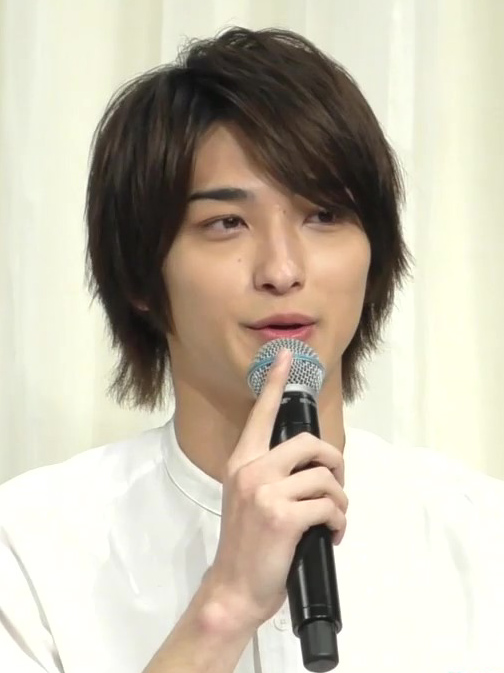
FigureAsia 35 Under 35 · Entertainment
Ryusei Yokohama
Age 29 · Actor · Japan
Kabuki co-lead turning inherited privilege into physical dramatic pressure
- Age at 31 December 2025
- 29
- Field
- Film performance
- Country or region
- Japan
- FigureAsia U35 Assessment
- 91.9 / 100
Profile
Career and documented record
Screen work in his teens brought Ryusei Yokohama broad recognition through the action series Ressha Sentai ToQger. The Japanese actor, born in Kanagawa in 1996, later used Your Eyes Tell, The Journalist, The Lines That Define Me, Village and Faceless to move from physically driven popular entertainment towards roles organised around grief, secrecy and social pressure. By 2025, he had substantial experience as both a lead and an ensemble performer. His appearance as Tsutaya Juzaburo in the completed historical serial Unbound supplies further context for that range.
The defining work of the period is the completed 2025 feature Kokuho. Yokohama plays Shunsuke Ogaki, the hereditary kabuki heir and lifelong counterpart to Ryo Yoshizawa’s Kikuo, an outsider adopted into the same artistic household. Shunsuke begins with legitimacy that Kikuo lacks, yet inherited access becomes a source of pressure when he is compared with an adopted brother of greater aptitude. The role must therefore make affection, privilege, rivalry, professional insecurity and loss coexist without reducing Shunsuke to an obstacle in another man’s ascent.
Yokohama prepared for more than a year in kabuki movement and dance. His task differs from that of his co-lead: posture, breath and stage movement must express not only acquired technique but the burden of an art form treated as a birthright. Across several decades, changes in confidence, health and physical vulnerability have to remain continuous while Shunsuke retains a dramatic line of his own.
The long preparation matters because technique becomes behaviour; it is not detachable from the character’s social position. Kokuho sustained a long Japanese theatrical run, set a domestic benchmark for locally produced live-action cinema and travelled internationally. These outcomes belong to the complete production.
He also built Shunsuke against his habitual physical instinct, deliberately lifting the character’s centre of gravity. Yokohama treated the unfamiliarity he felt after a take as useful evidence that he had not slipped back into his own body.
FigureAsia selection
Why Ryusei Yokohama is on the list
Yokohama is selected for solving a precise co-lead problem rather than for borrowing the stature of Kokuho. The verified preparation lasting more than a year supports craft or creative execution: its significance is visible in Shunsuke’s posture, breath and changing physical confidence, where inherited technique becomes dramatic pressure. The verified fact that he sustains Shunsuke through several decades supports narrative responsibility: a secondary but essential life must remain coherent while the film’s outsider protagonist commands greater structural attention. The verified 2025 record of a sustained domestic run and international circulation supports audience and critical consequence: a culturally specific performance reached a cross-generational public and drew attention beyond Japan, without converting collective reception into personal authorship.
Individual agency survives the necessary attribution limits. Yoshizawa’s Kikuo, the director, writers, choreographic guidance, advisers and production design are all indispensable. Yet Yokohama alone must prevent Shunsuke from becoming either an emblem of privilege or a functional rival. His choices allow legitimacy, affection, insecurity and loss to register at the same time, giving the central relationship its changing balance.
Compared with performers whose current visibility rests on a familiar screen persona, Yokohama completed a role that required specialised physical preparation, a long chronology and restraint within an interdependent pairing. Unbound demonstrates separate 2025 range but does not carry the ranking; Kokuho provides the qualifying weight. He earns one of 35 places because his contribution remains distinct after spectacle, box office and his co-lead’s work are removed. The achievement is collaborative, but not interchangeable.
The raised centre of gravity makes that preparation individually legible. Yokohama was not only acquiring stage vocabulary; he used bodily unfamiliarity as a check against habitual screen movement, giving inherited status and Shunsuke’s later vulnerability a distinct physical base.
Verified work
The 2025–26 record
Completed work
Co-led the completed 2025 feature Kokuho as Shunsuke Ogaki, giving the hereditary heir an essential dramatic line within the film’s central friendship and rivalry.
Attributable execution
Completed more than a year of kabuki movement and dance preparation, using posture, breath and stage convention to embody inherited artistic pressure in the 2025 release.
Documented responsibility
Sustained Shunsuke across several decades of changing status, health and intimacy, preserving character continuity beside an outsider protagonist who occupies the film’s centre.
Verified consequence
Helped anchor a 2025 film whose prolonged domestic run set a live-action cinema benchmark and whose international circulation placed both principal performances under close scrutiny.
Physical character design
Deliberately raised Shunsuke’s centre of gravity and used the resulting unfamiliarity after takes as a check against returning to his habitual body.
Field context
The work in its field
Yokohama’s attributable contribution is the second essential dramatic line that makes Kikuo’s outsider story relational rather than solitary. His Shunsuke gives the three-hour epic an internally coherent counterweight, enabling audiences to understand the personal pressure within hereditary artistic succession. That combination of physical execution, duration and shared responsibility makes the performance more than a specialist reconstruction of kabuki technique.
The comparative difficulty lies in performing inherited privilege without flattening Shunsuke into Kikuo’s obstacle. Yokohama’s preparation and responsive work give the friendship, rivalry and succession conflict their second point of view; the edition credits that sustained relational construction, not the film’s earnings or institutional prestige.
Yokohama’s deliberate shift in centre of gravity is a particularly useful marker of agency: it distinguishes Shunsuke’s inherited physical confidence from both the actor’s normal movement and Kikuo’s outsider route into the form.
FigureAsia U35 Assessment
Assessment breakdown
91.9out of 100
Substantive 2025–2026 contribution
20 / 20
Yokohama co-led Kokuho as the heir whose inherited place in kabuki becomes inseparable from friendship, rivalry and loss, giving the epic its second essential dramatic line.
Verified impact
13.5 / 15
The film's sustained Japanese theatrical run and international attention made his performance part of a rare cross-generational cinema event rather than a specialist exercise in theatrical reconstruction.
Originality and distinction
9 / 10
Long preparation allowed him to build the character through posture, breath and the pressure of inherited technique, with physical choices that remained readable beside the production's spectacle.
Industry influence
9 / 10
His agency is shared with a co-lead, but the scale of preparation, narrative duration and audience consequence exceeded the ordinary demands placed on a commercial drama performance.
Individual agency
9 / 10
The assessed responsibility is the person's work as actor on Kokuho, not the production's entire result.
Durability and demonstrated trajectory
4.5 / 5
The qualifying work was completed and entered public circulation within the evidence window; no announced next project earns credit.
Asian significance and global relevance
4.5 / 5
The work is situated in Japan and was compared for meaning within Asian entertainment and for consequence beyond one immediate market.
Craft or creative execution
8 / 8
Long preparation allowed him to build the character through posture, breath and the pressure of inherited technique, with physical choices that remained readable beside the production's spectacle.
Performance, narrative or production responsibility
5.4 / 6
Ryusei Yokohama held actor responsibility on Kokuho; collective production credit was separated from individual agency.
Audience and critical consequence
4.5 / 5
The film's sustained Japanese theatrical run and international attention made his performance part of a rare cross-generational cinema event rather than a specialist exercise in theatrical reconstruction.
Cross-market and format achievement
2.4 / 3
The completed work was assessed across its original Japan context and any verified international or cross-format circulation.
Professional practice and representation
2.1 / 3
The case records a specific japanese actor contribution without treating identity itself as an achievement.