
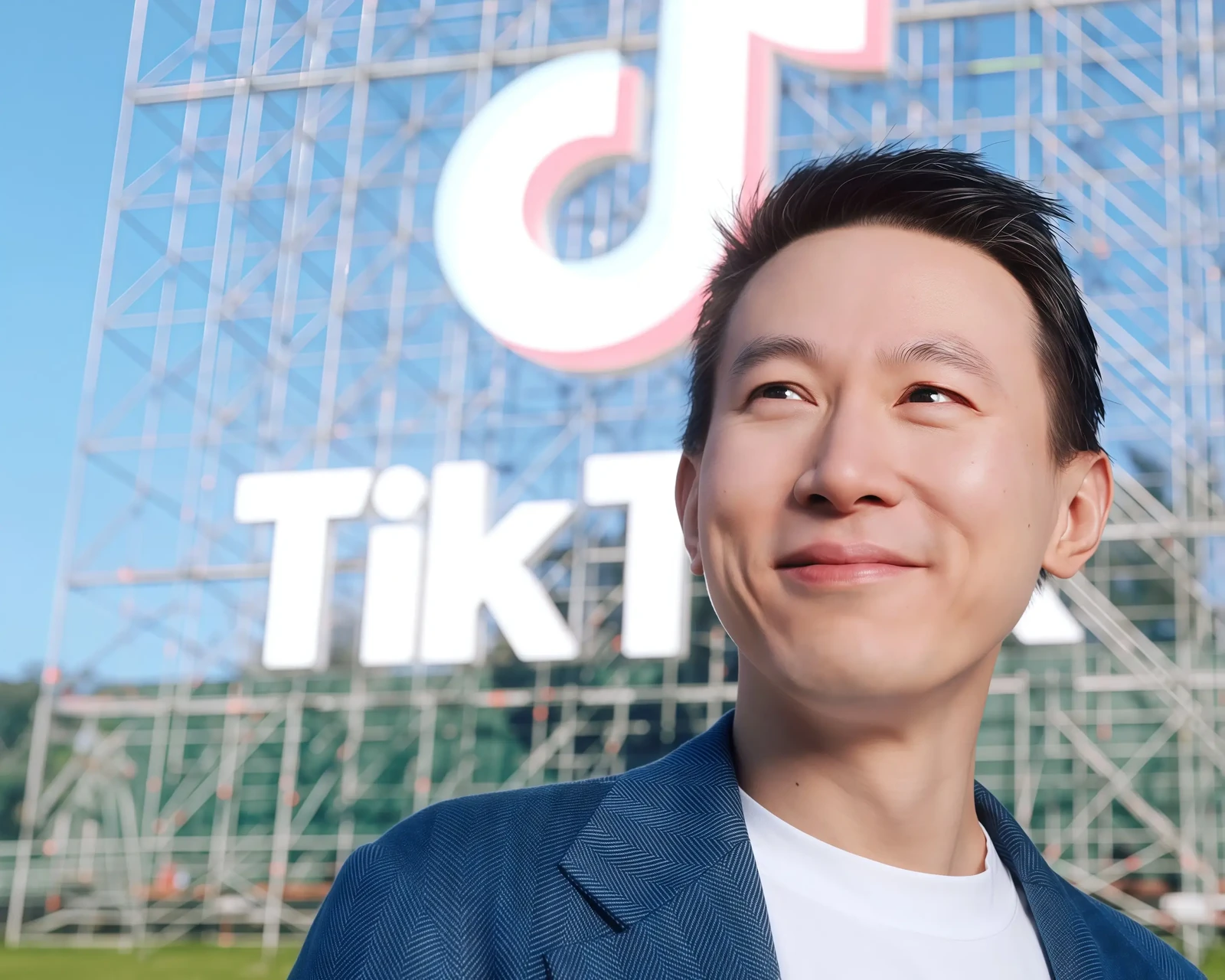
Shou Zi Chew's latest European expansion is easy to describe as a larger addressable market. The harder description begins after a customer presses buy. On 15 June, TikTok Shop became available in Austria, Belgium, the Netherlands and Poland, adding four markets to France, Germany, Ireland, Italy, Spain and the UK. The launch gave more merchants access to TikTok's blend of entertainment, product discovery and checkout. It also placed a greater share of the platform's commercial credibility inside parcels that must arrive on time, match their descriptions and travel back efficiently when buyers change their minds.
That is a different leadership test from growing an audience. TikTok says 200 million people across Europe use the application each month. More than 100,000 businesses had joined its shop service in the first five European Union markets by early 2026, while daily gross merchandise value across those markets recorded triple-digit growth between August 2025 and February 2026. Those figures establish momentum, but not the durability of the merchant economics. TikTok did not disclose the starting value, seller profitability, repeat-purchase rates or the cost of incentives behind that growth.
Chew, TikTok's chief executive, is therefore taking the company deeper into a business where reach is only the opening asset. His task is to turn the recommendation feed into a dependable commercial channel without asking small sellers to carry more complexity than the demand is worth. Europe offers a large prize, but it fragments that prize across languages, tax rates, delivery networks and consumer rules. TikTok can simplify the interface. It cannot make those obligations disappear.
The onboarding shortcut
The most consequential part of the expansion is not the addition of four flags to a market map. It is Sell Across Europe, the system TikTok introduced to reduce the administrative work of entering another country. Once a merchant has registered a source shop, TikTok can create additional European shops automatically. Its Global Listings tool can synchronise products from one shop into as many as 12 others, manage them through the same seller account and translate titles, descriptions, attributes and text embedded in product images.
The design attacks a genuine cost. A small skincare label in France or a homeware seller in Poland should not need to rebuild its catalogue each time it tests another market. TikTok lets merchants apply common pricing rules, adjust prices above or below the source market, share one inventory pool or maintain separate stock, and choose whether prices change with currency movements. By July, its seller guidance showed products could be made available across 13 European markets, extending beyond the ten countries in the June consumer launch.
This creates operating leverage if the demand follows. One catalogue can be distributed through local creators, short videos and live demonstrations without a separate marketing infrastructure in every country. Approved affiliates can promote products across the EU and earn commission. For a young brand, that can compress the distance between market entry and the first sale. Instead of buying search terms against established rivals, it can use a creator's audience and the platform's recommendations to manufacture discovery.
Yet automation shifts work rather than abolishing it. Machine translation can publish a catalogue quickly, but merchants are still told to review the output, including safety warnings. Shared inventory reduces idle stock but increases the penalty for inaccurate availability across several storefronts. A common price is simple, though it may fail to reflect different VAT rates, affiliate commissions, postage and return costs. Independent inventories solve some delivery problems while tying up more working capital. Each convenience in the seller dashboard has a corresponding choice on the merchant's balance sheet.
Europe's costs begin after checkout
Cross-border e-commerce becomes difficult precisely where a social platform has the least experience. TikTok has partnered with local logistics and courier networks, and sellers can use approved carriers. But the merchant remains responsible for fulfilment capacity. TikTok's registration policy allows eligible businesses to ship orders and accept returns either through domestic warehouses in each market or from an address in their country of incorporation. That flexibility lowers the initial barrier, but it can lengthen delivery routes and make reverse logistics uneconomic for low-priced goods.
Returns expose the central trade-off. European consumers generally have 14 days after delivery to withdraw from an online purchase without giving a reason. Buyers can usually be required to pay return postage if that was disclosed, while the seller bears the cost of taking back defective goods. A blouse or beauty accessory that generated an attractive contribution margin on the outward journey can become a loss once customer service, inspection, refund handling and a second parcel are included. Viral demand magnifies that risk because it can produce an order surge before a seller has learnt the product's true return rate.
Tax is another boundary between a convenient listing and a completed business system. For intra-EU distance sales, a common threshold of €10,000 determines when destination-country VAT becomes relevant. The EU's One Stop Shop can consolidate registration, returns and payment through one portal, but the merchant still needs accurate records and must charge the correct destination rate. TikTok's own guidance warns that VAT duties vary with where a company is established, where inventory is stored and where buyers live. A single TikTok registration is not a single European tax treatment.
Product rules add further cost. Depending on category and destination, sellers may need Extended Producer Responsibility information before an item can be offered. The EU's General Product Safety Regulation requires an economic operator in the union for covered products and imposes duties on online marketplaces as well as manufacturers, importers and distributors. Listings need traceability and safety information. For cosmetics, electronics, children's products or anything carrying environmental obligations, rapid catalogue replication is useful only if the underlying documentation travels with it.
These requirements are not peripheral to TikTok's economics. Weak compliance increases removals, refunds and support expense. Poor fulfilment damages conversion because buyers learn to distrust unfamiliar sellers. A platform that earns more transactions while producing more complaints may grow gross merchandise value without building a high-quality marketplace. Chew needs the merchant tools, policy enforcement and logistics partnerships to mature together.
Trust is part of the margin
TikTok enters European commerce with a powerful advantage and a structural disadvantage. Its recommendations can create demand for products that consumers were not searching for. That gives small brands a route around the costly ranking systems of established marketplaces. The weakness is that spontaneous discovery provides less time for comparison. A persuasive video can move inventory quickly, but it can also amplify exaggerated claims, counterfeit goods or products that look better on screen than they perform at home.
The company says product reviews, reporting tools and returns are built into the service, while listings are checked through technology and human review. Enforcement will determine whether those protections are credible at scale. Removing a merchant after violations is necessary, but it does not reimburse every seller whose legitimate offer competed with a non-compliant one or every buyer who waits for a refund. TikTok must detect risk before recommendation turns it into volume.
Competition raises the standard. Amazon has spent decades making fulfilment and returns feel routine. Poland's Allegro and the Netherlands' bol have local merchant relationships and consumer familiarity. Shein and Temu condition shoppers to expect very low prices from cross-border supply chains, while Meta can connect social discovery to advertisers and external shops. TikTok cannot rely on entertainment alone when a failed delivery teaches a customer to complete the next purchase elsewhere.
The company also has to protect the economics of its creator network. Affiliates can reduce a merchant's fixed marketing cost because commissions follow sales, but popular creators command value and weakly targeted promotion can raise returns. If a product needs steep discounts, platform incentives, affiliate payments and subsidised shipping to go viral, the top-line result may flatter the seller's progress. Sustainable commerce requires repeat customers who return for the product, not just viewers who responded once to the content.
A model developed in Asia meets European friction
TikTok's commercial confidence was built partly in Southeast Asia, where live selling, creator affiliates and mobile-first shopping became core parts of the platform much earlier. Chew, a Singaporean executive running a company with headquarters in Singapore and Los Angeles, can draw on that operating history. It shows that entertainment can become a serious distribution channel and that local creators can perform roles once divided among advertising agencies, sales staff and television shopping hosts.
Europe is not a copy of that market. Consumer purchasing power is attractive, but labour and delivery costs are higher in many countries, regulation is more formalised and commerce remains nationally textured. The languages of Austria and Germany overlap, yet their seller operations need not. Dutch buyers can be reached from a French warehouse, though the delivery promise and cost base will differ from a domestic order. Poland adds a large user base and strong local marketplace competition. The value of Sell Across Europe lies in reducing these differences to manageable operations, not pretending they do not exist.
Success would matter beyond Europe. A credible cross-border system would give Asian brands a more disciplined route into EU demand and give European sellers a path across the union before considering markets farther away. It would also prove that TikTok can operate as more than a traffic source whose merchants complete the hard work elsewhere. The company would own more transaction data, deepen its relationship with sellers and diversify a business still associated primarily with advertising.
That opportunity also increases accountability. Chew has spent much of his tenure defending TikTok's licence to operate. Commerce creates another form of licence, granted one order at a time by buyers and merchants. The June launch is complete; the operating proof is not. Over the coming quarters, delivery times, cancellation rates, refunds, repeat purchases, seller retention and the share of sales that survive without heavy incentives will reveal more than gross merchandise value alone.
If Sell Across Europe lowers market-entry costs while leaving merchants with unpredictable tax, fulfilment and return losses, expansion will produce a wide but shallow marketplace. If TikTok can make compliance legible, reverse logistics affordable and creator-led demand repeatable, Chew will have converted a vast audience into durable commercial infrastructure. The decisive result will be found not in how many shops TikTok opens automatically, but in how many sellers choose to keep them open after the first returns arrive.