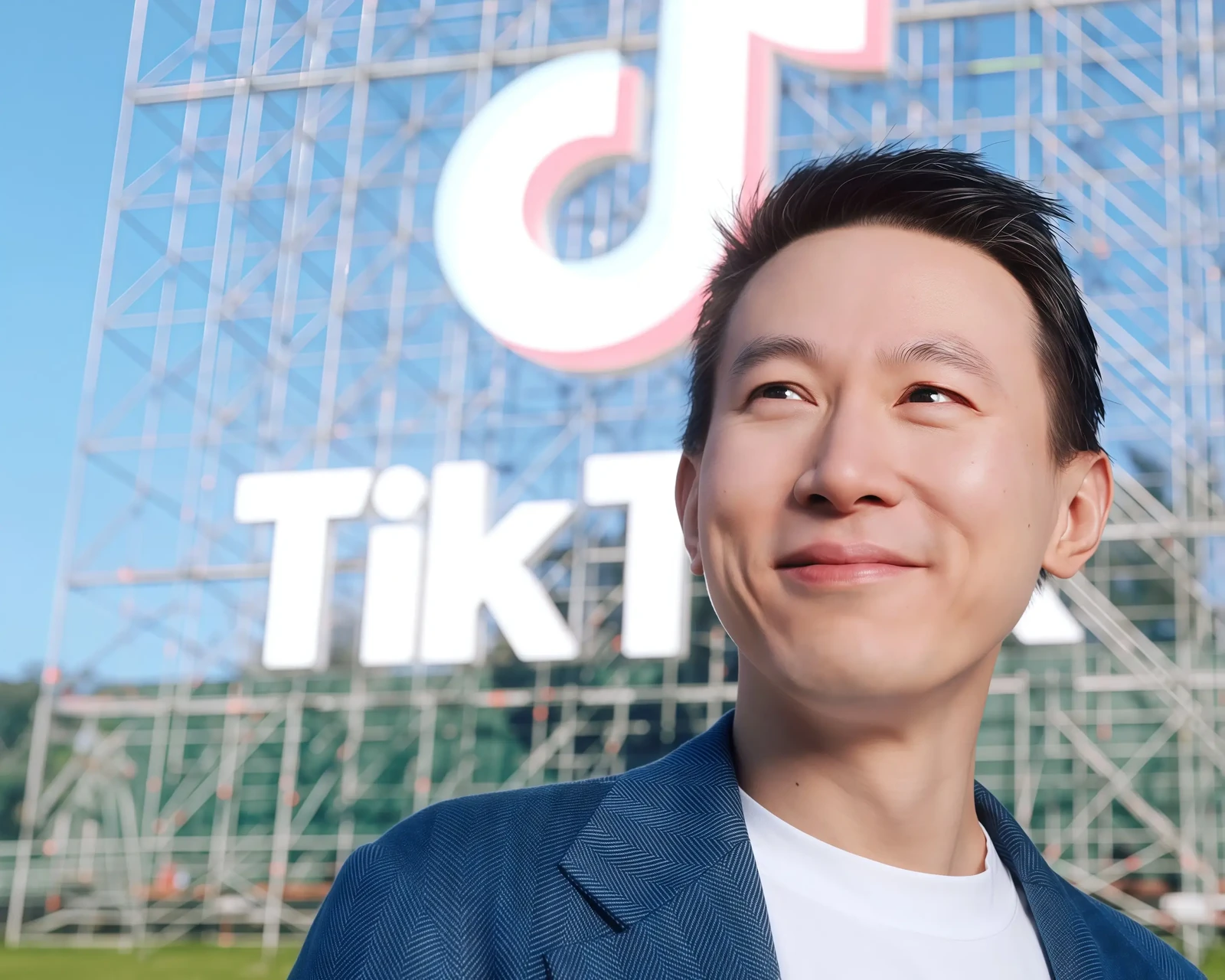
Shou Zi Chew kept TikTok operating in the United States. The price was a corporate structure that makes operating it considerably harder.
In January 2026, TikTok’s American business moved into a majority US-owned joint venture created to satisfy the federal divestiture law and a presidential agreement. ByteDance retained 19.9 per cent. Oracle, Silver Lake and Abu Dhabi-based MGX each took 15 per cent, with other investors holding the balance. A seven-member board assumed oversight, American user data remained inside Oracle’s cloud, and the joint venture gained authority over the US recommendation system, content moderation, software assurance and trust-and-safety policy.
Chew remains chief executive of global TikTok and sits on the new board. He does not run the American joint venture; that role belongs to Adam Presser. TikTok’s global entities continue to manage product interoperability and parts of the commercial system, including advertising, marketing and e-commerce.
The arrangement preserved access for more than 200 million American users and 7.5 million businesses. It also divided control of the platform at the precise points where TikTok’s value is created: data, code, recommendations, moderation, commerce and the ability for a video made in one country to find an audience in another.
This is now the defining problem of Chew’s leadership. For years, he served as TikTok’s public defence counsel, appearing before lawmakers and arguing that a Singapore-led global management team could protect users without treating every connection to ByteDance as evidence of Chinese state control. The American settlement changed the question. TikTok no longer has to persuade Washington to accept one global governance model. It has to prove that separate governance systems can still produce one coherent product.
Few chief executives have been asked to manage such a consequential separation without destroying the network effects that made the company valuable. Chew must preserve a global creator economy while nationalising critical infrastructure. He must grow advertising and commerce while regulators challenge the platform’s design. He must make the recommendation system more transparent without weakening the speed and intimacy that distinguish it.
The United States was the existential test. The next test is institutional: can TikTok survive the solution that saved it?
The settlement transformed survival into systems engineering
The 2024 Protecting Americans from Foreign Adversary Controlled Applications Act was designed to force a choice. ByteDance would complete a qualified divestiture or American app stores and hosting providers would be prohibited from supporting TikTok. The Supreme Court rejected TikTok’s constitutional challenge in January 2025, leaving the company dependent on enforcement delays and negotiations.
The final structure was intended to remove foreign-adversary control while allowing TikTok to remain connected to the global service. US user data is held in an American cloud environment. The recommendation algorithm is retrained, tested and updated on US data. Oracle assists with continuing review of source code and software. The joint venture controls content moderation and trust-and-safety policy for American users.
At the same time, interoperability is preserved so that American creators can reach global audiences and global content can reach the United States. TikTok’s commercial entities continue to support advertising, e-commerce and marketing. The product is separated enough to satisfy national-security requirements but connected enough to retain its economic purpose.
That balance is technically and organisationally demanding. A recommendation system is not a static package handed from one owner to another. It learns from behaviour, content supply, safety rules, product changes and commercial objectives. Retraining a US model on American data while maintaining a global experience requires clear boundaries around features, code changes, model inputs and performance.
Moderation adds another layer. If the American joint venture has decision-making authority over policy and enforcement, it may reach different judgments from TikTok elsewhere. That divergence could be required by law or culture. It could also create inconsistent treatment for creators whose audiences cross borders.
Chew’s role is therefore less like that of a conventional product chief and more like that of an architect of controlled interdependence. He has to determine which capabilities can remain global, which must be local and how the interfaces between them are governed.
The settlement is sustainable only if those interfaces are legible to regulators and invisible enough to users. Too much integration revives the national-security concern. Too much separation diminishes the product.
The algorithm is no longer only an asset; it is a jurisdiction
TikTok’s recommendation system changed social media by weakening the relationship between distribution and an existing follower network. A new creator can reach millions because the system evaluates a piece of content against observed interest rather than relying primarily on whom the user has chosen to follow.
That design turned attention into an exceptionally fluid market. Videos compete continuously. The platform learns from viewing time, rewatches, skips, shares, comments and searches. Each interaction improves the next selection, making TikTok feel less like a catalogue of people and more like a personalised stream of cultural probability.
The result is both the company’s commercial moat and the source of its political power. A system that decides what hundreds of millions of people see can shape music, language, consumer demand, political information and perceptions of public reality. Control of the algorithm therefore became inseparable from control of the platform.
The American structure formalises that understanding. The joint venture is responsible for retraining and securing the US recommendation system. It controls trust and safety. Oracle monitors code and data flows. The algorithm is being treated not simply as intellectual property but as critical infrastructure subject to territorial governance.
For Chew, the danger is product drift. A separately trained system may begin to optimise differently because its user data, moderation choices and commercial environment differ. Small deviations compound. The American experience could become more local, more regulated or more commercially distinct from the global service.
Some divergence may be healthy. Local accountability can improve safety and make policy more responsive to national law. The global internet has always adapted products to different jurisdictions. The issue is whether the core discovery experience remains recognisably shared.
TikTok’s network effects do not depend only on the number of users. They depend on the circulation of formats, sounds, humour and creators across markets. A dance, product or political clip becomes culturally powerful because it moves quickly through communities that do not share the same media system.
If governance partitions that movement too aggressively, TikTok risks becoming a collection of national feeds using a common brand. If it preserves too much commonality without transparent controls, the political settlement will remain vulnerable.
Chew has to govern the algorithm as a federation: local authority, common protocols and enough movement across borders to make membership valuable.
His authority is strongest where it is least visible
Chew became globally recognisable through congressional hearings, but public performance is only a small part of his value to TikTok. His career sits at the intersection of capital, technology and corporate governance.
A Singaporean educated in London and at Harvard Business School, he worked at Goldman Sachs and the investment firm DST before becoming an early investor in ByteDance. He later served as Xiaomi’s chief financial officer and international-business president, returned to ByteDance as finance chief and became TikTok chief executive in 2021.
That path gave him fluency in the constituencies that TikTok must reconcile: founders, private investors, public-market expectations, global operating teams and governments. He understands ByteDance from both sides of the table—as investor and executive—and can translate between a parent company built in China and a product whose economic and cultural life is overwhelmingly international.
The translation is not neutral. Chew has repeatedly insisted that he, based in Singapore, leads TikTok’s day-to-day and strategic decisions. Yet TikTok remains part of ByteDance, whose board and management retain authority over high-level financial and governance matters. The US settlement adds another layer of directors, investors, security officials and operating executives.
His influence therefore depends less on formal command than on his ability to keep multiple centres of power aligned. He must secure product investment from the parent, satisfy the US board’s safeguards, respond to European regulators, preserve the confidence of advertisers and creators, and keep employees working as one company despite legal separation.
This is a distinctive form of chief-executive authority. Chew cannot resolve every conflict by issuing an instruction. He has to design processes through which institutions that do not fully trust one another can still cooperate.
His calm public manner is useful because TikTok operates inside a permanent credibility deficit. But composure is not governance. The company’s future depends on evidence that authority is allocated clearly, disputes are resolved independently and commercial pressure cannot override security or safety decisions.
Chew’s least visible achievement will be the most important: creating a system that does not require his personal mediation to remain stable.
TikTok is becoming a commerce company built on discovery
The regulatory drama can obscure TikTok’s commercial evolution. The platform is no longer only an advertising business attached to short video. It is building a commerce system in which entertainment, recommendation, creator influence and checkout occur inside the same feed.
TikTok Shop turns the algorithm’s ability to create demand into a transaction engine. A product can move from obscurity to mass attention through a creator demonstration or livestream, without beginning with search intent or an established brand. Sellers pay commissions, creators earn affiliate income and TikTok captures more economic value from the attention it already controls.
In the United States, Shop sales rose sharply in 2025, with more than 170,000 local and small businesses using the platform. Across Southeast Asia, livestream and affiliate commerce have grown rapidly, building on consumer habits already familiar from China’s digital economy. TikTok Shop has expanded into Latin America and other markets, adapting the discovery-commerce model to local sellers and payments.
The opportunity is substantial because social media and e-commerce have traditionally monetised different moments. Advertising monetises consideration; marketplaces monetise intent. TikTok can create the intent, demonstrate the product and process the purchase in one session.
That integration also creates conflicts. Users need to know whether a recommendation reflects genuine interest, paid promotion, affiliate commission or the platform’s commercial objective. Creators who become sales channels may weaken the authenticity that made their influence valuable. Counterfeits, unsafe products and manipulative claims can spread at recommendation speed.
TikTok says it has invested heavily in marketplace protection, but scale changes the risk. A platform hosting tens of millions of products cannot rely solely on removing bad sellers after harm occurs. Merchant verification, product testing, intellectual-property enforcement, refund systems and affiliate disclosure become core infrastructure.
The American joint venture makes the commercial boundary especially important. USDS controls data, the algorithm and moderation, while TikTok global entities manage certain commercial activities. Decisions about whether to promote a shoppable video may involve both recommendation integrity and revenue.
Chew needs a governance model that prevents commerce from quietly becoming the feed’s dominant purpose. Discovery works because users do not experience every recommendation as an advertisement. Once that assumption breaks, the platform’s most valuable asset—attention freely given—becomes more expensive to retain.
The creator economy gives TikTok power and fragility
TikTok’s strongest defence against political exclusion was never corporate argument alone. It was dependence. Creators had built audiences, businesses had built customer-acquisition channels and cultural industries had reorganised promotion around the platform. Removing TikTok would not simply close an application; it would disrupt livelihoods and commercial routines.
The new American joint venture was announced with explicit reference to more than 200 million users and 7.5 million businesses. Those numbers express political constituency as much as market scale.
Yet creators do not owe permanent loyalty to a platform. Their income is exposed to algorithm changes, policy enforcement, advertising cycles and consumer fashion. A creator can have millions of followers and still lose distribution if the recommendation system shifts. Unlike a subscriber list or owned storefront, platform reach is rented.
Chew must make that relationship durable enough for professional creators to invest. Monetisation has to be understandable. Enforcement needs credible appeal. Commerce commissions and brand partnerships require transparent rules. Cross-border reach must survive the new governance boundaries.
The separation of the US algorithm could create a particular anxiety. If American recommendations are trained and managed independently, creators may need to optimise for two TikToks. Content that succeeds globally may not travel in the same way inside the United States. Policy differences could affect visibility, music rights and eligibility for monetisation.
Interoperability is intended to prevent that fracture. But interoperability is not the same as equal distribution. The economic experience of creators will reveal whether the platform remains truly global long before corporate statements do.
TikTok also has to protect the conditions that make creation possible. Generative AI lowers production costs but increases synthetic content, impersonation and volume. If feeds become saturated with machine-produced material optimised for engagement, human creators may struggle to compete and users may become less certain what is authentic.
Labelling, provenance and enforcement must evolve without suppressing legitimate experimentation. Chew’s platform has always rewarded creative adaptation. Its next challenge is distinguishing adaptation from industrialised imitation.
Europe is turning product design into a regulatory question
The American settlement addressed ownership and national security. Europe is focusing on a different source of power: the design of the product itself.
TikTok had more than 200 million monthly users across Europe by late 2025, approaching a third of the population in the European Economic Area and the United Kingdom. That scale makes it one of the platforms subject to the strictest obligations under the European Union’s Digital Services Act.
In February 2026, the European Commission preliminarily found that TikTok’s addictive design breached the Act. The inquiry focused on infinite scroll, autoplay, notifications and the highly personalised recommendation system, arguing that TikTok had not adequately assessed risks to the wellbeing of users, including minors and vulnerable adults.
The finding goes to the heart of TikTok’s economics. The platform is designed to reduce the friction between one piece of content and the next. Viewing time produces more data, more advertising opportunities and more chances for commerce. Features that regulators describe as compulsive are closely related to features investors would describe as engagement.
Chew cannot answer that tension through parental controls alone. The question is whether the default product asks enough of the user before extending a session indefinitely. Break reminders and time limits matter, but their effectiveness depends on presentation, defaults and whether the recommendation system is rewarded for circumventing the spirit of the intervention.
The Commission has also raised concerns about researcher access to platform data. External scrutiny is essential because many systemic effects—political influence, harmful-content pathways, discrimination and compulsive use—cannot be evaluated through company-selected examples.
TikTok understandably protects user privacy and intellectual property. It also has an interest in controlling how its impact is measured. A mature platform needs mechanisms that allow qualified independent research without exposing personal data or enabling competitors to reconstruct the algorithm.
Europe’s approach signals the next phase of platform regulation. Governments will not limit themselves to removing illegal content. They will examine how product incentives create risk. For Chew, compliance may require changes that reduce engagement in the short term to protect the licence to operate in the long term.
Data localisation has to become more than architecture
TikTok has spent years constructing geographically specific data-security programmes. Project Texas underpinned the American joint venture; Project Clover was designed for European users. Data centres, access controls, third-party monitoring and local governance were intended to demonstrate that information could be protected even within a globally connected group.
The company’s European record shows why architecture alone is insufficient. In 2025, Ireland’s Data Protection Commission imposed a €530 million fine over transfers of European user data to China and transparency failures. TikTok appealed, but the regulator also opened a further inquiry after the company disclosed that limited European data had in fact been stored on servers in China, contrary to information previously provided.
The episode damaged more than legal compliance. TikTok’s central argument has always depended on the reliability of its assurances about where data is stored, who can access it and under what controls. Inaccurate information to a regulator undermines confidence in the governance system around the technology.
Chew must turn data sovereignty into an operating discipline understood across engineering, legal, security and product teams. A server location is only one part of the question. Remote access, troubleshooting, model training, logging, backups and vendor support can all create data transfers or exposure.
The challenge becomes greater as localisation expands. Separate environments increase cost, duplicate systems and slow global product development. Engineers may have limited visibility into production issues. Security teams must monitor more boundaries, while regulators expect proof that those boundaries work.
There is no credible shortcut. TikTok’s global model survives only if local commitments are technically enforceable and accurately described. The company cannot ask regulators to distinguish it from ByteDance governance while relying on informal access when formal systems become inconvenient.
Trust in data policy is cumulative and asymmetrical. It takes years of audited performance to build and one contradiction to weaken.
Safety is a product responsibility, not a moderation department
TikTok’s public debates often collapse into a binary argument: the platform is either a source of creativity and community or a machine that exposes young people to harm. Both descriptions can be true because the same recommendation system amplifies beneficial and dangerous content with remarkable efficiency.
Chew has emphasised age restrictions, family controls, content rules, safety staff and specialised protections for minors. TikTok has built systems to detect child sexual abuse material, self-harm content, dangerous challenges, scams and coordinated manipulation.
The difficulty is that moderation acts after or alongside distribution. Product design determines how quickly content travels, how deeply a user enters a topic and whether the system keeps supplying adjacent material. Safety cannot be separated from the objective function of the feed.
For younger users, the issue is especially acute. A recommendation engine can learn vulnerability without naming it. Repeated viewing of content about body image, depression or risky behaviour may lead the system to provide more of the same because observed interest and wellbeing are not equivalent.
The US joint venture now holds decision-making authority over American trust-and-safety policy and moderation. That local accountability is significant, but it creates another coordination problem. Harmful trends cross borders instantly. Safety intelligence, threat indicators and enforcement techniques must move globally even when user data and policy authority do not.
Chew needs a safety architecture that shares enough information to respond at platform speed while respecting local controls. The company must also disclose outcomes that allow outsiders to judge whether interventions work, not merely how many pieces of content were removed.
The mature measure is prevention: reduced exposure, slower propagation and fewer users entering harmful recommendation loops. Those metrics may be less flattering than removal totals. They are also closer to the product responsibility regulators increasingly expect.
The global platform is becoming a negotiated institution
TikTok’s original international success was built on product universality. The same interface, recommendation logic and creative grammar could travel across languages and borders. Local content made the platform feel native without requiring a different operating model in every country.
That period is ending. The United States has created an ownership and security regime. Europe is regulating design, transparency and data transfers. Countries across Asia impose different rules on commerce, content, payments and data. Age-assurance laws are expanding. Political campaigns expect stronger protections against influence operations and synthetic media.
Chew cannot preserve TikTok by insisting that one architecture should satisfy all of them. He has to negotiate a common platform out of local obligations. That means modular code, regional data controls, auditable recommendation systems, policy variation and governance bodies with real authority.
The cost will be substantial. Compliance teams, security partners, separate infrastructure and regulatory reporting reduce the efficiency of global scale. Product launches may arrive at different times. Features may not be available everywhere. Decision-making becomes slower.
But regulatory complexity can also become a competitive barrier. A company capable of operating safely across demanding jurisdictions may be harder to displace than one optimised only for growth. TikTok already possesses engineering scale, capital and institutional relationships that smaller challengers would struggle to replicate.
The strategic objective should not be to minimise every local constraint. It should be to turn compliance into a trusted operating system. Advertisers want brand safety. Creators want predictable rules. Users want control over data and recommendations. Governments want enforceable accountability.
If TikTok can provide those things without losing cultural velocity, regulation may strengthen the platform it was intended to contain. If the layers become performative or contradictory, fragmentation will accelerate.
Chew has to prove the settlement can outlast him
Shou Zi Chew’s tenure has already been defined by survival. TikTok endured hearings, litigation, a federal divestiture law, a brief American shutdown and years of negotiations. The app remains available, its audience has expanded and its commercial ambitions are broader.
Survival, however, can create the wrong management habit. A company under constant threat learns to optimise for the next deadline, hearing or political relationship. Temporary arrangements accumulate. Senior leaders become indispensable because they carry the history of every compromise.
The US joint venture offers a chance to move from contingency to institution. Its board, security committee, independent chief executive, Oracle controls and defined authority can create durable accountability if they function as more than negotiated safeguards. TikTok global can establish clear interfaces and conflict-resolution mechanisms that do not depend on private understanding among a few executives.
Chew’s presence on the US board is valuable because he can preserve alignment with the global product. It is also a reminder that the structure still relies on someone able to speak for both systems. A stable settlement should be capable of handling disagreement even when that bridge is absent.
The broader leadership test is equally demanding. TikTok must grow commerce without turning every recommendation into a sales proposition. It must adapt to European design rules without hollowing out discovery. It must give researchers enough visibility to establish legitimacy. It must protect minors through product choices, not only content removal. It must make data commitments that survive technical reality.
Chew kept TikTok in America by accepting that the platform could no longer be governed as a single undivided system. His achievement will be complete only if that division produces stronger accountability without breaking the global community it was designed to preserve.
The next version of TikTok will not be held together by ownership alone. It will be held together by protocols, trust and the willingness of separate institutions to accept common rules.
That is a less visible form of innovation than the For You feed. It may now be the one that matters most.