
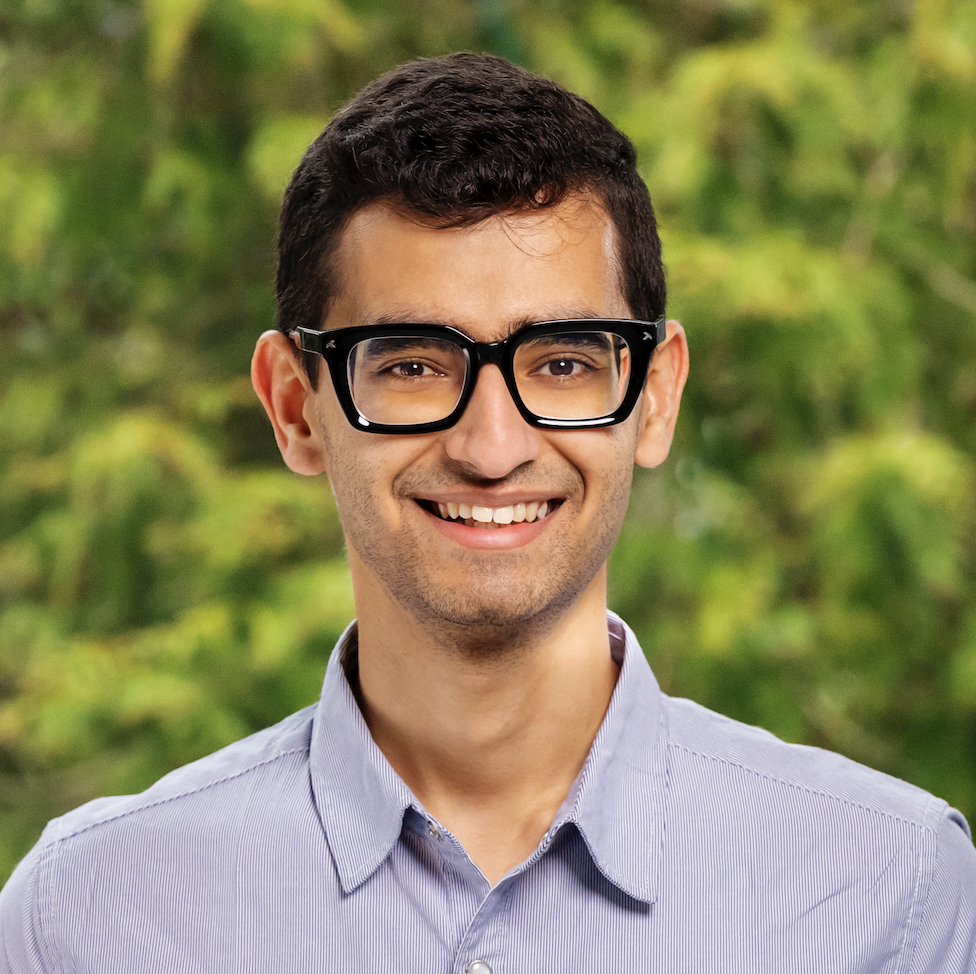
FigureAsia 35 Under 35 · AI
Sayash Kapoor
Age 29 · Evaluation researcher · India and United States; open evaluation work used across international agent research
Rebuilding the Tests Behind the Agentic AI Boom
- Age at the edition eligibility date
- 29
- Field
- AI-agent evaluation, reproducibility and reliability
- Country or region
- India and United States; open evaluation work used across international agent research
- FigureAsia U35 Assessment
- 88.3 / 100
Profile
Career and documented record
Sayash Kapoor studies a foundational weakness in the market for AI agents: impressive demonstrations often reveal little about reliability, cost or real-world usefulness. His recent work builds evaluation systems intended to replace isolated scores with reproducible evidence across tasks, models and repeated runs.
Sayash Kapoor’s work begins where many AI demonstrations end. An agent completes a task once; the result circulates as evidence of capability; and questions of reliability, cost and reproducibility arrive later. As a Princeton computer-science doctoral candidate, Kapoor has helped build a more demanding science of agent evaluation. In 2025, AI Agents That Matter, co-led with Benedikt Stroebl, argued for benchmarks that account for deployment costs, overfitting and meaningful downstream usefulness. In 2026, Kapoor and Stroebl were co-first authors of the Holistic Agent Leaderboard, an open evaluation platform designed to compare agents across multiple benchmarks while exposing cost, variance and methodological choices. Kapoor also co-authored work on agent reliability that treats performance as a distribution across repeated trials rather than a single pass rate. Alongside this technical programme, he contributed to the 2025 and 2026 International AI Safety Reports and research on independent flaw disclosure. His contribution is deliberately corrective: not a claim that agents are unimportant, but a demand that the evidence used to judge them become as sophisticated as the systems being sold.
FigureAsia selection
Why Sayash Kapoor is on the list
FigureAsia selected Kapoor because the credibility of agentic AI depends on the credibility of its tests. He has identified where current leaderboards invite overclaiming and helped build alternatives that surface cost, variance and reproducibility. The work is especially timely as agents move from research prototypes into software, scientific and professional settings. This selection recognises a collaborative research programme, not sole ownership of its platforms or conclusions. It also distinguishes evaluation infrastructure from deployment impact: the case rests on improving the quality of evidence available to the field.
Verified work
The 2025–26 record
Verified contribution 01
Co-led AI Agents That Matter, published in TMLR in 2025, which set out evaluation principles covering cost, overfitting, reproducibility and real-world utility.
Verified contribution 02
Served as co-first author of the Holistic Agent Leaderboard, accepted at ICLR 2026, an open platform comparing agent performance across benchmarks while recording methodological and cost information.
Verified contribution 03
Co-authored Towards a Science of AI Agent Reliability, accepted at ICML 2026, which evaluates agents across repeated trials and analyses failure distributions rather than relying on single aggregate scores.
Verified contribution 04
Contributed to both the 2025 and 2026 International AI Safety Reports; these were collective assessments, not Kapoor-authored policy recommendations.
Field context
The work in its field
Kapoor’s evaluation tools and papers address models and agents used across markets, while the international safety-report process connects his work to an assessment backed by more than 30 countries and intergovernmental organisations. Open artefacts allow independent use and replication.
Educated in India and working on globally deployed systems, Kapoor brings direct regional grounding to questions Asian enterprises face when assessing imported or locally built AI agents.
FigureAsia U35 Assessment
Assessment breakdown
88.3out of 100
Defining contribution
22 / 25
A completed piece of work, institution or system that materially changes what the field can do.
Demonstrated impact and reach
16.4 / 20
Observable adoption, scientific use, policy consequence or operational reach, with self-reported metrics labelled as such.
Personal agency and attribution
13.5 / 15
Evidence that the individual shaped the result, separated from team, employer and investor halo.
Technical or institutional originality
13.8 / 15
A new method, product form, research direction, governance mechanism or deployment model.
Durability and field-shaping influence
8.9 / 10
The likelihood that the contribution will remain useful beyond a single news cycle or model release.
Evidence integrity and responsible practice
9.3 / 10
The quality of the record, the precision of claims and the seriousness with which limitations and harms are addressed.
Asia–world relevance
4.4 / 5
A documented connection to Asia, impact on Asian systems, or clear importance to the region’s place in the international field.