
FigureAsia 35 Under 35 · AI
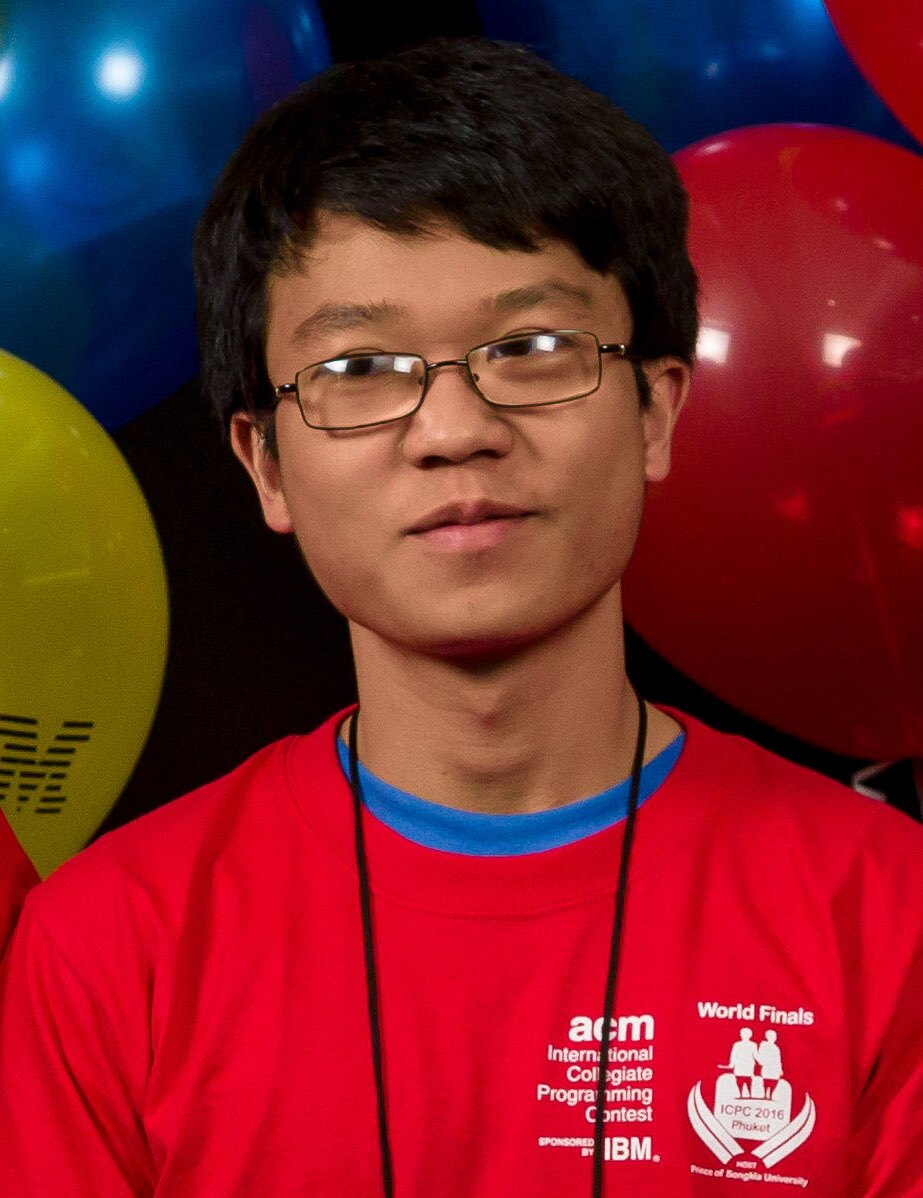
Scott Wu
Age 29 · Technical founder and operating leader · United States; cloud software agents used by engineering organisations internationally
Testing How Far Software Agents Can Go
- Age at the edition eligibility date
- 29
- Field
- Autonomous software engineering agents
- Country or region
- United States; cloud software agents used by engineering organisations internationally
- FigureAsia U35 Assessment
- 89.0 / 100
Profile
Career and documented record
Scott Wu has pushed software agents from a provocative demonstration into a fast-growing enterprise product. The 2025–2026 expansion combined a redesigned agent environment, the acquisition of an AI-native editor and reported adoption at substantial scale—while keeping scrutiny on reliability and production performance.
Scott Wu grew up in the United States in a Chinese-American family and became known early for exceptional competitive-programming results. He later co-founded Cognition with Steven Hao and Walden Yan, serving as chief executive. In 2024 the company introduced Devin, presented as an autonomous software engineer capable of planning, coding, debugging and using development tools. Initial demonstrations created enormous attention, but independent testers subsequently questioned whether the public presentation overstated reliability on unconstrained work. That scrutiny remains relevant. The more persuasive evidence has emerged through subsequent product iteration and enterprise use rather than the launch narrative alone. In April 2025, the company released Devin 2.0, introducing an agent-native development environment, parallel agent sessions, planning and repository search. In July it acquired Windsurf, bringing an established coding environment and its team into Cognition. By September, the company reported that Devin’s annual recurring revenue had risen from US$1 million to US$73 million in nine months. In May 2026, it announced financing at a US$26 billion valuation and reported a US$492 million revenue run rate, more than tenfold growth in enterprise use since January and 89% of its internal code committed by Devin. These are company statements. Wu’s contribution is the sustained attempt to turn software agency into a production system after the original demonstration’s claims were contested.
FigureAsia selection
Why Scott Wu is on the list
FigureAsia selected Wu because Cognition continued to test the limits of autonomous software work after an unusually scrutinised debut. Devin 2.0, the Windsurf acquisition and reported enterprise growth indicate that the company evolved beyond a single viral demonstration. The selection does not validate every autonomy or productivity claim; it recognises Wu’s role in building one of the most consequential experiments in agentic software engineering. Independent reliability, transparent evaluation and sustainable working practices remain essential to the company’s long-term authority.
Verified work
The 2025–26 record
Verified contribution 01
In April 2025, the company released Devin 2.0 with parallel agents, an agent-native interface, planning, search and repository documentation.
Verified contribution 02
In July 2025, it acquired Windsurf and integrated its team and coding environment.
Verified contribution 03
In September 2025, the company reported annual recurring revenue of US$73 million, up from US$1 million nine months earlier.
Verified contribution 04
In May 2026, it reported a US$492 million revenue run rate, more than tenfold enterprise-use growth and 89% internal code contribution from its agents.
Field context
The work in its field
Cognition and Windsurf serve developers and enterprises internationally through cloud-based products. Reported revenue and usage growth suggest broad demand, but the company has not released audited geographic adoption or independent productivity measurements.
Wu’s Chinese-American family background and the globally distributed developer market connect the work to Asia’s large engineering, software-services and technology-startup communities.
FigureAsia U35 Assessment
Assessment breakdown
89.0out of 100
Defining contribution
22.5 / 25
A completed piece of work, institution or system that materially changes what the field can do.
Demonstrated impact and reach
18.4 / 20
Observable adoption, scientific use, policy consequence or operational reach, with self-reported metrics labelled as such.
Personal agency and attribution
13.65 / 15
Evidence that the individual shaped the result, separated from team, employer and investor halo.
Technical or institutional originality
13.65 / 15
A new method, product form, research direction, governance mechanism or deployment model.
Durability and field-shaping influence
8.7 / 10
The likelihood that the contribution will remain useful beyond a single news cycle or model release.
Evidence integrity and responsible practice
7.6 / 10
The quality of the record, the precision of claims and the seriousness with which limitations and harms are addressed.
Asia–world relevance
4.5 / 5
A documented connection to Asia, impact on Asian systems, or clear importance to the region’s place in the international field.