
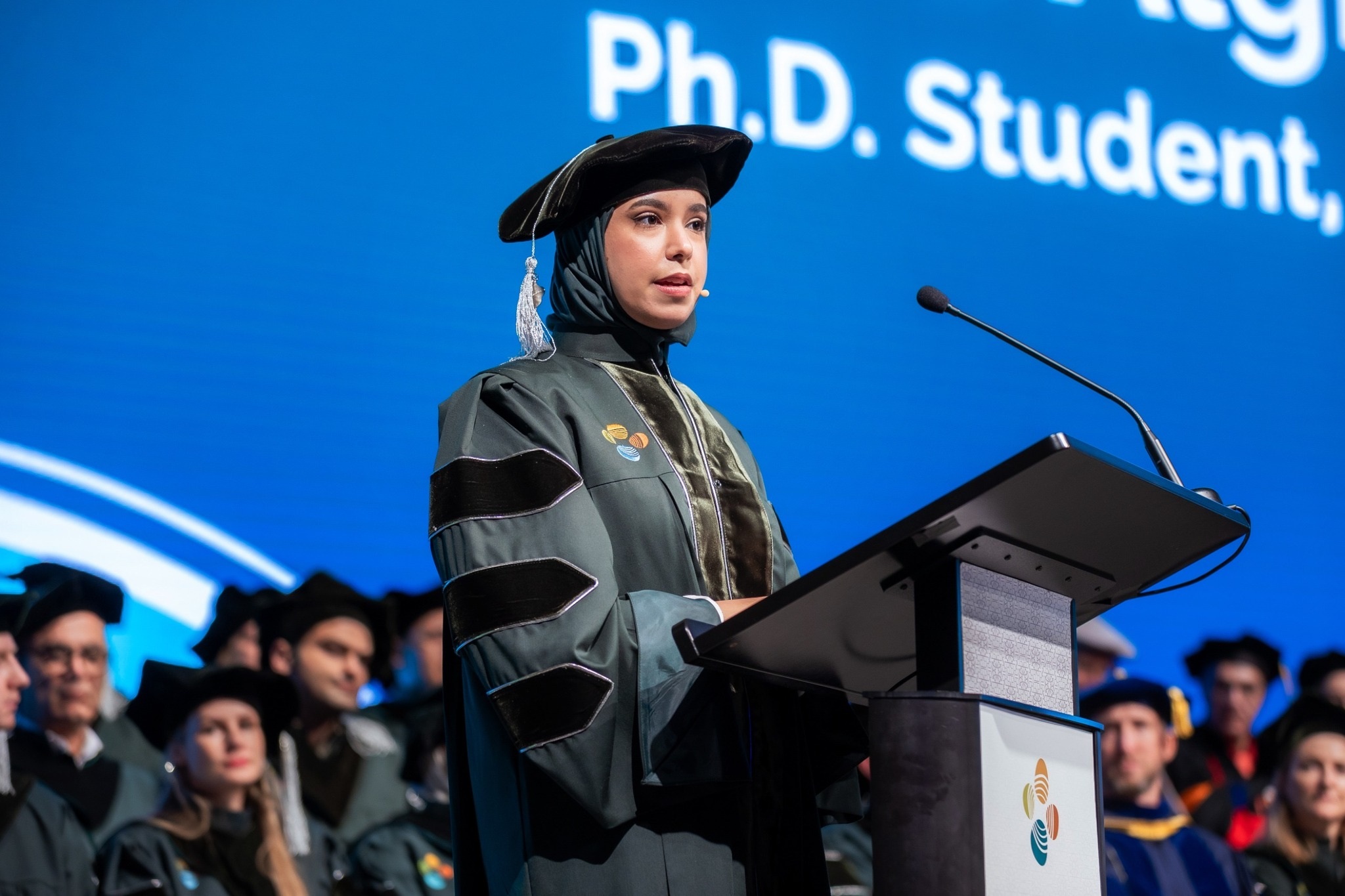
FigureAsia 35 Under 35 · Healthcare
Arwa Alghuneim
Age 28 · Stem-cell engineering and leukemia · Thuwal, Saudi Arabia
Co-first author of 2026 preclinical work using fucosylation to improve hematopoietic stem-cell homing and engraftment.
- Approximate age at 31 December 2025
- 28
- Field
- Healthcare
- Country or region
- Thuwal, Saudi Arabia
- FigureAsia U35 Assessment
- 80.6 / 100
Profile
Career and documented record
A successful hematopoietic stem-cell transplant depends not only on the cells' intrinsic quality but on whether they home to and engraft in the bone marrow. Arwa Alghuneim was a co-first author on 2026 work examining fucosylation as a way to improve that trafficking biology. The study reported enhanced homing and engraftment in preclinical models, connecting a cell-surface modification to a clinically recognizable bottleneck.
Her doctoral programme also addresses acute myeloid leukemia, giving the transplantation work a larger disease context. Alghuneim's contribution is experimental and collaborative, not a claim of sole invention. Co-first authorship and a sustained thesis record establish a meaningful personal role at a stage when many young researchers remain difficult to distinguish inside large teams.
The work remains preclinical. It does not show safer or more effective transplantation in patients, and optimization of a cell product introduces manufacturing and regulatory questions. Its significance lies in making a specific biological barrier tractable and in building advanced cell-therapy research capacity in Saudi Arabia.
FigureAsia selection
Why Arwa Alghuneim is on the list
FigureAsia selected Alghuneim because the 2026 study is mechanistically clear, translationally relevant and anchored by visible authorship. It also demonstrates that West Asian biomedical research is contributing to the engineering details on which sophisticated therapies depend. The score remains disciplined on evidence maturity: this is promising preclinical work, not a clinical breakthrough.
Verified work
The 2025–26 record
Principal milestone
Co-first-author 2026 study
Evidence record
Improved homing and engraftment reported in preclinical models
Scale or implementation
Doctoral programme linked to acute myeloid leukemia
Field context
The work in its field
Within stem-cell engineering and leukemia, the relevant test is whether a result can survive scrutiny of maturity, attribution, validity and practical fit. That distinction matters: completed evidence is not projected benefit, and individual responsibility is not interchangeable with the wider team’s achievement.
FigureAsia U35 Assessment
Assessment breakdown
80.6out of 100
Substantive 2025–2026 contribution
18 / 20
The score reflects completed 2025–26 work in stem-cell engineering and leukemia, assessed at the documented maturity of preclinical cell-therapy research.
Verified impact
10.5 / 15
Impact credit is limited to the measured study, regulatory, implementation or operating record stated in the profile; unsupported patient benefit is excluded.
Originality and distinction
8 / 10
The work creates or materially advances a distinctive capability within stem-cell engineering and leukemia rather than relying on title or institutional association.
Field and industry influence
7 / 10
The assessment recognises demonstrated effects on research, product development, care delivery or professional practice, with publicity alone carrying no weight.
Individual agency
8 / 10
Named authorship and the documented role of Doctoral Researcher in Bioscience establish individual responsibility while preserving credit for collaborators.
Durability and trajectory
4 / 5
The cited work forms part of a continuing programme, platform or research trajectory rather than a single uncompleted announcement.
Asian significance and global relevance
5 / 5
The Asian connection is material to the person's identity, operating base or populations served: Saudi stem-cell and cancer researcher.
Clinical and scientific validity
5.6 / 7
Clinical and scientific validity is calibrated to preclinical cell-therapy research, with the profile retaining the evidence boundary attached to the result.
Safety, quality and responsible governance
6.3 / 7
Safety and governance credit reflects accurate regulatory language, study limitations, data stewardship and the refusal to turn early evidence into clinical certainty.
Translation and care-pathway fit
4.2 / 6
The work is scored for its demonstrated fit with a laboratory, regulatory, clinical, operational or public-health pathway, not for projected future adoption.
Access, equity and resource stewardship
4 / 5
Access credit reflects documented reach, capacity, affordability or inclusion while distinguishing service volume from proven clinical outcome.