
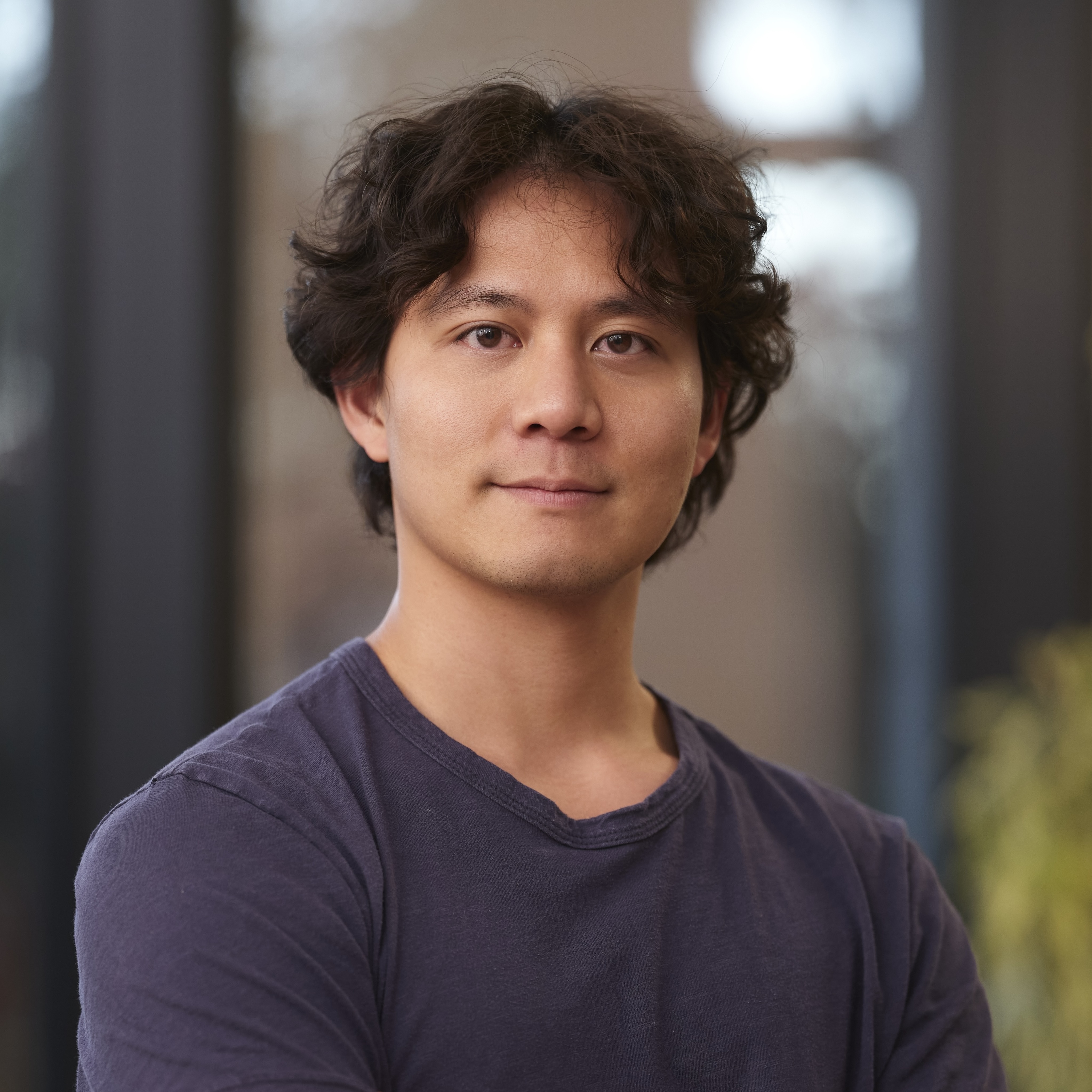
FigureAsia 35 Under 35 · Healthcare
Patrick D. Hsu
Age 33 · Genome engineering and generative biology · Berkeley and Palo Alto, United States
A co-senior author behind Evo 2 and the senior investigator on programmable human-genome rearrangements approaching one million base pairs.
- Approximate age at 31 December 2025
- 33
- Field
- Healthcare
- Country or region
- Berkeley and Palo Alto, United States
- FigureAsia U35 Assessment
- 88.2 / 100
Profile
Career and documented record
Patrick Hsu's 2025 record reaches across two foundational layers of modern biomedicine: learning from genomes and rewriting them. As a co-senior author on Evo 2, he helped lead an openly released biological foundation model trained on more than 9.3 trillion nucleotides from over 128,000 genomes, with a one-million-nucleotide context window. The release included code, model weights and training resources, turning a large scientific asset into infrastructure that other laboratories could interrogate rather than a closed demonstration.
Later in the year, Hsu's group reported programmable bridge recombinases engineered for human cells. The system achieved insertions, excisions and inversions, with DNA segments mobilized up to roughly 0.93 megabases; reported insertion efficiency reached 20% in the tested setting, with genome-wide specificity as high as 82%. These are cell-based research results, not a therapy. Their importance is the size and programmability of the genomic changes, which address a class of variation that small-edit tools cannot readily model. Hsu's role is unusually legible: he is a senior author, laboratory leader and institution builder who has also argued for opening expensive scientific platforms to broad scrutiny.
FigureAsia selection
Why Patrick D. Hsu is on the list
FigureAsia recognizes Hsu for a paired contribution of rare scope. Evo 2 expanded the scale and accessibility of genomic modeling, while the bridge-recombinase work advanced programmable rearrangement in human cells. Both carry substantial safety and translation questions; neither is represented here as clinical medicine. Their combined influence, however, is already visible in the research agenda they create for variant interpretation, genome design and large-scale editing.
Verified work
The 2025–26 record
Principal milestone
Evo 2 trained on more than 9.3 trillion nucleotides
Evidence record
One-million-nucleotide model context window
Scale or implementation
Bridge recombinases mobilized DNA segments up to about 0.93 megabases
Field context
The work in its field
Within genome engineering and generative biology, the relevant test is whether a result can survive scrutiny of maturity, attribution, validity and practical fit. That distinction matters: completed evidence is not projected benefit, and individual responsibility is not interchangeable with the wider team’s achievement.
FigureAsia U35 Assessment
Assessment breakdown
88.2out of 100
Substantive 2025–2026 contribution
20 / 20
The score reflects completed 2025–26 work in genome engineering and generative biology, assessed at the documented maturity of foundational and preclinical research.
Verified impact
12 / 15
Impact credit is limited to the measured study, regulatory, implementation or operating record stated in the profile; unsupported patient benefit is excluded.
Originality and distinction
10 / 10
The work creates or materially advances a distinctive capability within genome engineering and generative biology rather than relying on title or institutional association.
Field and industry influence
10 / 10
The assessment recognises demonstrated effects on research, product development, care delivery or professional practice, with publicity alone carrying no weight.
Individual agency
10 / 10
Named authorship and the documented role of Assistant Professor of Bioengineering; Cofounder and Core Investigator establish individual responsibility while preserving credit for collaborators.
Durability and trajectory
4.5 / 5
The cited work forms part of a continuing programme, platform or research trajectory rather than a single uncompleted announcement.
Asian significance and global relevance
4 / 5
The Asian connection is material to the person's identity, operating base or populations served: Born in Taipei and active in the Taiwanese-American scientific diaspora.
Clinical and scientific validity
5.6 / 7
Clinical and scientific validity is calibrated to foundational and preclinical research, with the profile retaining the evidence boundary attached to the result.
Safety, quality and responsible governance
4.9 / 7
Safety and governance credit reflects accurate regulatory language, study limitations, data stewardship and the refusal to turn early evidence into clinical certainty.
Translation and care-pathway fit
4.2 / 6
The work is scored for its demonstrated fit with a laboratory, regulatory, clinical, operational or public-health pathway, not for projected future adoption.
Access, equity and resource stewardship
3 / 5
Access credit reflects documented reach, capacity, affordability or inclusion while distinguishing service volume from proven clinical outcome.