
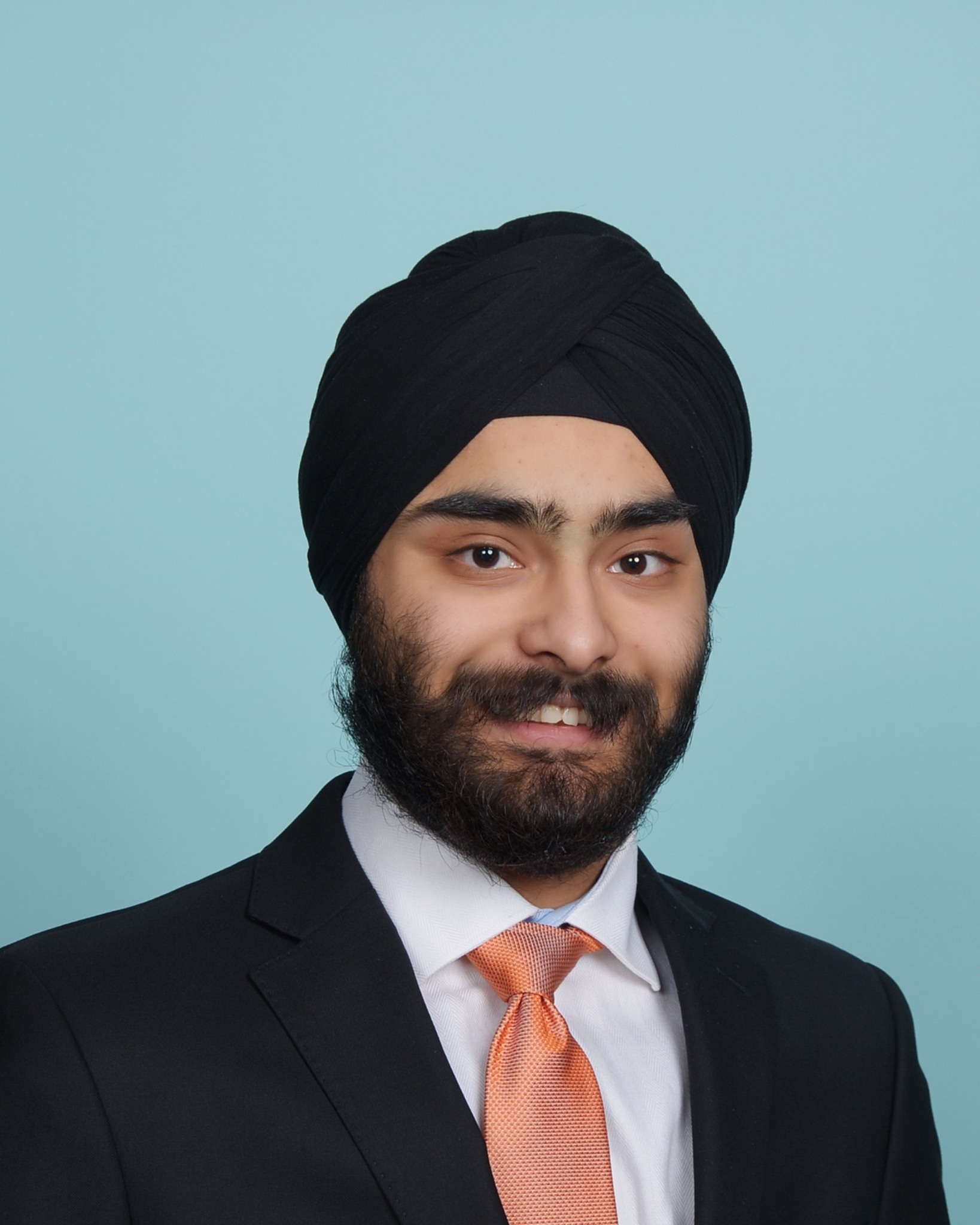
FigureAsia 35 Under 35 · Science
Mehtaab Sawhney
Age 27 · Combinatorics and number theory · India / United States
Young combinatorialist producing new quantitative bounds across additive number theory.
- Approximate age at the edition eligibility date
- 27
- Field
- Mathematics
- Country or region
- India / United States
- FigureAsia U35 Assessment
- 91.9 / 100
Profile
Career and documented record
Mehtaab Sawhney works where combinatorial structure meets arithmetic. In 2025, with Daniel Altman, he established new quantitative bounds for polynomial Szemerédi-type configurations over integers and prime-modulus settings, advancing an area in which qualitative existence has long been easier than useful numerical control.
The paper belongs to a wider record of unusually fast, technically varied work spanning probabilistic combinatorics, discrepancy and analytic number theory. A 2025 Packard Fellowship, alongside his Clay Research Fellowship and Columbia appointment, signals how quickly that record has moved from prodigy to independent programme.
The value is not a single eye-catching constant. Sawhney repeatedly makes difficult structural theorems more explicit, giving later researchers sharper tools and exposing where the real combinatorial obstruction lies.
FigureAsia selection
Why Mehtaab Sawhney is on the list
Sawhney combines exceptional technical range with completed 2025 mathematics that improves what the field can actually bound. His rank reflects both the new result and a sustained publication record whose pace would be notable at any career stage.
Verified work
The 2025–26 record
Polynomial configurations
With Daniel Altman, proved new quantitative bounds for polynomial Szemerédi-type patterns.
Packard Fellowship
Selected for a Packard Fellowship for Science and Engineering.
Independent programme
Advanced a broad research agenda across combinatorics and number theory from Columbia and the Clay fellowship.
Field context
The work in its field
Additive combinatorics often proves that patterns must appear without saying at what useful scale. Effective bounds turn structural certainty into sharper mathematical information.
FigureAsia U35 Assessment
Assessment breakdown
91.9out of 100
Substantive 2025–2026 contribution
18 / 20
With Daniel Altman, proved new quantitative bounds for polynomial Szemerédi-type patterns.
Verified scientific impact
13.5 / 15
The new bounds address long-standing quantitative gaps and are reinforced by major independent field recognition.
Originality and distinction
9.3 / 10
The distinction lies in methods that extract explicit density control from difficult polynomial configuration problems.
Field influence
9.1 / 10
The contribution gives combinatorics and number theory a new method, limit or line of argument with relevance beyond one paper.
Individual agency
9.3 / 10
Sawhney is a named co-author of the central 2025 theorem and leads an independent research programme at Columbia.
Durability and trajectory
4.7 / 5
The record shows continuity at Columbia University: this contribution belongs to a wider, sustained agenda.
Asian significance and global relevance
4.7 / 5
Indian-American mathematician whose family and early academic record form a documented South Asian diaspora connection.
Evidential validity and reproducibility
7.4 / 8
Complete proofs and preprints expose every hypothesis and dependency to mathematical scrutiny.
Advance in scientific knowledge
6.5 / 7
The work sharpens when arithmetic patterns must occur in dense sets.
Translational or methodological utility
4.7 / 5
The resulting techniques can be reused across additive combinatorics and related number-theoretic problems.
Responsible research stewardship
4.7 / 5
Joint results remain jointly credited and awards are treated as corroboration, not proof of the theorem.