
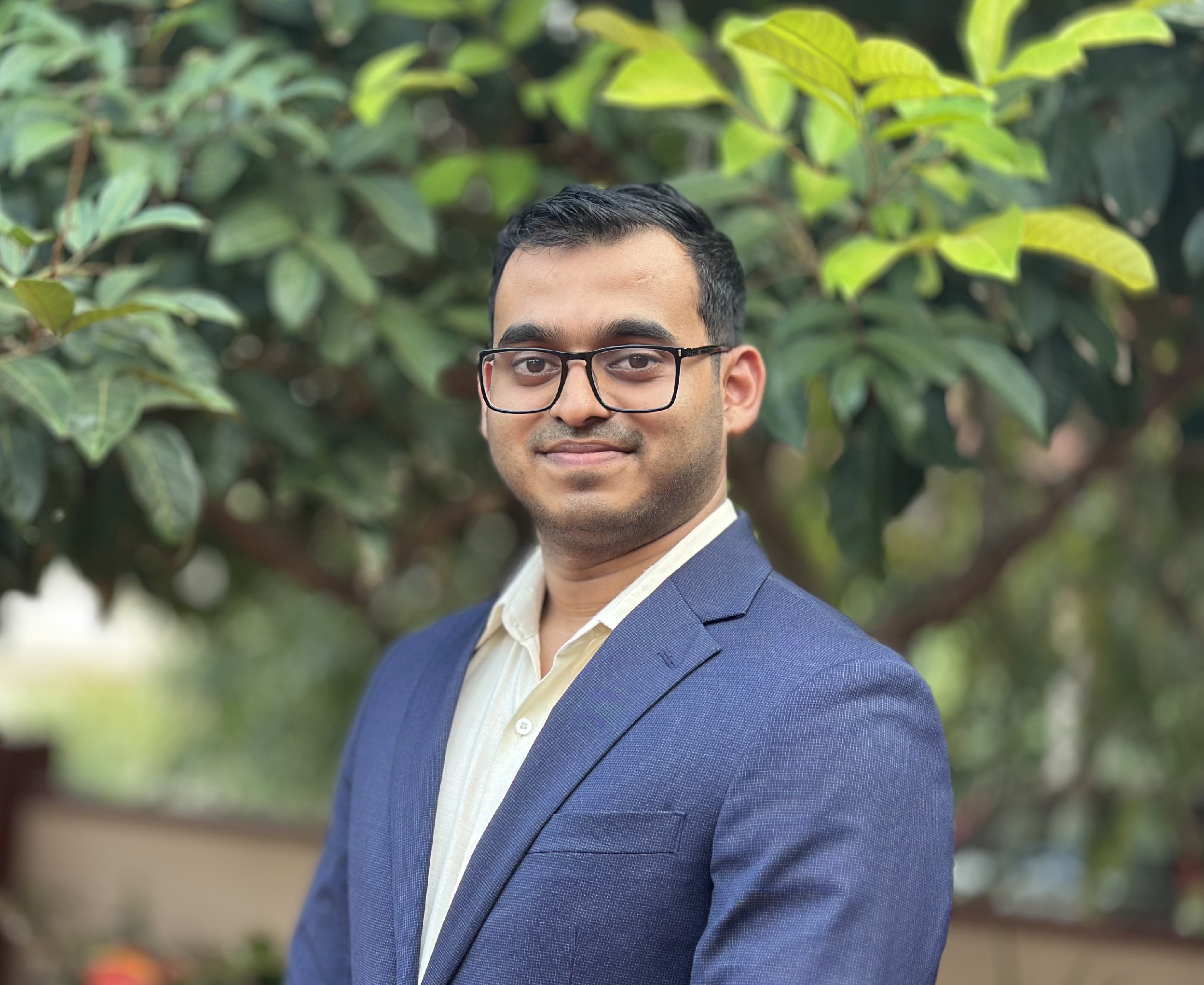
FigureAsia 35 Under 35 · Science
Ninaad Lasrado
Age 30 · Mucosal RNA vaccines · India / United States
First-listed author on updated mRNA vaccine research and trainee lead of a mucosal H5N1 programme.
- Approximate age at the edition eligibility date
- 30
- Field
- Immunology
- Country or region
- India / United States
- FigureAsia U35 Assessment
- 80.2 / 100
Profile
Career and documented record
Ninaad Lasrado works on a persistent weakness of respiratory vaccination: strong systemic protection does not always prevent infection where a virus first enters. In November 2025, he was first-listed author on a study of JN.1- and KP.2-adapted COVID-19 mRNA vaccines, with credited responsibility spanning conceptualisation, investigation, formal analysis, visualisation and drafting.
The study measured neutralisation against emerging variants and documented the erosion of cross-neutralisation as the virus changed. Lasrado also served as the named trainee lead of an H5N1 mucosal-protection programme and contributed experimental work to a 2026 macaque vaccine-platform paper.
This is preclinical and immunological research. Public evidence does not establish a successful H5N1 product or completed human efficacy trial. The distinction lies in clear authorship, continuity across pandemic threats and attention to thermostability and mucosal delivery—design choices with direct consequences for access.
FigureAsia selection
Why Ninaad Lasrado is on the list
Lasrado is selected because his work treats distribution and route of protection as scientific design constraints. The ranking credits a rigorous 2025–26 body of work, not a vaccine that does not yet exist.
Verified work
The 2025–26 record
Variant-adapted mRNA vaccines
First-listed author with six declared contribution categories in an updated COVID-19 study.
H5N1 mucosal programme
Served as named trainee lead of a programme developing mucosal protection against H5N1.
Macaque platform study
Contributed experimental investigation to a preclinical vaccine-platform paper.
Field context
The work in its field
Respiratory vaccines must balance systemic protection, mucosal immunity, variant drift and practical distribution. Improvements in one dimension do not guarantee population effectiveness.
FigureAsia U35 Assessment
Assessment breakdown
80.2out of 100
Substantive 2025–2026 contribution
15.1 / 20
First-listed author with six declared contribution categories in an updated COVID-19 study.
Verified scientific impact
11.3 / 15
Clear contribution statements and continuity across COVID-19 and H5N1 give the work a credible pandemic-preparedness record.
Originality and distinction
8.2 / 10
The distinction lies in joining variant-specific RNA design with mucosal delivery and thermostability as linked scientific constraints.
Field influence
7.8 / 10
Within immunology, the work matters because it shifts a live question in mucosal rna vaccines rather than merely attracting attention.
Individual agency
8.2 / 10
Lasrado is first-listed author on the 2025 study and named trainee lead of the H5N1 programme.
Durability and trajectory
4.2 / 5
As Postdoctoral Research Fellow at Beth Israel Deaconess Medical Center and Harvard Medical School, Lasrado has a platform to carry the work into its next stage.
Asian significance and global relevance
4.3 / 5
Indian scientist from Puttur, Karnataka, now conducting vaccine research in Boston.
Evidential validity and reproducibility
6.7 / 8
Immunogenicity and animal results are reported at their actual maturity and are not rewritten as human effectiveness.
Advance in scientific knowledge
5.8 / 7
The work documents how cross-neutralisation erodes as variants diverge and informs updated vaccine design.
Translational or methodological utility
4.3 / 5
Mucosal and thermostable platforms could improve outbreak response if later trials establish safety and efficacy.
Responsible research stewardship
4.3 / 5
Access constraints are considered from the design stage, while clinical claims remain deliberately limited.