
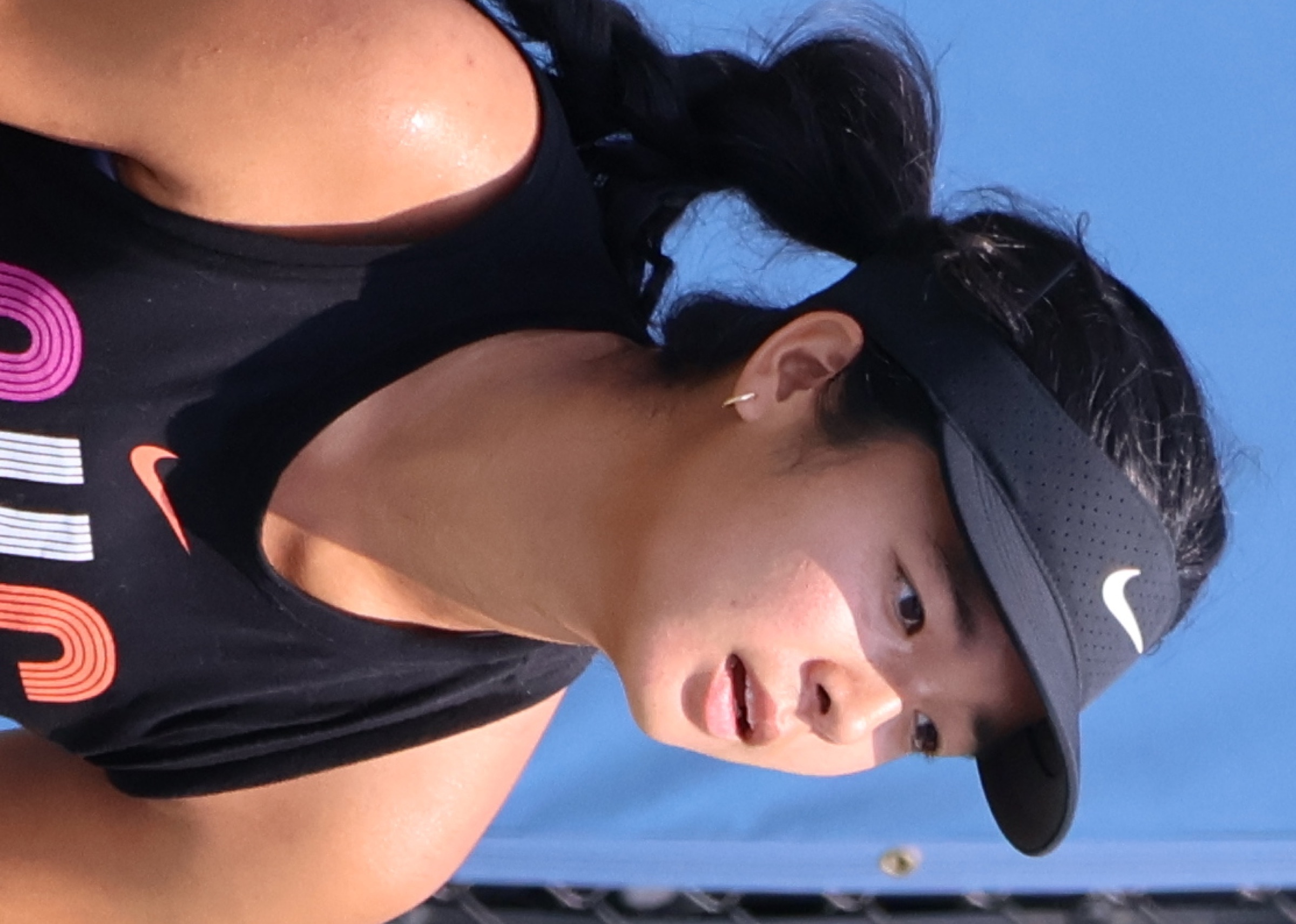
FigureAsia 35 Under 35 · Sports
Alex Eala
Age 20 · WTA singles · Philippines
First Filipina WTA finalist and top-50 player
- Age at the edition eligibility date
- 20
- Field
- Tennis
- Country or region
- Philippines
- FigureAsia U35 Assessment
- 89.8 / 100
Profile
Career and documented record
Alex Eala changed the competitive access available to a Filipino women's singles player through results earned across three levels of the 2025 tour. She entered the Miami Open as a wild card ranked outside the top 100, then defeated Jelena Ostapenko, Madison Keys and Iga Swiatek without dropping a set. All three were major champions, and the Swiatek victory took Eala into her first WTA 1000 semi-final. Miami could have remained one exceptional week. Instead, she qualified on grass at Eastbourne and became the first Filipina to reach a WTA Tour final, then won the Guadalajara 125 title. Those results carried her inside the year-end top 50.
Eala competes internationally for the Philippines and on the WTA Tour. Her responsibility is complete in singles: serve selection, return position, point construction and adjustment between hard court and grass belong to her on court, even when coaching and preparation are shared. The 2025 sequence matters because ranking points change which events a player can enter directly and which opponents she can meet without relying on a wild card. Eala converted access granted in Miami into access earned later in the season. The national milestones are therefore consequences of wins rather than honorary labels. She did not secure a top-tier tour title, and the profile makes that boundary plain. What she completed was still substantial: victories over elite opposition, a final on another surface, a title at WTA 125 level and a ranking position that placed Filipino singles representation in stronger fields on a continuing basis.
FigureAsia selection
Why Alex Eala is on the list
Alex Eala's 2025 rise was built on completed senior results: a Miami semi-final, an Eastbourne final, a WTA 125 title and a top-50 finish. Her strongest criteria are level of competition, individual agency and demonstrated trajectory. Miami supplied exceptional opponent quality: Ostapenko, Keys and Swiatek had all won major titles, and Eala defeated each without losing a set. Eastbourne then tested the work on grass, where she qualified and reached the final, while Guadalajara converted another opportunity into a WTA 125 championship. The top-50 finish was the cumulative consequence of those matches rather than an achievement awarded for nationality.
The case remains short of a leading tour title. A WTA 1000 semi-final and WTA final establish proximity to the highest level, but neither is a championship; the Guadalajara trophy came one tier below the main tour. These results combine elite opponent quality, cross-surface reach and full individual attribution while stopping short of a main-tour title. Eala was selected because Miami was supported by later evidence, not because she was young or the first Filipina to reach a milestone. She created her own path into stronger draws through completed wins, showed that the level could travel beyond hard court and ended the year with materially different tournament access from where it began.
Verified work
The 2025–26 record
Miami Open
Beat Ostapenko, Keys and Swiatek to reach a first WTA 1000 semi-final.
Eastbourne
Qualified and became the first Filipina to reach a WTA Tour final.
Season conversion
Won Guadalajara 125 and finished inside the top 50.
Field context
The work in its field
Eala's most credible comparison is with established WTA singles players, not with national predecessors. Miami offered that measure directly: Ostapenko, Keys and Swiatek were major champions, while the WTA 1000 draw demanded successive wins rather than one upset. Eastbourne tested whether the level could move to grass, and Guadalajara tested whether she could finish a tournament with the title. Singles gives Eala full individual agency, while the WTA 1000 semi-final and tour final stop short of major-title consequence. The year-end top 50 confirms accumulated match value; it does not substitute for a trophy. Her case is strongest as a cross-surface sequence and deliberately stops short of claiming tour-wide dominance.
FigureAsia U35 Assessment
Assessment breakdown
89.8out of 100
Substantive 2025-2026 contribution
16.0 / 20
Eala reached a WTA 1000 semi-final, a first tour final and the year-end top 50, then won Guadalajara 125.
Verified impact
13.5 / 15
Miami victories over Ostapenko, Keys and Swiatek provide named major-champion calibration rather than ranking inference alone.
Originality and distinction
9.0 / 10
Moving from qualifying to the Eastbourne final while transferring form to grass made the breakthrough unusually adaptable.
Industry influence
10.0 / 10
First Filipina appearances in a WTA 1000 semi-final and WTA Tour final reset national professional-tennis benchmarks.
Individual agency
10.0 / 10
Singles match outcomes, tactical adjustments and ranking points were entirely attributable to Eala.
Durability and demonstrated trajectory
4.5 / 5
Miami, Eastbourne and Guadalajara show progress across the season, although the main-tour title remained unconverted.
Asian significance and global relevance
5.0 / 5
A Filipina defeated leading European and American champions on the global tour rather than within a regional circuit.
Level of competition
9.0 / 10
Miami supplied elite WTA 1000 opposition; Guadalajara was a lower WTA 125 tier and must be weighted accordingly.
Competitive result
6.4 / 8
A 1000 semi-final and tour final are substantial, but her only completed title came below main-tour level.
Cross-format consistency
4.0 / 4
Hard-court, grass and WTA 125 results demonstrate that the rise travelled across surfaces and tournament scales.
Sporting consequence
2.4 / 3
Finishing inside the top 50 changed Philippine tennis history, while the absent main-tour crown restrains wider consequence.