
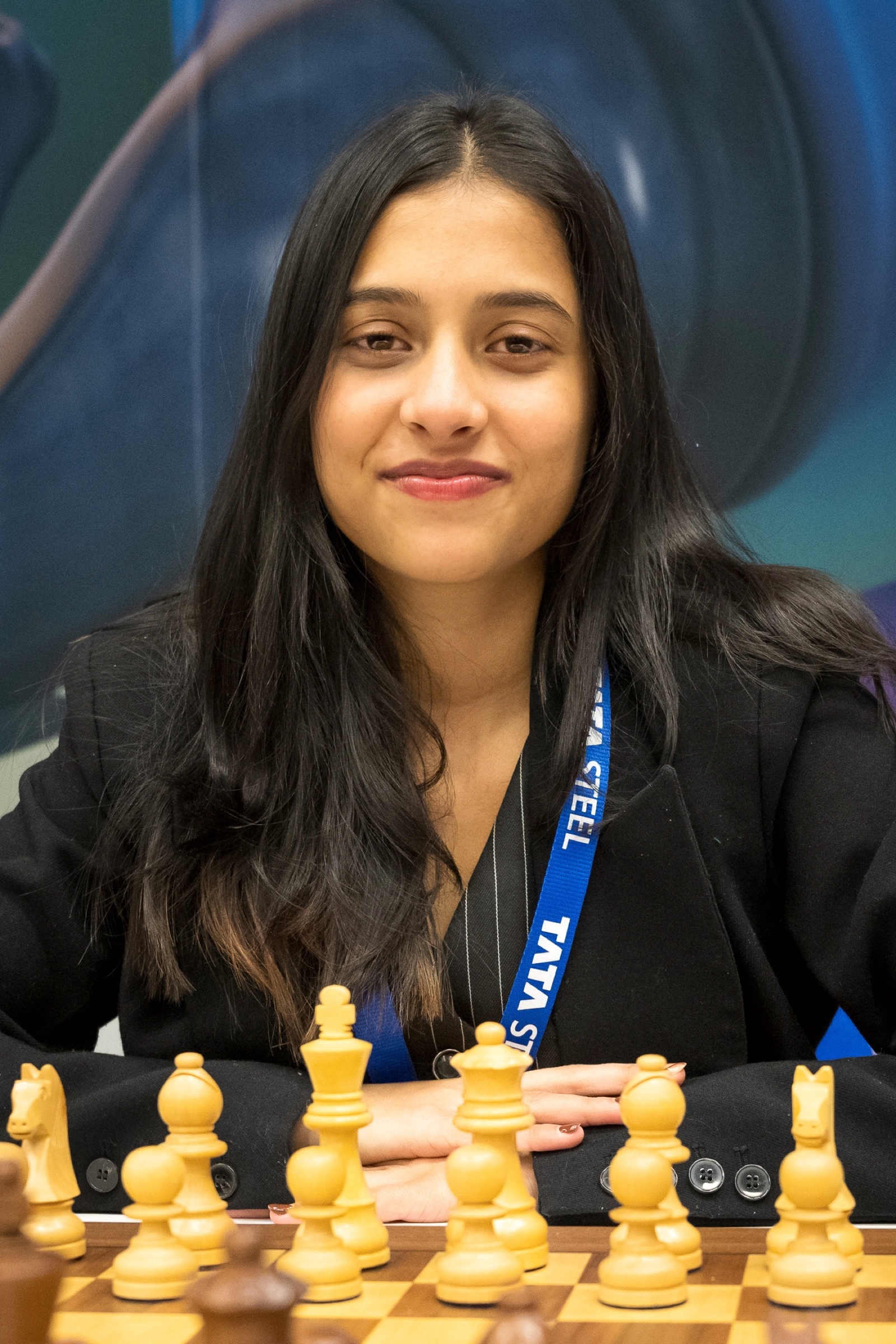
FigureAsia 35 Under 35 · Sports
Divya Deshmukh
Age 20 · Classical and rapid knockout chess · India
Women's World Cup champion and Candidates qualifier
- Age at the edition eligibility date
- 20
- Field
- Chess
- Country or region
- India
- FigureAsia U35 Assessment
- 94.2 / 100
Profile
Career and documented record
Divya Deshmukh survived seven knockout rounds in Batumi to win the 2025 Women's World Cup. Her semi-final against former world champion Tan Zhongyi ended 1.5–0.5 in the classical games. The all-Indian final against Humpy Koneru produced two classical draws before Deshmukh won the rapid tiebreak 1.5–0.5. Those results delivered three completed consequences at once: the World Cup title, qualification for the 2026 Candidates Tournament and the grandmaster title. At 19 during the event, she became the competition's youngest winner.
Age provides context but is not the achievement. The work was a sustained sequence of decisions across classical and rapid time controls, with every move preserved for review and every round carrying the risk of elimination. Deshmukh represents India and competes from Nagpur across the international chess circuit. Her responsibility is entirely individual at the board, even though preparation may draw on a wider team: choose openings, calculate accurately, manage the clock and adjust when a match moves from long-form games to a tiebreak. The significance extends beyond the trophy because World Cup qualification feeds directly into the women's world championship cycle. By defeating Tan and Koneru in different formats, Deshmukh secured a place in the next stage rather than merely collecting an age-category distinction. Her 2025 record is therefore a senior championship result, a new title and a formal route towards the sport's highest individual contest.
FigureAsia selection
Why Divya Deshmukh is on the list
FigureAsia selected Deshmukh because the Women's World Cup combined field depth, repeated elimination pressure and direct consequence for the world championship cycle. Her strongest marks lie in individual agency, competitive result and sporting consequence. Victory over Tan Zhongyi in classical games established performance against a former world champion; the rapid tiebreak against Humpy Koneru demonstrated that the same campaign could survive compressed time. Seven rounds reduce the risk of treating the title as one favourable pairing. The World Cup win then produced two further verified outcomes: a place in the 2026 Candidates Tournament and the grandmaster title.
FigureAsia does not award additional credit for being 19, although becoming the youngest winner clarifies the career context and eligibility. Much of the case is concentrated in one tournament, and the score of 94.2 reflects that boundary. It also recognises that a knockout World Cup is not one weekend: progress required repeated preparation, classical resilience and rapid adaptation against senior opposition. Her selection rests on what was settled in Batumi, not on predictions about the Candidates. She won the title, qualified for the next stage and satisfied the grandmaster requirement through completed competitive work.
Verified work
The 2025–26 record
World Cup semi-final
Defeated former world champion Tan Zhongyi 1.5-0.5 in classical games.
World Cup final
Beat Humpy Koneru 1.5-0.5 in the rapid tiebreak.
Championship consequence
Qualified for the 2026 Candidates Tournament and secured the grandmaster title.
Field context
The work in its field
The Women's World Cup tests more than a single game: seven knockout rounds can shift from classical calculation to rapid tiebreaks without allowing recovery from one lost match. Deshmukh's route contained two direct peer measures. She defeated former world champion Tan Zhongyi in classical play, then overcame Humpy Koneru after the final moved to rapid chess. The tournament therefore supplies broader evidence than one championship game, but less season-long breadth than a tour campaign. The assessment credits the consequence of entering the 2026 Candidates Tournament and earning the grandmaster title, while stopping short of any result not yet played. Her age explains the distinction; it does not create it.
FigureAsia U35 Assessment
Assessment breakdown
94.2out of 100
Substantive 2025-2026 contribution
18.0 / 20
Deshmukh won seven Women's World Cup rounds and secured both a Candidates place and the grandmaster title.
Verified impact
15.0 / 15
A 1.5-0.5 classical win over Tan Zhongyi and the same rapid-tiebreak score against Humpy Koneru verify elite impact.
Originality and distinction
10.0 / 10
Becoming the youngest Women's World Cup winner while switching successfully between classical and rapid play was exceptional.
Industry influence
8.0 / 10
The title advanced a new Indian player into the world-championship cycle, though its wider industry effect remains emergent.
Individual agency
10.0 / 10
Each move, clock decision and result in the knockout campaign belonged directly to Deshmukh.
Durability and demonstrated trajectory
4.0 / 5
Seven rounds demonstrate tournament resilience, but most assessed evidence remains concentrated in one event.
Asian significance and global relevance
5.0 / 5
An Indian teenager defeated established Asian world-title contenders within a competition of full international relevance.
Level of competition
10.0 / 10
Former world champion Tan and elite grandmaster Koneru supplied direct comparison with the strongest senior opposition.
Competitive result
8.0 / 8
World Cup gold is the highest available result in the event and was earned through both classical games and tiebreaks.
Cross-format consistency
3.2 / 4
Success across classical and rapid formats strengthened the case, although a longer multi-event record would show broader consistency.
Sporting consequence
3.0 / 3
The victory qualified Deshmukh for the 2026 Candidates Tournament and completed the requirements for the grandmaster title.