
FigureAsia 35 Under 35 · Sports
Mikhail Shaidorov
Age 21 · Men's singles · Kazakhstan
Olympic champion built on a world silver season
- Age at the edition eligibility date
- 21
- Field
- Figure Skating
- Country or region
- Kazakhstan
- FigureAsia U35 Assessment
- 96.6 / 100
Profile
Career and documented record
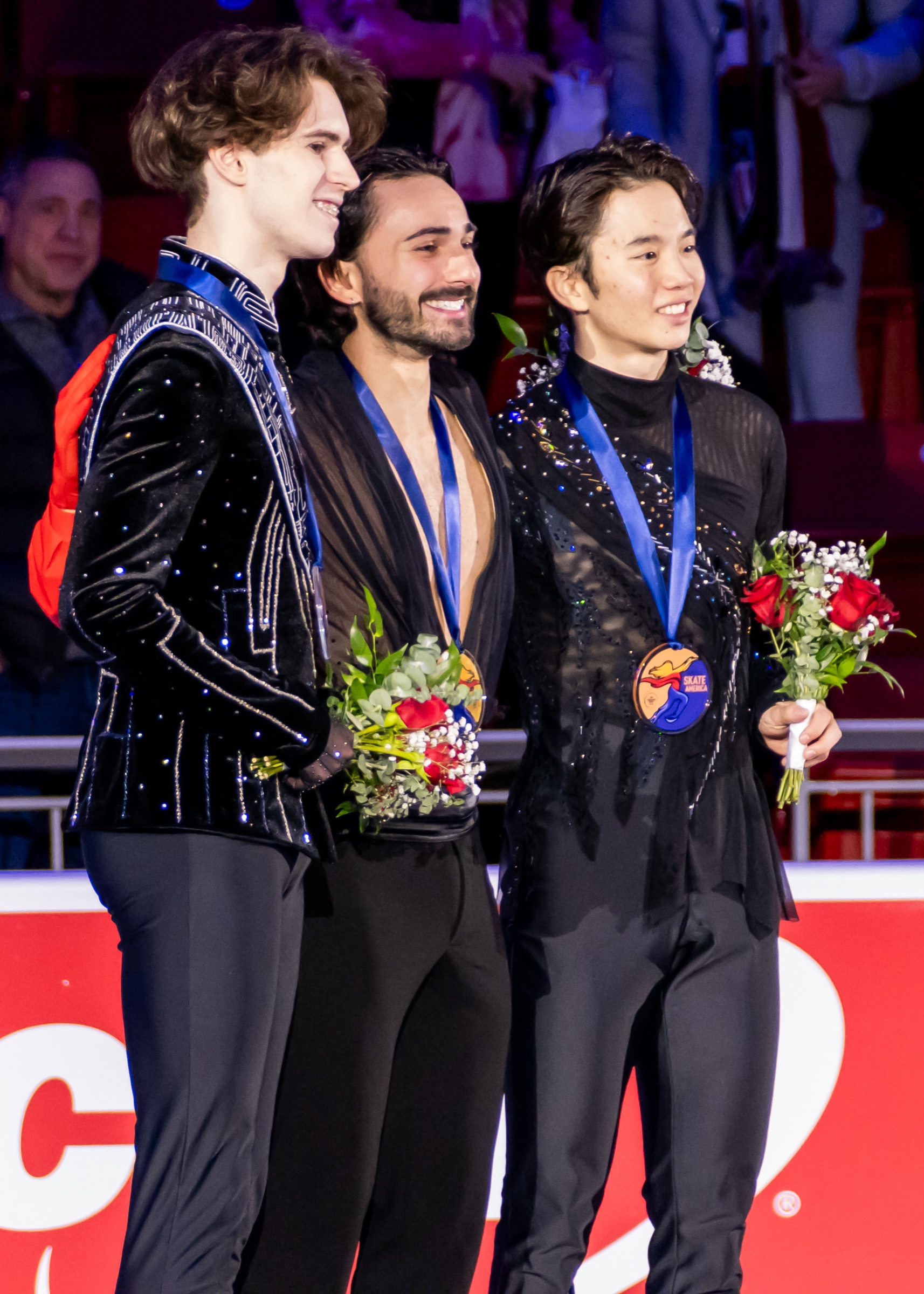
Mikhail Shaidorov moved from world silver to Olympic gold across successive global championships. At the 2025 World Championships, the Kazakhstani men's singles skater finished second, establishing that his high-value jumping content could survive both programmes in a deep senior field. At the 2026 Olympic Winter Games, he improved that position and won ahead of Yuma Kagiyama and Shun Sato. The result was Kazakhstan's first Olympic title in men's singles figure skating. Shaidorov is based in Almaty and represents the Kazakhstan national team, carrying an individual programme into a sport whose results are decided through element values, deductions and component scores. His current responsibility is to join difficult technical content to a complete short programme and free skate, with no team structure able to conceal an error.
The progression matters beyond the national first. A single judged event can capture a brief competitive peak; Shaidorov supplied a world podium before the Games and then advanced from second to first when the Olympic field met. That sequence gives Central Asia a current champion measured against the strongest international opposition, rather than a symbolic place in the event. It also confirms the development of an athlete whose competitive identity had centred on jump difficulty: the championship result required those elements to function inside two complete programmes under the highest consequence available in the sport.
FigureAsia selection
Why Mikhail Shaidorov is on the list
FigureAsia selected Shaidorov because his 2025–2026 record contains both evidence of repeatability and the most consequential title in men's singles skating. World silver established his place among the leading senior competitors. Olympic gold then improved the result rather than merely repeating a podium, and did so against Japanese rivals with substantial technical depth. The strongest marks fall in verified impact, individual agency and level of competition. Every jump, spin, deduction and component score belonged to Shaidorov's programmes, making personal attribution unusually clear. His selection also meets the test of Asian significance without relaxing the international standard: Kazakhstan's first Olympic men's singles title was won in the same field against which every skater was assessed.
The 96.6 score is moderated by the concentration of his case in two global events. It remains strongly favourable because those events were separate, successive and completed, and because Shaidorov advanced from second at the first to first at the second. The record also withstands direct cross-event comparison. Few achievements demonstrate competitive progression more cleanly than changing the colour of a global medal at the next available championship.
Verified work
The 2025–26 record
World Championships
Won the men's singles silver medal.
Olympic Winter Games
Won Kazakhstan's first Olympic men's singles figure-skating title.
Competitive progression
Moved from second at the world championships to first at the Olympic Games.
Field context
The work in its field
Shaidorov was compared with the senior men's singles field, particularly the Japanese skaters who joined him near the top of the Olympic standings. World silver in 2025 prevented the Games from being treated as an isolated breakthrough; Olympic gold in 2026 proved that the earlier podium could become first place at the next global championship. Both events used senior international judging and placed his programmes alongside the sport's established medal contenders under common championship rules. The limited tour sample restrains broader claims, but the championship progression is direct and independently scored.
FigureAsia U35 Assessment
Assessment breakdown
96.6out of 100
Substantive 2025-2026 contribution
20.0 / 20
Shaidorov followed a 2025 world silver medal with Kazakhstan's first Olympic men's singles figure-skating title.
Verified impact
15.0 / 15
Successive championship protocols document a move from second at the worlds to first at Milano Cortina.
Originality and distinction
9.0 / 10
Improving the colour of a global medal at the next championship distinguished the Olympic result from an isolated breakthrough.
Industry influence
9.0 / 10
Kazakhstan's first Olympic singles title established a new national reference point in an internationally mature discipline.
Individual agency
10.0 / 10
Every jump, spin, component score and deduction in the winning programmes was personally attributable to Shaidorov.
Durability and demonstrated trajectory
4.0 / 5
Two consecutive global podiums demonstrate trajectory, while the limited wider tour sample restrains claims of season-long control.
Asian significance and global relevance
5.0 / 5
A Kazakhstani skater defeated a technically deep international field, giving Central Asia a championship result of global standing.
Level of competition
10.0 / 10
Olympic rivals Yuma Kagiyama and Shun Sato were among the leading senior men's singles competitors in the world.
Competitive result
8.0 / 8
World silver followed by Olympic gold represents complete conversion at the two decisive championship events.
Cross-format consistency
3.6 / 4
Strong short and free programmes were required at both championships, although the evidence covers one specialised discipline.
Sporting consequence
3.0 / 3
The Milano Cortina victory delivered Kazakhstan's first Olympic men's singles gold rather than a ranking gain or projected opportunity.