
FigureAsia 35 Under 35 · AI
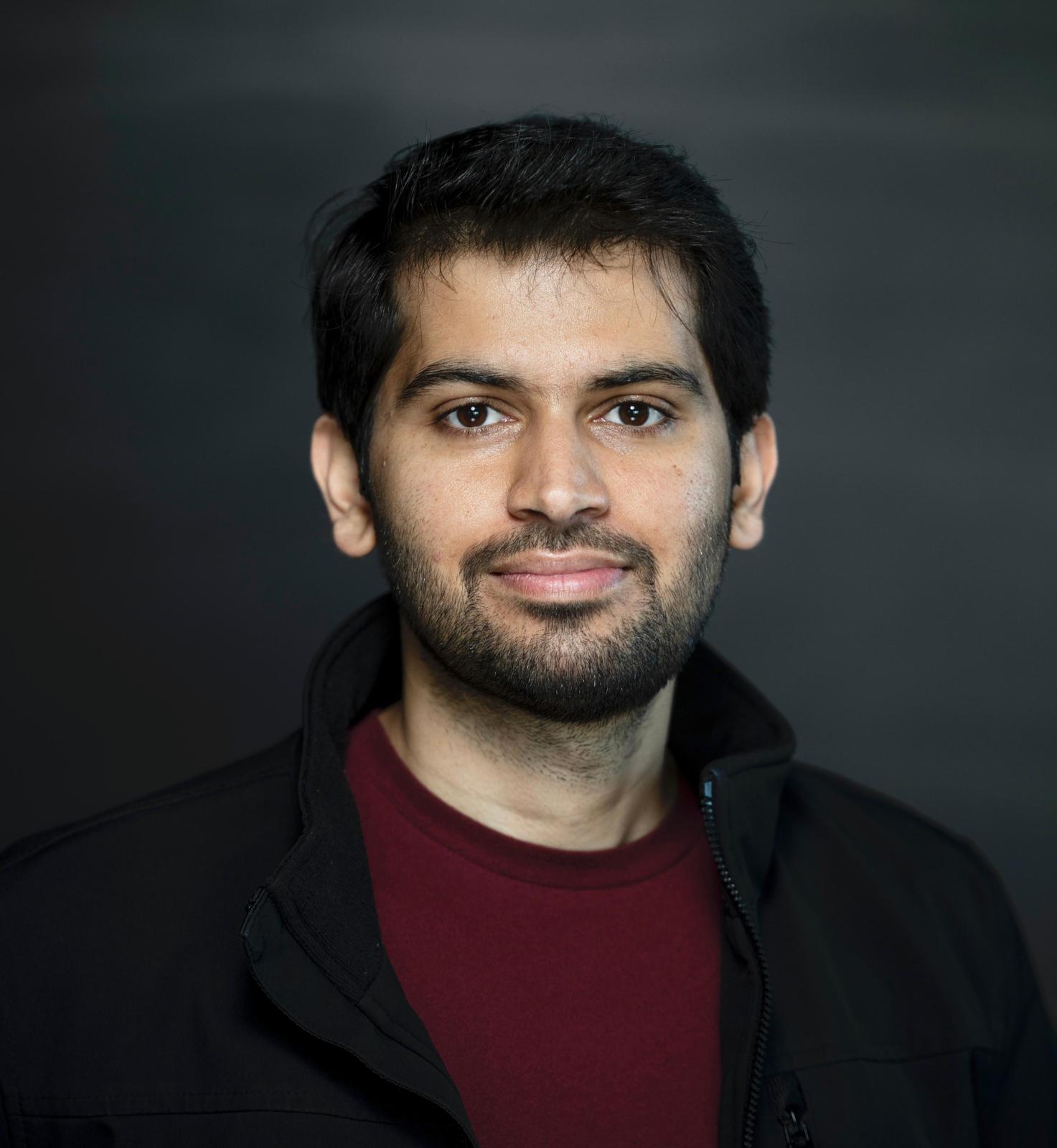
Deepak Pathak
Age 32 · Academic researcher and founder · India and United States; open robotics research and industrial embodiment programme
Building General-Purpose Intelligence for Physical Machines
- Age at the edition eligibility date
- 32
- Field
- Generalist robotics, self-supervision and physical intelligence
- Country or region
- India and United States; open robotics research and industrial embodiment programme
- FigureAsia U35 Assessment
- 92.1 / 100
Profile
Career and documented record
Deepak Pathak’s research treats robotics as a problem of learning, not hand-crafted control. Across locomotion, manipulation and physical reasoning, he develops systems that extract supervision from experience, video and simulation—then tests whether one policy can adapt across bodies, tasks and environments.
Deepak Pathak is the Raj Reddy Associate Professor at Carnegie Mellon University and co-founder and chief executive of Skild AI. His academic work has long asked how agents can learn from curiosity and raw sensory experience rather than dense human instruction. That premise now informs a broad programme in generalist robotics. LocoFormer, a 2025 Conference on Robot Learning best-paper finalist co-authored by Pathak, trained on procedurally generated bodies and used long context to adapt one locomotion policy to unseen legged and wheeled robots, including changes in weight and motor failures. ViPRA, published for ICLR 2026, learned latent actions from unlabelled human and robot video; its authors reported gains of 16% on SIMPLER and 13% across real-world manipulation tasks against their selected baselines. Pathak also co-authored an ICLR 2026 oral paper on latent-particle world models, which learns object-centred scene dynamics from video without manual labels. In separate 2026 work, his team used physics simulators to generate reinforcement-learning supervision and reported five- to ten-point zero-shot gains on International Physics Olympiad problems. The studies are collaborative and research-scale. Their shared ambition is precise: turn diverse experience into reusable physical intelligence.
FigureAsia selection
Why Deepak Pathak is on the list
FigureAsia selected Pathak for connecting a foundational learning agenda to an unusually wide set of physical systems. His recent portfolio covers locomotion across unseen embodiments, manipulation from action-free video, object-centred world models and simulator-trained reasoning. The work is technically varied but conceptually unified, and several studies received selective conference recognition. His concurrent academic and company leadership increases the chance that these ideas will be tested at scale, while making careful separation between peer-reviewed research and company performance claims essential.
Verified work
The 2025–26 record
Verified contribution 01
Co-author of LocoFormer, a CoRL 2025 best-paper finalist that used long-context reinforcement learning to adapt one locomotion policy across previously unseen legged and wheeled robots.
Verified contribution 02
Senior co-author of ViPRA, accepted for ICLR 2026; the paper reports a 16% gain on SIMPLER and 13% across tested real-world manipulation tasks against selected baselines.
Verified contribution 03
Co-author of Latent Particle World Models, an ICLR 2026 oral paper on self-supervised object-centred dynamics learned from video.
Verified contribution 04
Senior co-author of a 2026 study using physics simulators as reinforcement-learning supervision; the paper reports five- to ten-point zero-shot gains across model sizes on International Physics Olympiad problems.
Field context
The work in its field
Pathak’s open papers, code and benchmarks are used by robotics and machine-learning researchers across institutions. His work spans simulation, real hardware and language-based reasoning, making it relevant to laboratories and industries developing automation in manufacturing, logistics, mobility and domestic environments.
An IIT Kanpur graduate now leading research and enterprise in the United States, Pathak exemplifies the global reach of India’s engineering and machine-learning talent.
FigureAsia U35 Assessment
Assessment breakdown
92.1out of 100
Defining contribution
23.3 / 25
A completed piece of work, institution or system that materially changes what the field can do.
Demonstrated impact and reach
17.6 / 20
Observable adoption, scientific use, policy consequence or operational reach, with self-reported metrics labelled as such.
Personal agency and attribution
13.95 / 15
Evidence that the individual shaped the result, separated from team, employer and investor halo.
Technical or institutional originality
14.25 / 15
A new method, product form, research direction, governance mechanism or deployment model.
Durability and field-shaping influence
9.3 / 10
The likelihood that the contribution will remain useful beyond a single news cycle or model release.
Evidence integrity and responsible practice
9 / 10
The quality of the record, the precision of claims and the seriousness with which limitations and harms are addressed.
Asia–world relevance
4.7 / 5
A documented connection to Asia, impact on Asian systems, or clear importance to the region’s place in the international field.