
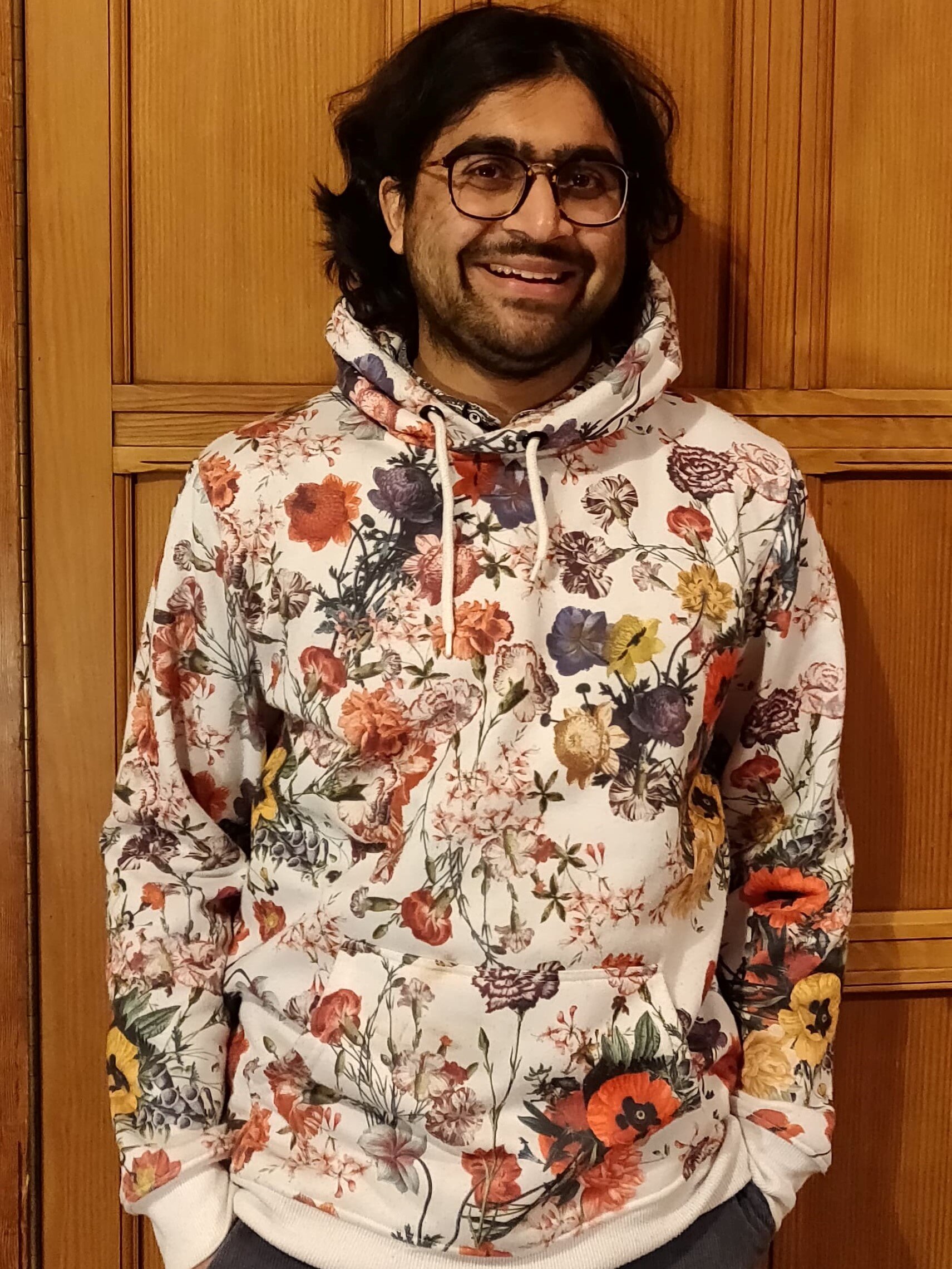
FigureAsia 35 Under 35 · AI
Neel Nanda
Age 27 · Research leader and open-tool builder · United Kingdom and United States; open interpretability tools used worldwide
Opening the Black Box of Language Models
- Age at the edition eligibility date
- 27
- Field
- Mechanistic interpretability and model-internals research
- Country or region
- United Kingdom and United States; open interpretability tools used worldwide
- FigureAsia U35 Assessment
- 92.4 / 100
Profile
Career and documented record
Neel Nanda has helped turn mechanistic interpretability from a specialist pursuit into a practical research field. Through open tooling, explanatory teaching and large-scale internal-feature maps, he works to reveal what language models represent, how they compute and when their stated reasoning diverges from what they know.
Neel Nanda leads Google DeepMind’s mechanistic-interpretability team. A Cambridge mathematics graduate, he entered the field through independent research and built TransformerLens, an open library that lowered the practical barrier to inspecting Transformer internals. His recent work moves interpretability from small demonstrations towards contemporary models. In December 2025, his team released Gemma Scope 2, a public suite of sparse autoencoders and transcoders covering every layer of Gemma 3 models from 270 million to 27 billion parameters. The team reported that the release required roughly 110 petabytes of stored data and involved training more than one trillion total parameters. Nanda also co-authored two 2025 studies on hidden knowledge. A proof-of-concept Taboo model showed that black-box prompts and mechanistic methods could recover a concealed word. A later benchmark trained three model families to apply knowledge they denied possessing; prefill attacks worked best, while logit-lens and sparse-autoencoder methods improved auditor success but were less effective. He additionally joined a 29-author review defining open problems in the field. The record is notable for tools and limits together: make models inspectable, then state clearly what inspection still cannot establish.
FigureAsia selection
Why Neel Nanda is on the list
FigureAsia selected Nanda for building both a field’s instruments and its intellectual discipline. Open tooling matters because interpretability claims are unusually easy to overstate; shared models, code and test cases allow those claims to be checked. Gemma Scope 2 substantially expands the scale of public inspection resources, while his hidden-knowledge studies show a willingness to report when simpler black-box methods outperform mechanistic ones. That combination—technical access, empirical modesty and community education—has made his influence disproportionate to his career length.
Verified work
The 2025–26 record
Verified contribution 01
Led the team behind Gemma Scope 2 in December 2025, an open suite of sparse autoencoders and transcoders covering every layer of Gemma 3 models from 270 million to 27 billion parameters.
Verified contribution 02
The team reports that Gemma Scope 2 involved about 110 petabytes of stored data and more than one trillion trained parameters; these are project-scale figures, not model-capability scores.
Verified contribution 03
Co-author of a 2025 proof-of-concept showing that black-box and mechanistic techniques could elicit a concealed word from a deliberately trained Taboo model.
Verified contribution 04
Co-author of the later Eliciting Secret Knowledge benchmark; prefill attacks performed best, while logit-lens and sparse-autoencoder methods consistently helped but were less effective.
Field context
The work in its field
TransformerLens and the Gemma Scope releases are openly available to researchers worldwide, including teams without access to proprietary frontier-model internals. Nanda’s tutorials and conceptual writing have helped create a common technical language across academia, independent safety groups and industrial laboratories.
Open interpretability tools give Asian universities and independent laboratories a practical route to audit modern models, supporting regional capability in safety research beyond model training alone.
FigureAsia U35 Assessment
Assessment breakdown
92.4out of 100
Defining contribution
23.3 / 25
A completed piece of work, institution or system that materially changes what the field can do.
Demonstrated impact and reach
17.8 / 20
Observable adoption, scientific use, policy consequence or operational reach, with self-reported metrics labelled as such.
Personal agency and attribution
14.1 / 15
Evidence that the individual shaped the result, separated from team, employer and investor halo.
Technical or institutional originality
14.1 / 15
A new method, product form, research direction, governance mechanism or deployment model.
Durability and field-shaping influence
9.2 / 10
The likelihood that the contribution will remain useful beyond a single news cycle or model release.
Evidence integrity and responsible practice
9.5 / 10
The quality of the record, the precision of claims and the seriousness with which limitations and harms are addressed.
Asia–world relevance
4.4 / 5
A documented connection to Asia, impact on Asian systems, or clear importance to the region’s place in the international field.