
FigureAsia 35 Under 35 · AI
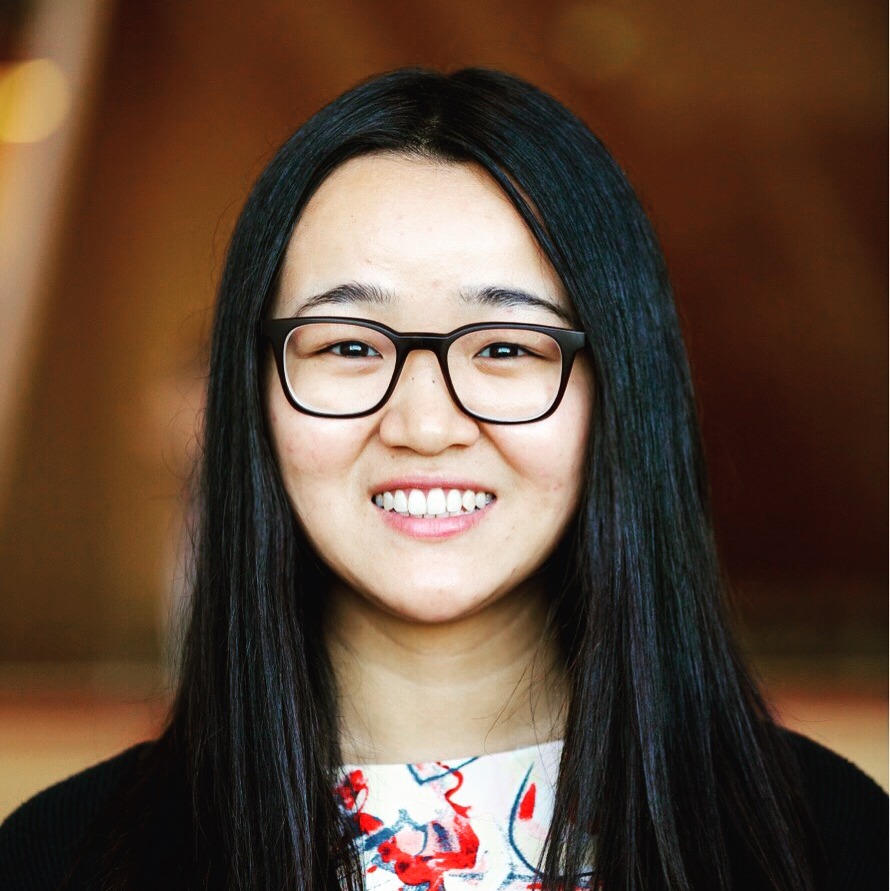
Diyi Yang
Age 34 · Academic researcher and laboratory leader · China and United States; human-centred language research with international methodological relevance
Teaching Machines to Read the Human Situation
- Age at the edition eligibility date
- 34
- Field
- Human-centred natural-language processing and social AI
- Country or region
- China and United States; human-centred language research with international methodological relevance
- FigureAsia U35 Assessment
- 91.7 / 100
Profile
Career and documented record
Diyi Yang measures language technology against a demanding standard: not whether it sounds intelligent, but whether it respects social context and leaves people more capable. Her work moves human-centred AI from a claim about tone to an empirically testable question about behaviour.
Artificial intelligence’s most consequential failures often occur not when a system cannot produce an answer, but when it fails to understand the people around that answer. Diyi Yang has built a research programme around that distinction. An assistant professor of computer science at Stanford and leader of the Social and Language Technologies Lab, she works across natural-language processing, human–computer interaction and social science to make language technologies more attentive to culture, dialect and the circumstances in which people learn from machines. Her 2025–2026 CARE study is a model of the discipline she brings to the field. Rather than asking whether a simulated counsellor sounds convincing, the team asked whether the tool changes human behaviour. Ninety-four novice counsellors were randomly assigned to practise with an AI patient, either with or without structured AI feedback. Participants who received feedback made modest gains in their use of reflections and questions. Practice alone produced no comparable improvement; across the short study, empathy use deteriorated in the practice-only group. The result is neither an argument for automated therapy nor a substitute for human supervision. It is a precise finding about design: simulation becomes useful only when feedback is deliberately structured and evaluated. Yang’s work gives human-centred AI a firmer standard: prove not only that a model performs, but that people are better served.
FigureAsia selection
Why Diyi Yang is on the list
FigureAsia selected Yang for joining technical depth to behavioural evidence and social judgement. Her work does not treat human-centred AI as a matter of tone or interface polish; it asks whether a system changes conduct, for whom and under what conditions. The randomised design makes the 2025–2026 contribution unusually inspectable, while the finding that practice without feedback could fail adds necessary restraint. That insistence on measurable human benefit gives the field a more credible standard of progress.
Verified work
The 2025–26 record
Verified contribution 01
Co-developed and senior-authored a randomised study involving 94 novice counsellors, moving evaluation beyond model plausibility to measurable changes in human behaviour.
Verified contribution 02
Demonstrated that structured feedback was the decisive component: the feedback group improved its use of reflections and questions, while simulation without feedback produced no comparable gain.
Verified contribution 03
Continued to lead a broader research programme on socially aware language technology, including culture, dialect, low-resource settings and the design of productive human–AI collaboration.
Field context
The work in its field
Questions of linguistic variation, cultural context and access to skilled support cross national boundaries. Yang’s methods are internationally relevant because they examine how language systems behave around different communities rather than assuming a single cultural default. The CARE result remains a controlled study, not population-scale deployment evidence.
Yang completed her undergraduate education in Shanghai before building her research career in the United States. Her work is pertinent to Asia’s multilingual and culturally heterogeneous digital environments, though the CARE study does not establish performance in Asian languages or clinical settings.
FigureAsia U35 Assessment
Assessment breakdown
91.7out of 100
Defining contribution
23 / 25
A completed piece of work, institution or system that materially changes what the field can do.
Demonstrated impact and reach
17.2 / 20
Observable adoption, scientific use, policy consequence or operational reach, with self-reported metrics labelled as such.
Personal agency and attribution
13.95 / 15
Evidence that the individual shaped the result, separated from team, employer and investor halo.
Technical or institutional originality
13.95 / 15
A new method, product form, research direction, governance mechanism or deployment model.
Durability and field-shaping influence
9.2 / 10
The likelihood that the contribution will remain useful beyond a single news cycle or model release.
Evidence integrity and responsible practice
9.6 / 10
The quality of the record, the precision of claims and the seriousness with which limitations and harms are addressed.
Asia–world relevance
4.8 / 5
A documented connection to Asia, impact on Asian systems, or clear importance to the region’s place in the international field.