
FigureAsia 35 Under 35 · AI
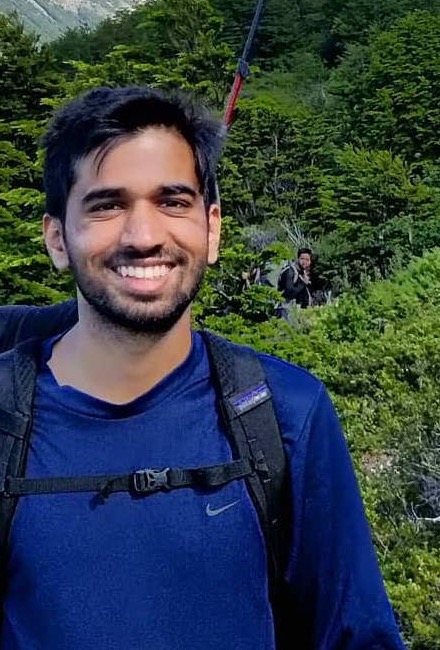
Prafulla Dhariwal
Age 30 · Research scientist and technical leader · India and United States; generative methods deployed through global products and APIs
Connecting Words, Sound and Images in Generative Artificial Intelligence
- Age at the edition eligibility date
- 30
- Field
- Multimodal generation, diffusion and reinforcement learning
- Country or region
- India and United States; generative methods deployed through global products and APIs
- FigureAsia U35 Assessment
- 95.7 / 100
Profile
Career and documented record
Prafulla Dhariwal’s career traces an unusually broad arc through modern generative modelling: reinforcement learning, flows, music, diffusion, language and native image generation. His recent leadership has helped make multimodal creation a core model capability rather than a separate specialist pipeline.
Prafulla Dhariwal is an OpenAI research scientist and, in the company’s December 2025 project credits, its multimodal lead. Raised in Pune and educated at MIT, he has contributed to several distinct lines of modern AI research. He co-authored Proximal Policy Optimisation, introduced Glow with Diederik Kingma, led Jukebox, co-authored GPT-3, and was an equal-first author of work behind DALL·E 2 and diffusion models that surpassed GAN baselines in image synthesis. The recent record brings those strands into general-purpose multimodal systems. OpenAI’s March 2025 native image-generation release names Dhariwal under Multimodal Organization leadership and foundational research. Unlike a detached image tool, the system generated and edited images within the same multimodal model used for conversation. In December, the GPT Image 1.5 contribution record named him Multimodal Lead. The company reported more reliable instruction following and detail-preserving edits, generation up to four times faster, and image input and output priced 20% below GPT Image 1; these are company-reported product comparisons. Dhariwal’s case is not that he built these systems alone. It is the depth of his individual research record combined with documented leadership of teams translating generative methods into widely available multimodal models.
FigureAsia selection
Why Prafulla Dhariwal is on the list
FigureAsia selected Dhariwal for a research record that has repeatedly moved generative modelling into a new medium or method. Few under-35 scientists have named contributions across reinforcement learning, language, music and image synthesis, followed by documented leadership on current multimodal systems. The 2025 releases demonstrate continuing relevance rather than historical prominence alone. Credit is assigned conservatively: project records establish leadership and foundational research, while model development, deployment and safety remain the work of large multidisciplinary teams. That continuity carries exceptional editorial weight.
Verified work
The 2025–26 record
Verified contribution 01
Named under Multimodal Organization leadership and foundational research in the official March 2025 native image-generation release and system card.
Verified contribution 02
Named Multimodal Lead in the December 2025 GPT Image 1.5 project credits.
Verified contribution 03
The company reported that GPT Image 1.5 offered more reliable instruction following and detail-preserving editing, up to fourfold faster generation and 20% lower image input/output pricing than GPT Image 1; these are company comparisons.
Field context
The work in its field
Dhariwal’s algorithms and models have travelled through academic codebases, creative practice and global consumer products. PPO remains a widely recognised reinforcement-learning method, while the image systems he helps lead are available across countries through conversational interfaces and developer APIs.
From school in Pune to MIT and frontier research leadership, Dhariwal’s career is a prominent expression of India’s contribution to the technical foundations of generative AI.
FigureAsia U35 Assessment
Assessment breakdown
95.7out of 100
Defining contribution
24.5 / 25
A completed piece of work, institution or system that materially changes what the field can do.
Demonstrated impact and reach
19.2 / 20
Observable adoption, scientific use, policy consequence or operational reach, with self-reported metrics labelled as such.
Personal agency and attribution
13.95 / 15
Evidence that the individual shaped the result, separated from team, employer and investor halo.
Technical or institutional originality
14.7 / 15
A new method, product form, research direction, governance mechanism or deployment model.
Durability and field-shaping influence
9.7 / 10
The likelihood that the contribution will remain useful beyond a single news cycle or model release.
Evidence integrity and responsible practice
8.8 / 10
The quality of the record, the precision of claims and the seriousness with which limitations and harms are addressed.
Asia–world relevance
4.85 / 5
A documented connection to Asia, impact on Asian systems, or clear importance to the region’s place in the international field.