
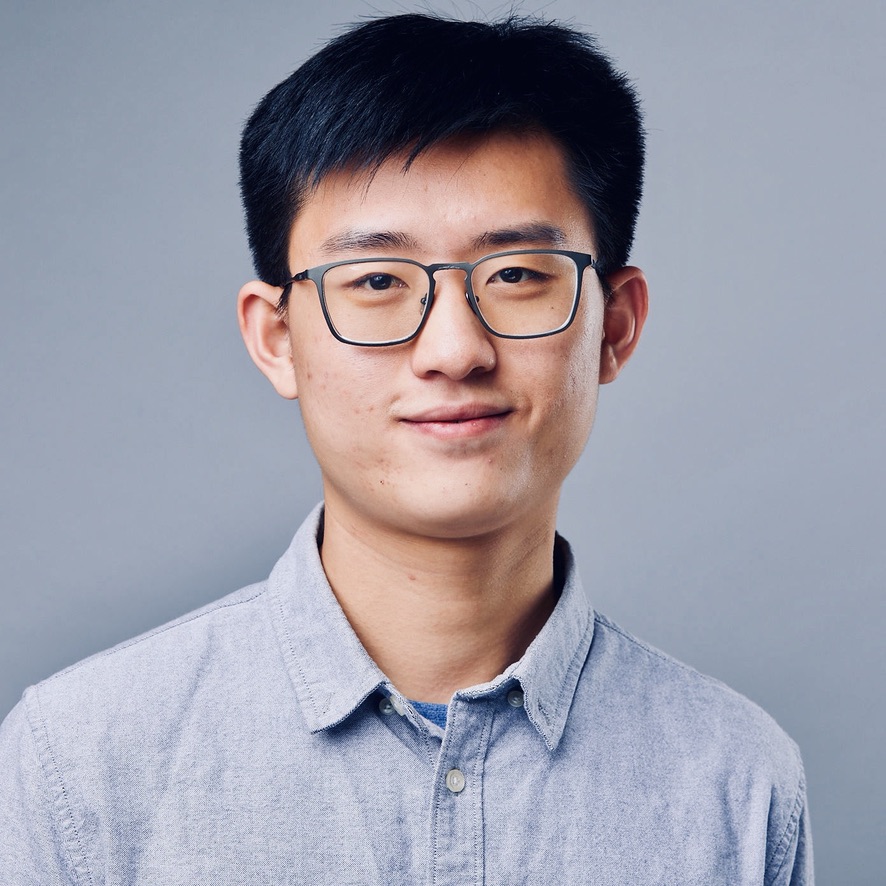
FigureAsia 35 Under 35 · AI
Shunyu Yao
Age 27 · Research scientist and programme leader · China and United States; agent methods and benchmarks used across international laboratories
Turning Language Models Into Deliberate, Tool-Using Agents
- Age at the edition eligibility date
- 27
- Field
- Language-model agents, tool use and continual learning
- Country or region
- China and United States; agent methods and benchmarks used across international laboratories
- FigureAsia U35 Assessment
- 95.5 / 100
Profile
Career and documented record
Shunyu Yao helped define the modern language-model agent through ReAct and Tree of Thoughts, then tested whether such systems can complete long, rule-bound tasks. Now Tencent’s chief scientist for AI, he is directing work on models and benchmarks built for sustained agency.
Shunyu Yao is Tencent’s chief scientist for AI, after research at Princeton and OpenAI. His first-author papers ReAct and Tree of Thoughts supplied two foundational patterns for language-model agency: interleaving reasoning with external actions, and exploring multiple reasoning paths before committing to an answer. In 2025, he extended that agenda through τ-bench, an ICLR paper evaluating agents in realistic retail and airline settings with tools, policies and simulated users. The study found that then-leading agents completed fewer than half of tasks, with pass^8 below 25% in retail, exposing inconsistency across repeated attempts. Yao was also credited as a core research contributor to Deep Research. After joining Tencent in December 2025, he became last author of CL-bench, a 2026 benchmark for continual learning across 500 contexts, 1,899 tasks and 31,607 expert-written rubrics. The paper reported an average task-solve rate of 17.2% across ten frontier models; a follow-up, CL-bench Life, reported 13.8% average and 19.3% for the best tested system. As chief scientist, Yao has publicly presented Tencent’s Hy3 model programme. Its specifications and benchmark comparisons remain company-reported. Across institutions, his contribution is consistent: define an agentic method, then design tests difficult enough to reveal its limits.
FigureAsia selection
Why Shunyu Yao is on the list
FigureAsia selected Yao for rare continuity between a foundational idea and the discipline required to test it. ReAct and Tree of Thoughts are widely used conceptual building blocks; τ-bench and CL-bench resist easy demonstrations by measuring consistency, rule compliance and learning over time. His 2025–2026 move into chief-scientist leadership gives those questions direct relevance to a major Asian model programme. Selection credit is limited to named papers, documented system contribution and public leadership—not to every model or benchmark claim issued by his employer.
Verified work
The 2025–26 record
Verified contribution 01
First author of τ-bench, published at ICLR 2025; the study reported sub-50% task success for then-leading agents and retail pass^8 below 25%.
Verified contribution 02
Named as a core research contributor to Deep Research in 2025.
Verified contribution 03
Last author of CL-bench in 2026, spanning 500 contexts, 1,899 tasks and 31,607 expert rubrics; ten tested frontier models averaged a 17.2% task-solve rate.
Verified contribution 04
Last author of CL-bench Life in 2026, which reported a 13.8% average task-solve rate and 19.3% for the strongest tested system; as chief scientist, he also publicly presented the Hy3 programme, whose comparative metrics are vendor-reported.
Field context
The work in its field
ReAct and Tree of Thoughts have become reference points for agent research across laboratories and model families. Public benchmarks such as τ-bench and CL-bench give international teams common, inspectable tests for tool use, reliability and continual learning rather than relying on polished demonstrations.
Yao now leads AI science at one of Asia’s largest technology groups, bringing globally influential agent research into a China-based programme with regional infrastructure and deployment reach.
FigureAsia U35 Assessment
Assessment breakdown
95.5out of 100
Defining contribution
24.2 / 25
A completed piece of work, institution or system that materially changes what the field can do.
Demonstrated impact and reach
18.6 / 20
Observable adoption, scientific use, policy consequence or operational reach, with self-reported metrics labelled as such.
Personal agency and attribution
14.25 / 15
Evidence that the individual shaped the result, separated from team, employer and investor halo.
Technical or institutional originality
14.55 / 15
A new method, product form, research direction, governance mechanism or deployment model.
Durability and field-shaping influence
9.7 / 10
The likelihood that the contribution will remain useful beyond a single news cycle or model release.
Evidence integrity and responsible practice
9.2 / 10
The quality of the record, the precision of claims and the seriousness with which limitations and harms are addressed.
Asia–world relevance
5 / 5
A documented connection to Asia, impact on Asian systems, or clear importance to the region’s place in the international field.