
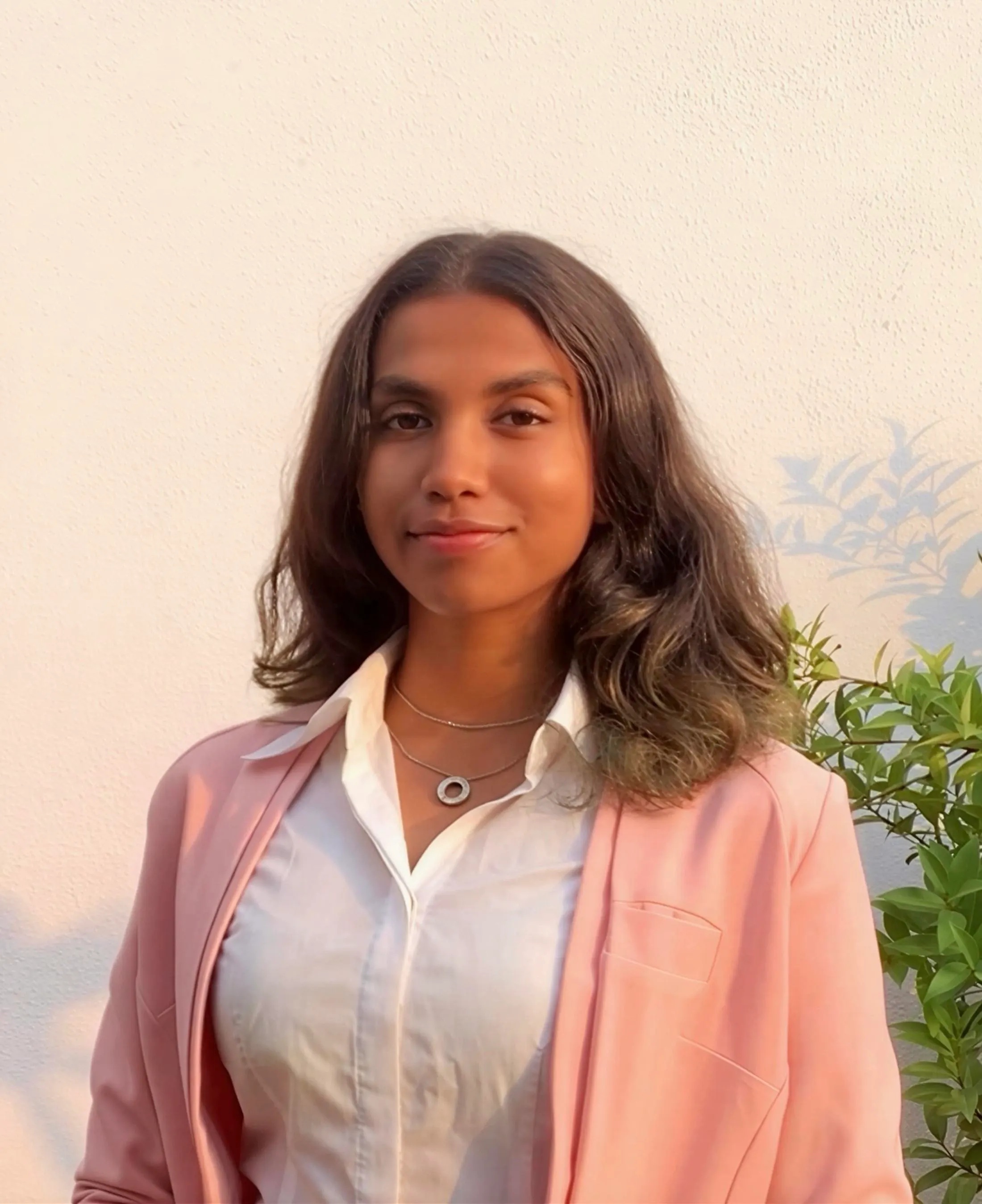
FigureAsia 35 Under 35 · Healthcare
Divaa Uthkarsha
Age 17 · Type 1 diabetes access and community health · Bengaluru, India
Teen founder whose programme reports support for 3,190 children with Type 1 diabetes and whose first-author study documented a major knowledge gap among rural health workers.
- Approximate age at 31 December 2025
- 17
- Field
- Healthcare
- Country or region
- Bengaluru, India
- FigureAsia U35 Assessment
- 87.9 / 100
Profile
Career and documented record
Divaa Uthkarsha founded Project Surya after her brother was diagnosed with Type 1 diabetes. By June 2026, the programme reported reaching more than 402,000 people, supporting 3,190 children, educating 19,858 students, training more than 200 community health workers and distributing over 4,500 insulin vials. Those cumulative figures are organization-reported and have not been presented as an independent audit.
What elevates Uthkarsha's record beyond charity metrics is the attempt to create evidence. She was first author of a 2025 study surveying 156 rural Karnataka community health workers. The paper reported that 90.4% had poor knowledge of Type 1 diabetes, only 14.1% had heard of it and 11.5% had received training. The design was cross-sectional, based on 2024 fieldwork, and did not test whether an intervention improved clinical outcomes.
At 17, Uthkarsha has joined direct access, frontline education and research in a way few much older founders manage. The editorial significance is not youth alone. It is the discipline of documenting the system failure her programme is trying to address.
FigureAsia selection
Why Divaa Uthkarsha is on the list
FigureAsia selected Uthkarsha because her work carries both moral urgency and evidence-building intent. She has mobilized meaningful reported access while publishing a concrete account of the rural knowledge gap. The score is discounted for self-reported cumulative metrics and the absence of an intervention trial, but her individual agency, equity focus and relevance to chronic-disease care are exceptional.
Verified work
The 2025–26 record
Principal milestone
3,190 children reportedly supported
Evidence record
More than 200 community health workers trained
Scale or implementation
156 health workers surveyed in the 2025 paper
Field context
The work in its field
Within type 1 diabetes access and community health, the relevant test is whether a result can survive scrutiny of maturity, attribution, validity and practical fit. That distinction matters: completed evidence is not projected benefit, and individual responsibility is not interchangeable with the wider team’s achievement.
FigureAsia U35 Assessment
Assessment breakdown
87.9out of 100
Substantive 2025–2026 contribution
18 / 20
The score reflects completed 2025–26 work in type 1 diabetes access and community health, assessed at the documented maturity of community-health implementation and cross-sectional research.
Verified impact
13.5 / 15
Impact credit is limited to the measured study, regulatory, implementation or operating record stated in the profile; unsupported patient benefit is excluded.
Originality and distinction
8 / 10
The work creates or materially advances a distinctive capability within type 1 diabetes access and community health rather than relying on title or institutional association.
Field and industry influence
8 / 10
The assessment recognises demonstrated effects on research, product development, care delivery or professional practice, with publicity alone carrying no weight.
Individual agency
10 / 10
Named authorship and the documented role of Founder establish individual responsibility while preserving credit for collaborators.
Durability and trajectory
4.5 / 5
The cited work forms part of a continuing programme, platform or research trajectory rather than a single uncompleted announcement.
Asian significance and global relevance
5 / 5
The Asian connection is material to the person's identity, operating base or populations served: Indian youth advocate and researcher based in Bengaluru.
Clinical and scientific validity
4.9 / 7
Clinical and scientific validity is calibrated to community-health implementation and cross-sectional research, with the profile retaining the evidence boundary attached to the result.
Safety, quality and responsible governance
5.6 / 7
Safety and governance credit reflects accurate regulatory language, study limitations, data stewardship and the refusal to turn early evidence into clinical certainty.
Translation and care-pathway fit
5.4 / 6
The work is scored for its demonstrated fit with a laboratory, regulatory, clinical, operational or public-health pathway, not for projected future adoption.
Access, equity and resource stewardship
5 / 5
Access credit reflects documented reach, capacity, affordability or inclusion while distinguishing service volume from proven clinical outcome.