
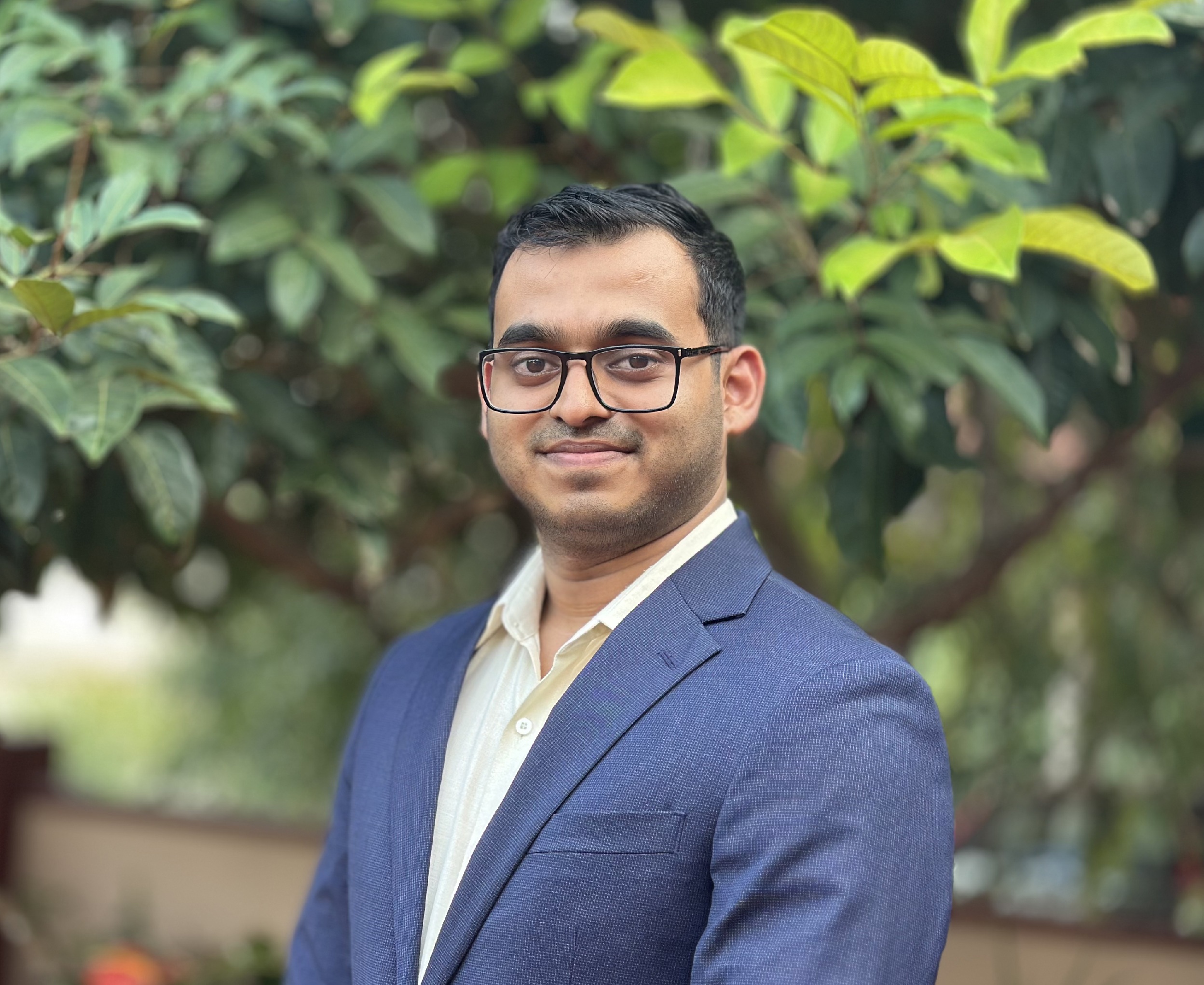
FigureAsia 35 Under 35 · Healthcare
Ninaad Lasrado
Age 30 · Mucosal RNA vaccines and viral immunology · Boston, United States
First-listed author on updated COVID-19 mRNA vaccine research and named trainee lead of a mucosal H5N1 vaccine programme.
- Approximate age at 31 December 2025
- 30
- Field
- Healthcare
- Country or region
- Boston, United States
- FigureAsia U35 Assessment
- 85.8 / 100
Profile
Career and documented record
Ninaad Lasrado works on a persistent weakness of respiratory vaccination: strong systemic protection does not always prevent infection where a virus first enters. In November 2025, he was first-listed author on a study of JN.1- and KP.2-adapted COVID-19 mRNA vaccines, with credited responsibility spanning conceptualization, investigation, formal analysis, visualization and drafting. The study measured neutralization against emerging variants and documented the erosion of cross-neutralization as the virus changed.
Lasrado also served as the named trainee lead of a 2024–2025 programme developing mucosal protection against H5N1 and contributed experimental investigation to a 2026 macaque vaccine-platform paper. His broader research interest in thermostable, mucosally delivered RNA systems has direct implications for cold-chain dependence and vaccine access, especially in settings where repeat boosting and specialist infrastructure are difficult.
The record is preclinical and immunological. Public evidence does not establish a successful H5N1 product, population effectiveness or a completed human trial. What distinguishes Lasrado is the clarity of his contribution statement, the continuity across pandemic threats and a research question that joins scientific sophistication to distribution reality.
FigureAsia selection
Why Ninaad Lasrado is on the list
FigureAsia selected Lasrado because his work treats access as a design constraint rather than an afterthought. He has earned visible intellectual and experimental responsibility inside a leading vaccine programme while keeping attention on mucosal delivery and thermostability. The ranking does not award a vaccine that does not yet exist; it recognizes a rigorous 2025–2026 body of work with credible relevance to pandemic preparedness in Asia and beyond.
Verified work
The 2025–26 record
Principal milestone
First-listed author with six named contribution categories in the 2025 study
Evidence record
Trainee lead of a 2024–2025 H5N1 mucosal-protection project
Scale or implementation
Experimental contributor to a 2026 macaque platform study
Field context
The work in its field
Within mucosal rna vaccines and viral immunology, the relevant test is whether a result can survive scrutiny of maturity, attribution, validity and practical fit. That distinction matters: completed evidence is not projected benefit, and individual responsibility is not interchangeable with the wider team’s achievement.
FigureAsia U35 Assessment
Assessment breakdown
85.8out of 100
Substantive 2025–2026 contribution
18 / 20
The score reflects completed 2025–26 work in mucosal rna vaccines and viral immunology, assessed at the documented maturity of preclinical vaccine and immunogenicity research.
Verified impact
12 / 15
Impact credit is limited to the measured study, regulatory, implementation or operating record stated in the profile; unsupported patient benefit is excluded.
Originality and distinction
9 / 10
The work creates or materially advances a distinctive capability within mucosal rna vaccines and viral immunology rather than relying on title or institutional association.
Field and industry influence
7 / 10
The assessment recognises demonstrated effects on research, product development, care delivery or professional practice, with publicity alone carrying no weight.
Individual agency
9 / 10
Named authorship and the documented role of Postdoctoral Research Fellow establish individual responsibility while preserving credit for collaborators.
Durability and trajectory
4.5 / 5
The cited work forms part of a continuing programme, platform or research trajectory rather than a single uncompleted announcement.
Asian significance and global relevance
4.5 / 5
The Asian connection is material to the person's identity, operating base or populations served: Indian scientist from Puttur, Karnataka, now conducting vaccine research in Boston.
Clinical and scientific validity
6.3 / 7
Clinical and scientific validity is calibrated to preclinical vaccine and immunogenicity research, with the profile retaining the evidence boundary attached to the result.
Safety, quality and responsible governance
6.3 / 7
Safety and governance credit reflects accurate regulatory language, study limitations, data stewardship and the refusal to turn early evidence into clinical certainty.
Translation and care-pathway fit
4.2 / 6
The work is scored for its demonstrated fit with a laboratory, regulatory, clinical, operational or public-health pathway, not for projected future adoption.
Access, equity and resource stewardship
5 / 5
Access credit reflects documented reach, capacity, affordability or inclusion while distinguishing service volume from proven clinical outcome.