
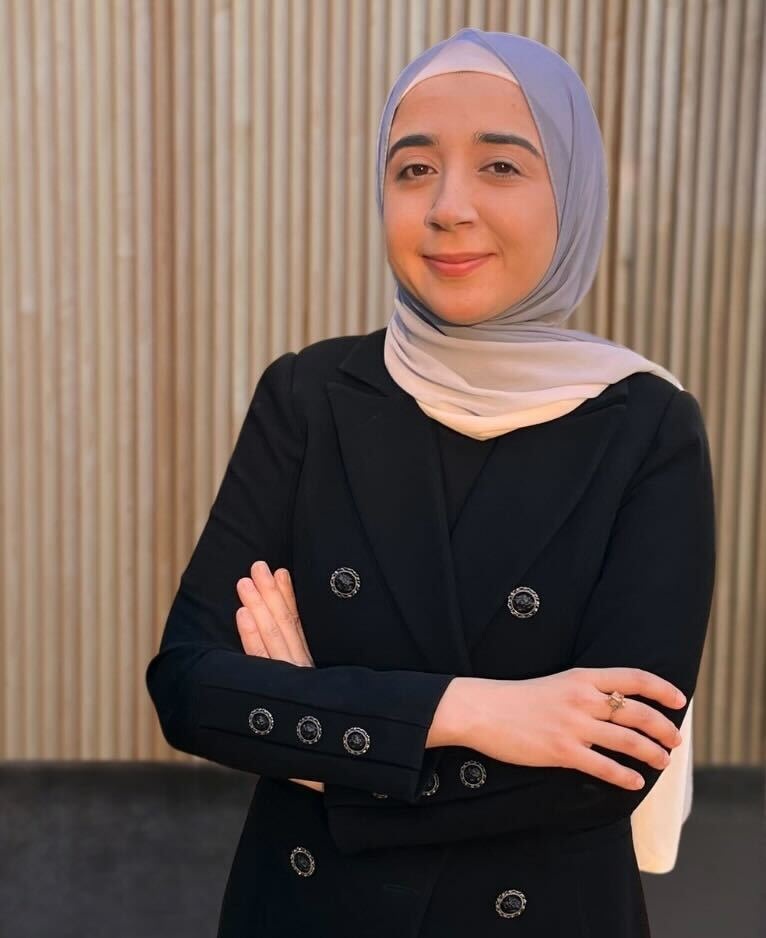
FigureAsia 35 Under 35 · Healthcare
Fatima Alrashdan
Age 32 · Wireless implant communication · Houston, United States
Equal-first author of a passive implant uplink that transmitted cardiac signals through tissue in a porcine demonstration while consuming less than 0.3 picojoules per bit.
- Approximate age at 31 December 2025
- 32
- Field
- Healthcare
- Country or region
- Houston, United States
- FigureAsia U35 Assessment
- 85.6 / 100
Profile
Career and documented record
Implantable devices cannot become smaller, longer-lived and more capable if communication consumes most of their energy. Fatima Alrashdan's 2026 work addressed that bottleneck with a passive magnetoelectric backscatter link. As an equal first author, she helped demonstrate an implant-side system that consumed less than 0.3 picojoules per bit, maintained a bit-error rate below one in a million at 55 millimetres and tolerated ten millimetres of misalignment in the reported tests.
The study also moved beyond a benchtop channel: the system transmitted electrocardiographic signals from the surface of a beating porcine heart to an external receiver. That large-animal demonstration matters because tissue depth, alignment and motion are precisely where elegant wireless concepts often fail. A related US patent issued in 2025, further documenting Alrashdan's inventorship and continuity in the platform.
The technology remains preclinical. It has not been shown to improve outcomes in patients, and the paper discloses relationships with a neurotechnology company. The contribution is nevertheless concrete and highly enabling: a credible route for deep implants to send data without a conventional powered radio. For closed-loop neural and cardiac systems, that can determine whether a device remains a laboratory object or becomes physically plausible.
FigureAsia selection
Why Fatima Alrashdan is on the list
FigureAsia selected Alrashdan for a technically disciplined advance with unusually clear performance boundaries and personal attribution. Equal-first authorship, patent inventorship and a named engineering role make her agency visible. The work also enlarges the map of West Asian participation in frontier bioelectronics without reducing identity to geography: a Jordanian engineer is helping solve a global implant-design constraint at its physical root.
Verified work
The 2025–26 record
Principal milestone
Less than 0.3 picojoules per bit
Evidence record
Bit-error rate below 1×10⁻⁶ at 55 millimetres
Scale or implementation
Electrocardiographic transmission from a beating porcine heart
Field context
The work in its field
Within wireless implant communication, the relevant test is whether a result can survive scrutiny of maturity, attribution, validity and practical fit. That distinction matters: completed evidence is not projected benefit, and individual responsibility is not interchangeable with the wider team’s achievement.
FigureAsia U35 Assessment
Assessment breakdown
85.6out of 100
Substantive 2025–2026 contribution
18 / 20
The score reflects completed 2025–26 work in wireless implant communication, assessed at the documented maturity of large-animal preclinical engineering validation.
Verified impact
12 / 15
Impact credit is limited to the measured study, regulatory, implementation or operating record stated in the profile; unsupported patient benefit is excluded.
Originality and distinction
10 / 10
The work creates or materially advances a distinctive capability within wireless implant communication rather than relying on title or institutional association.
Field and industry influence
8 / 10
The assessment recognises demonstrated effects on research, product development, care delivery or professional practice, with publicity alone carrying no weight.
Individual agency
9 / 10
Named authorship and the documented role of Bioelectronics Researcher and Senior Engineer establish individual responsibility while preserving credit for collaborators.
Durability and trajectory
4.5 / 5
The cited work forms part of a continuing programme, platform or research trajectory rather than a single uncompleted announcement.
Asian significance and global relevance
4.5 / 5
The Asian connection is material to the person's identity, operating base or populations served: Jordanian bioelectronics researcher working in the United States.
Clinical and scientific validity
6.3 / 7
Clinical and scientific validity is calibrated to large-animal preclinical engineering validation, with the profile retaining the evidence boundary attached to the result.
Safety, quality and responsible governance
5.6 / 7
Safety and governance credit reflects accurate regulatory language, study limitations, data stewardship and the refusal to turn early evidence into clinical certainty.
Translation and care-pathway fit
4.2 / 6
The work is scored for its demonstrated fit with a laboratory, regulatory, clinical, operational or public-health pathway, not for projected future adoption.
Access, equity and resource stewardship
3.5 / 5
Access credit reflects documented reach, capacity, affordability or inclusion while distinguishing service volume from proven clinical outcome.