
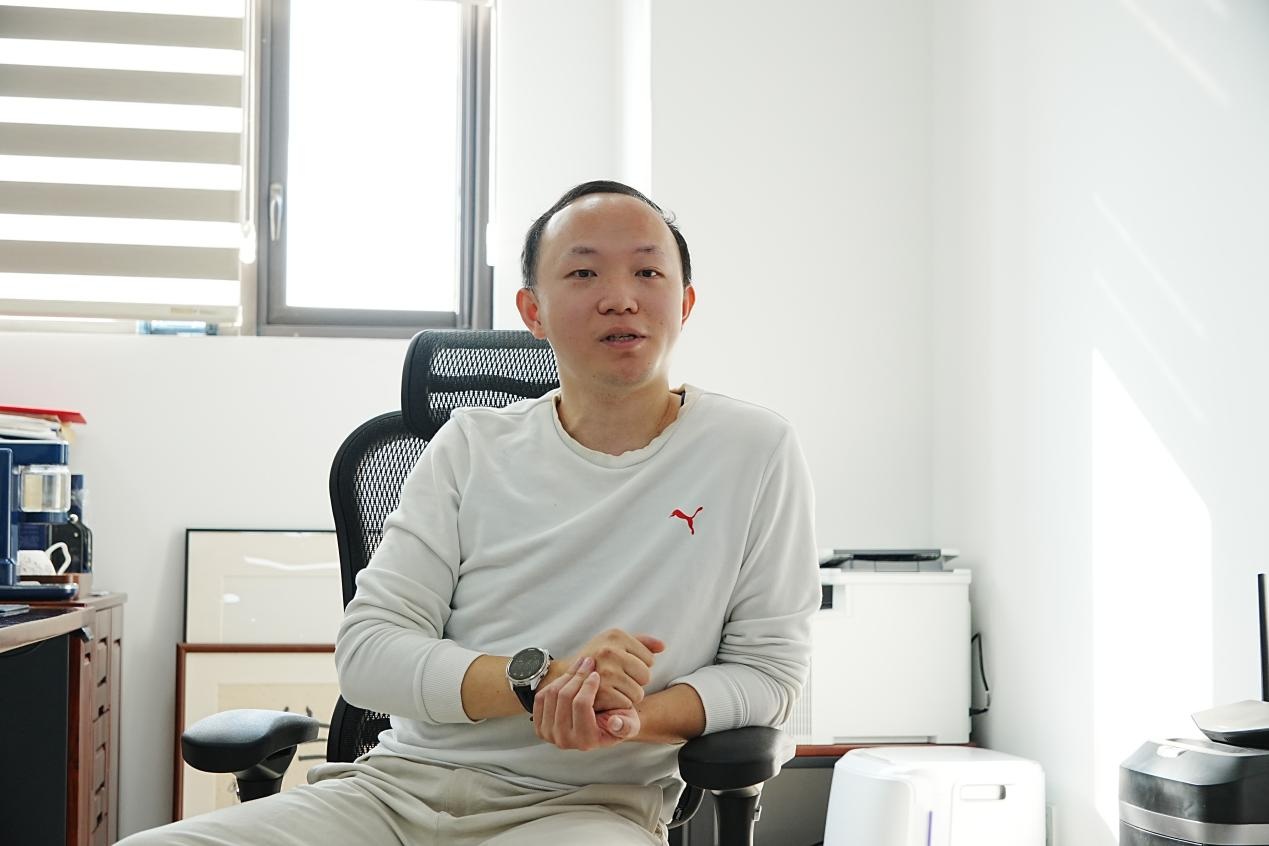
FigureAsia 35 Under 35 · Science
Chunsen Liu
Age 33 · Two-dimensional electronics and memory · China
Co-corresponding author of 2025 Nature work that pushed non-volatile flash programming to 400 picoseconds.
- Approximate age at the edition eligibility date
- 33
- Field
- Materials science
- Country or region
- China
- FigureAsia U35 Assessment
- 96.1 / 100
Profile
Career and documented record
Chunsen Liu attacked a stubborn limit in non-volatile memory: programming speed. In 2025, a Fudan-led Nature paper used an enhanced hot-carrier injection mechanism in a two-dimensional flash architecture to report 400-picosecond programming—orders of magnitude faster than conventional flash operation.
A second Nature paper in the same year moved the idea from an isolated device toward a full two-dimensional–silicon hybrid flash chip. The sequence matters. It pairs a striking device result with system-level integration, narrowing the distance between a laboratory transistor and usable memory architecture.
Liu is credited as a co-corresponding author and project leader, not as the sole inventor. His record nevertheless shows the rare combination of device physics, fabrication discipline and continuity needed to turn a headline metric into a research platform.
FigureAsia selection
Why Chunsen Liu is on the list
Liu's 2025 record joins a genuinely new operating regime with a second, integrated demonstration. The achievement is still pre-commercial, but its speed, repeatability and progression from device to chip give it unusual weight in a field crowded with one-off benchmarks.
Verified work
The 2025–26 record
400-picosecond flash
Co-led a Nature study reporting 400 ps programming in a two-dimensional non-volatile memory device.
Hybrid memory chip
Helped deliver a full-function two-dimensional–silicon hybrid flash chip in a second Nature study.
Integrated research programme
Linked materials, device physics and circuit integration within one continuing programme.
Field context
The work in its field
Two-dimensional semiconductors promise extreme electrostatic control but have struggled to become complete circuits. The value of Liu's work lies in connecting a device-level speed result to hybrid integration.
FigureAsia U35 Assessment
Assessment breakdown
96.1out of 100
Substantive 2025–2026 contribution
18.9 / 20
Co-led a Nature study reporting 400 ps programming in a two-dimensional non-volatile memory device.
Verified scientific impact
14.4 / 15
Two Nature papers established both an exceptional device metric and a route toward integrated memory hardware.
Originality and distinction
9.6 / 10
The distinction lies in enhanced hot-carrier injection in an atomically thin flash architecture operating on a sub-nanosecond timescale.
Field influence
9.6 / 10
Researchers in two-dimensional electronics and memory now have a stronger result to test, extend or challenge because of this contribution.
Individual agency
9.6 / 10
Contribution statements and Fudan records identify Liu as a co-corresponding author and research leader while preserving the team's credit.
Durability and trajectory
4.9 / 5
The contribution builds on an active line of work at Fudan University, with further tests and applications still to come.
Asian significance and global relevance
4.9 / 5
Chinese scientist leading a two-dimensional electronics programme at Fudan University in Shanghai.
Evidential validity and reproducibility
7.7 / 8
Peer-reviewed device measurements and a separate chip-level paper support the claim; commercial endurance and yield are not inferred.
Advance in scientific knowledge
6.8 / 7
The work revises expectations for how quickly non-volatile two-dimensional memory can be programmed.
Translational or methodological utility
4.8 / 5
The hybrid chip demonstration gives the underlying physics a credible path into future memory and in-memory computing research.
Responsible research stewardship
4.9 / 5
The profile distinguishes laboratory speed and integration from manufacturability, lifetime and market readiness.