
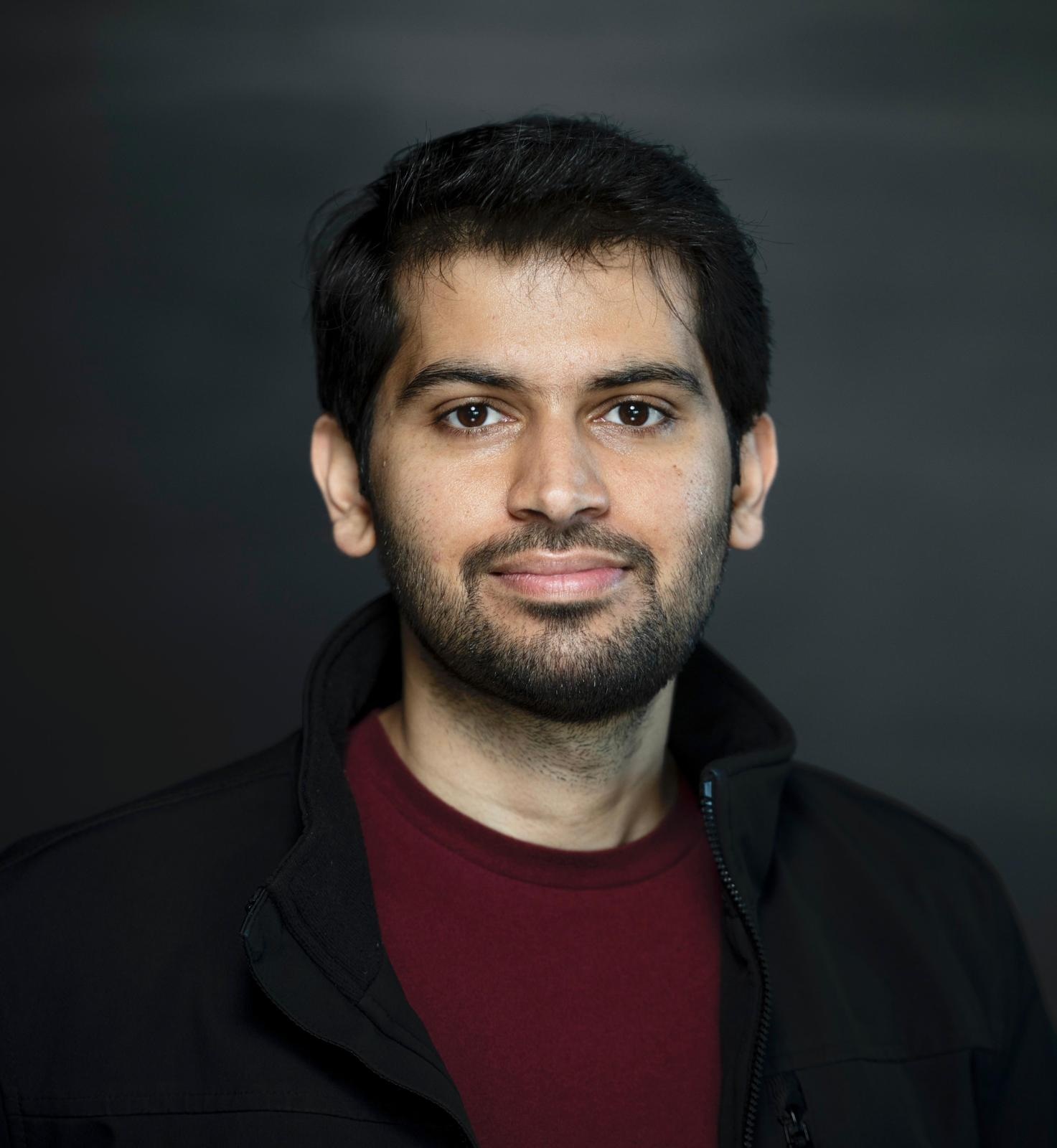
FigureAsia 35 Under 35 · Science
Deepak Pathak
Age 32 · Robot learning and embodied intelligence · India / United States
Senior author of DexWild, which trains dexterous robot hands from low-cost first-person human interaction data.
- Approximate age at the edition eligibility date
- 32
- Field
- Robotics
- Country or region
- India / United States
- FigureAsia U35 Assessment
- 93.8 / 100
Profile
Career and documented record
Dexterous manipulation has been constrained by the cost of collecting robot demonstrations. In work presented at Robotics: Science and Systems in 2025, Deepak Pathak's group introduced DexWild, a way to learn hand skills from first-person video of humans interacting with everyday objects.
The system was designed to transfer across embodiment rather than imitate a human hand literally. On unseen environments, the researchers reported a 68.5% success rate—roughly four times the comparison trained only on robot data—and markedly stronger cross-robot generalisation.
The result does not deliver a universal household robot. It addresses a more fundamental bottleneck: data. By replacing expensive teleoperation with scalable human video while retaining real-world robot tests, Pathak's programme offers a credible route from narrow demonstrations to more adaptable manipulation.
FigureAsia selection
Why Deepak Pathak is on the list
Pathak has spent a decade widening the data and exploration regimes available to robots. DexWild is a strong 2025 expression of that programme: conceptually clear, experimentally grounded and aimed at a bottleneck that determines whether dexterous systems can move beyond curated laboratories.
Verified work
The 2025–26 record
DexWild
Senior-authored a system learning dexterous manipulation from in-the-wild first-person human video.
Unseen-environment tests
Reported 68.5% success on held-out environments, about four times the robot-only comparison.
Cross-embodiment transfer
Demonstrated substantially stronger transfer across different robot-hand forms.
Field context
The work in its field
Robot learning advances when data collection becomes cheaper without losing physical realism. Human first-person video is abundant, but translating it across embodiment is the scientific difficulty DexWild confronts.
FigureAsia U35 Assessment
Assessment breakdown
93.8out of 100
Substantive 2025–2026 contribution
18.2 / 20
Senior-authored a system learning dexterous manipulation from in-the-wild first-person human video.
Verified scientific impact
13.9 / 15
The study reports large gains on real robot tests and directly targets the data bottleneck in dexterous learning.
Originality and distinction
9.5 / 10
The distinction lies in using scalable egocentric human interaction data while learning a representation that can transfer across robot embodiments.
Field influence
9.4 / 10
For Pathak, field influence turns on whether this work changes the operating baseline in robot learning and embodied intelligence; the record supports that judgement.
Individual agency
9.5 / 10
Pathak is the senior research leader of DexWild and heads the laboratory programme, with experimental credit retained for the student authors.
Durability and trajectory
4.8 / 5
A continuing programme at Carnegie Mellon University Robotics Institute extends beyond this single result.
Asian significance and global relevance
4.8 / 5
Indian scientist educated at IIT Kanpur and now leading robot-learning research in the United States.
Evidential validity and reproducibility
7.5 / 8
Results are reported across unseen settings and robot forms; the assessment does not extend them beyond the tested task distribution.
Advance in scientific knowledge
6.7 / 7
DexWild shows that embodiment mismatch need not prevent useful learning from large human-video corpora.
Translational or methodological utility
4.7 / 5
The method could reduce the cost of training manipulation systems and broaden the objects and environments represented in robot data.
Responsible research stewardship
4.8 / 5
The profile preserves benchmark boundaries and treats safety and real-world reliability as unresolved engineering obligations.