
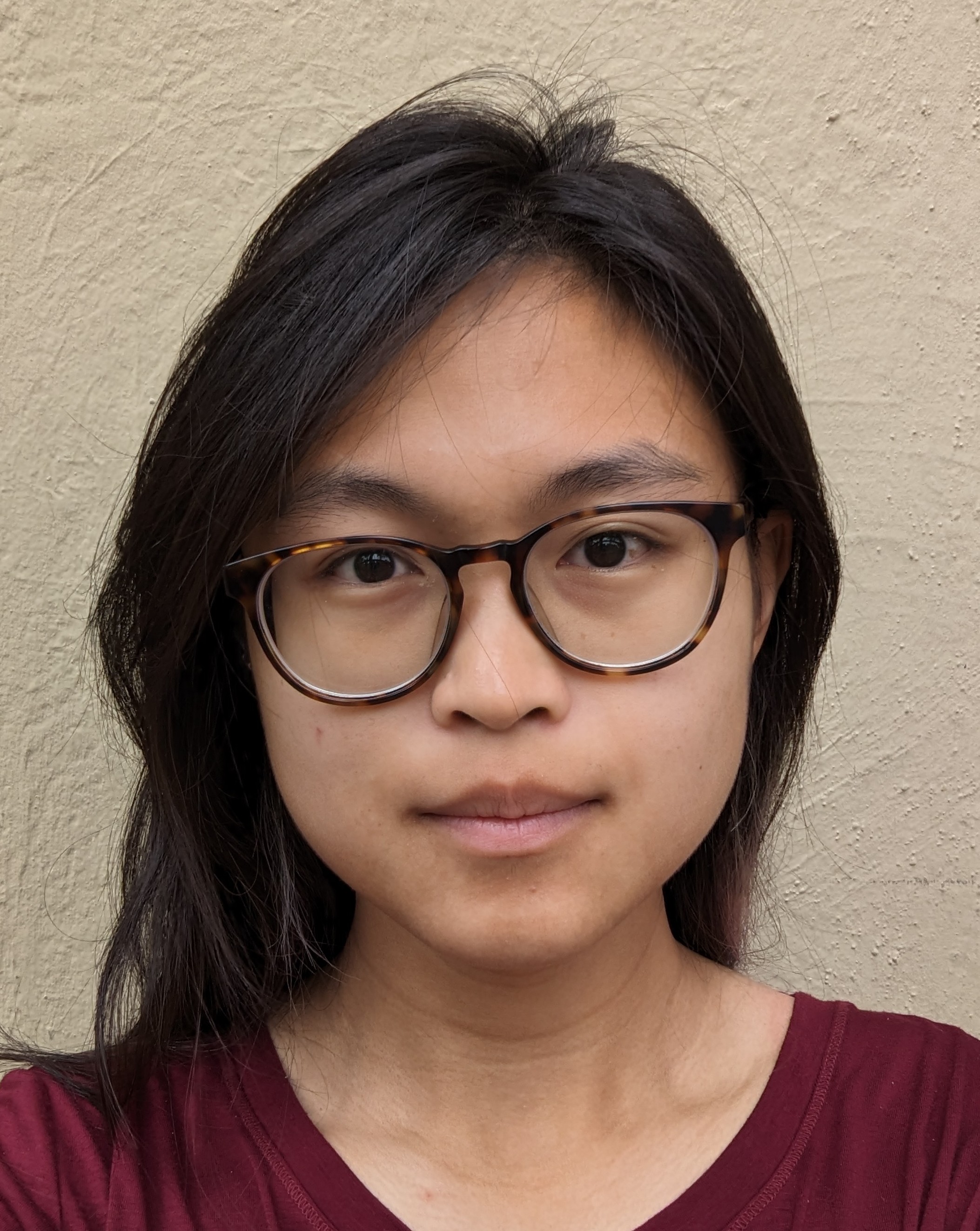
FigureAsia 35 Under 35 · Science
Ewin Tang
Age 25 · Quantum information and classical algorithms · United States / Taiwan
Theorist redefining the boundary between quantum advantage and efficient classical computation.
- Approximate age at the edition eligibility date
- 25
- Field
- Theoretical computer science
- Country or region
- United States / Taiwan
- FigureAsia U35 Assessment
- 93.1 / 100
Profile
Career and documented record
Ewin Tang made her name by showing that a celebrated quantum recommendation algorithm had an efficient classical counterpart. Her later work has turned that intervention into a broader research programme: identify the structural assumption behind a claimed quantum advantage, then test how much of it a carefully designed classical algorithm can recover.
During 2025–26, Tang extended that programme into the structure and learnability of quantum systems, including conditions governing quantum Markov chains and the information needed to learn open-system dynamics. The work is theoretical, but the stakes are practical: honest quantum advantage depends on the quality of the classical baseline.
Recognition through the 2025 Maryam Mirzakhani New Frontiers Prize and an incoming Princeton faculty appointment reflects more than precocity. At 25, Tang has already changed how an entire subfield frames its central comparison.
FigureAsia selection
Why Ewin Tang is on the list
Tang’s distinction is that she does not merely solve problems inside quantum information; she changes the questions the field must answer. Her record combines original algorithms, conceptual discipline and an unusual willingness to make quantum claims harder—not easier—to defend.
Verified work
The 2025–26 record
New Frontiers Prize
Received the Maryam Mirzakhani New Frontiers Prize for foundational work in quantum algorithms and complexity.
Quantum Markov structure
Advanced theoretical conditions connecting rapid mixing and conditional mutual information in quantum systems.
Learning open quantum systems
Studied the information and algorithmic structure required to learn open-system dynamics.
Field context
The work in its field
Quantum advantage is meaningful only against the best classical method under comparable data access and assumptions. Tang's programme raises that baseline and makes claims of separation more rigorous.
FigureAsia U35 Assessment
Assessment breakdown
93.1out of 100
Substantive 2025–2026 contribution
18.1 / 20
Received the Maryam Mirzakhani New Frontiers Prize for foundational work in quantum algorithms and complexity.
Verified scientific impact
13.9 / 15
Tang's classical challenges have become part of the standard intellectual discipline around quantum speedup claims, reinforced by major field recognition.
Originality and distinction
9.3 / 10
The distinction lies in turning quantum-inspired data access and structural assumptions into unexpectedly strong classical algorithms.
Field influence
9.3 / 10
Researchers in quantum information and classical algorithms now have a stronger result to test, extend or challenge because of this contribution.
Individual agency
9.3 / 10
Tang's single- and co-authored theoretical record identifies a coherent programme she originated and continues to lead.
Durability and trajectory
4.8 / 5
The contribution builds on an active line of work at University of California, Berkeley and Princeton University, with further tests and applications still to come.
Asian significance and global relevance
4.8 / 5
Taiwanese-American scientist whose family and academic record form a documented East Asian diaspora connection.
Evidential validity and reproducibility
7.5 / 8
Formal theorems make assumptions explicit and results auditable; the profile separates asymptotic insight from hardware claims.
Advance in scientific knowledge
6.6 / 7
The research sharpens where quantum and classical computation truly diverge.
Translational or methodological utility
4.7 / 5
Stronger classical baselines help researchers allocate quantum resources to problems where a defensible separation may exist.
Responsible research stewardship
4.8 / 5
The work exemplifies scientific restraint by challenging inflated advantage claims with reproducible mathematics.