
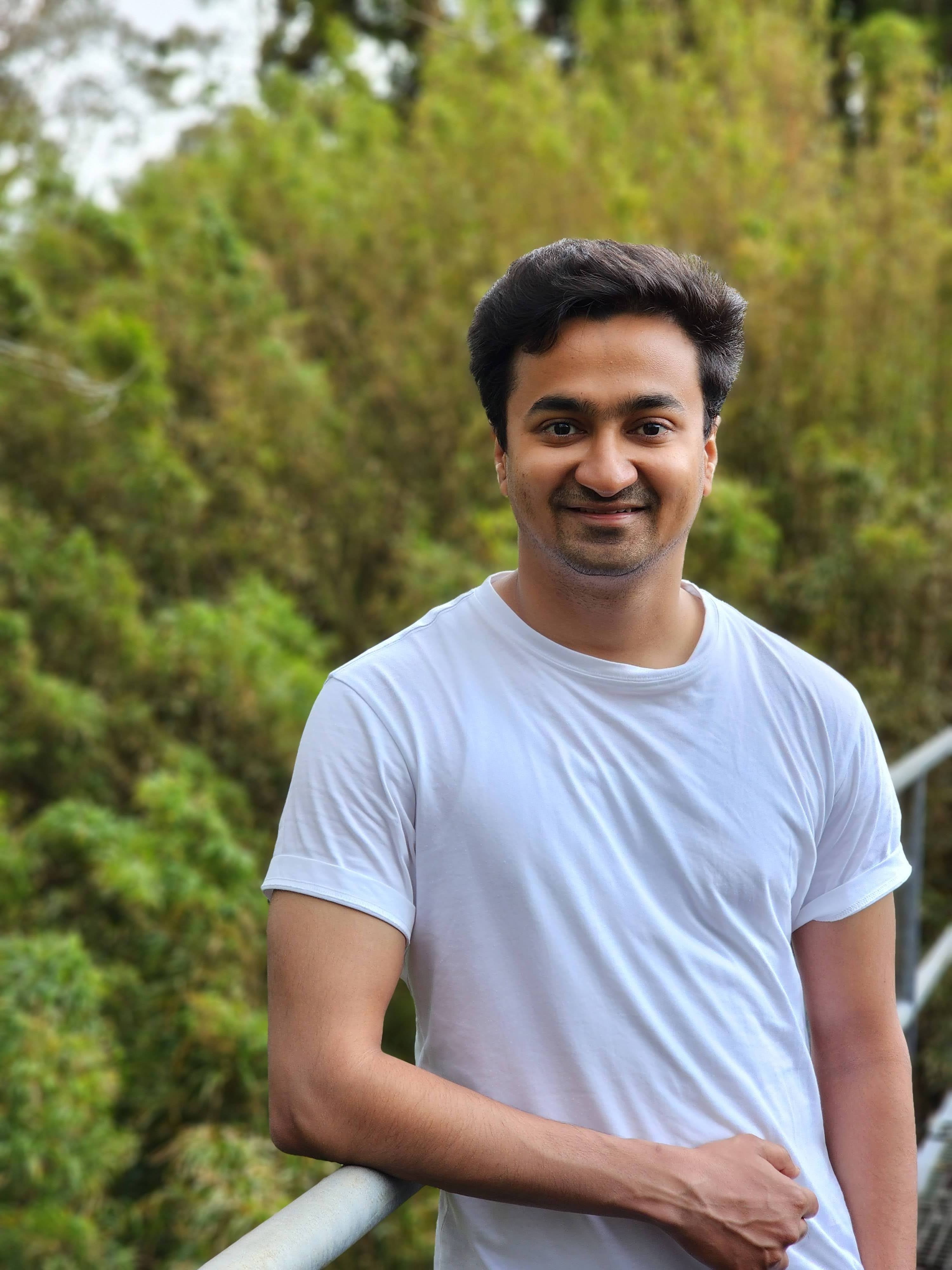
FigureAsia 35 Under 35 · Science
Kumar Ayush
Age 28 · Sensor-language models · India / United States
Co-first author of SensorLM, a foundation model joining wearable-sensor time series with natural language.
- Approximate age at the edition eligibility date
- 28
- Field
- Computational biology
- Country or region
- India / United States
- FigureAsia U35 Assessment
- 81.6 / 100
Profile
Career and documented record
Wearable sensors produce vast streams of motion and physiological data, but most models remain tied to one device, label set or study. Kumar Ayush co-first-authored SensorLM in 2025, a model that represents sensor time series and natural language in a shared system.
The accompanying resource covers more than 103,000 people and 59.7 million hours of data. The paper reports gains in zero-shot and few-shot activity recognition and cross-modal retrieval, making the scale of the data as significant as the model architecture.
SensorLM does not diagnose disease and its population coverage must be scrutinised for bias. Its scientific value is to make heterogeneous longitudinal signals more reusable across questions—and to expose the data and evaluation problem at a scale commensurate with modern wearables.
FigureAsia selection
Why Kumar Ayush is on the list
Ayush is selected for a 2025 contribution that joins model design with an unusually large human-sensor resource. The work creates infrastructure for health and behaviour research while keeping diagnosis outside its demonstrated claims.
Verified work
The 2025–26 record
SensorLM
Co-first-authored a shared model of wearable-sensor sequences and natural language.
59.7 million hours
Helped assemble a dataset covering more than 103,000 people and 59.7 million sensor-hours.
Cross-modal evaluation
Reported zero-shot, few-shot and retrieval gains across the tested health and activity tasks.
Field context
The work in its field
Sensor data are continuous, noisy and device-dependent. Language alignment can make them easier to query and transfer, but it also raises privacy and representation obligations.
FigureAsia U35 Assessment
Assessment breakdown
81.6out of 100
Substantive 2025–2026 contribution
14.9 / 20
Co-first-authored a shared model of wearable-sensor sequences and natural language.
Verified scientific impact
11.9 / 15
The scale of the data resource and breadth of the evaluation make SensorLM a substantial platform contribution.
Originality and distinction
8.1 / 10
The distinction lies in aligning long, heterogeneous sensor streams with natural language in a reusable foundation model.
Field influence
8.2 / 10
The contribution gives sensor-language models a new method, limit or line of argument with relevance beyond one paper.
Individual agency
8.5 / 10
Ayush is a co-first author and named research lead, with data and engineering contributions shared across the collaboration.
Durability and trajectory
4.3 / 5
The record shows continuity at Google DeepMind and Stanford University: this contribution belongs to a wider, sustained agenda.
Asian significance and global relevance
4.4 / 5
Indian scientist educated at IIT Kharagpur and now working across Stanford and Google DeepMind.
Evidential validity and reproducibility
6.6 / 8
The paper reports explicit tasks and baselines; diagnostic or clinical effectiveness is not inferred.
Advance in scientific knowledge
6 / 7
The work tests how much semantic structure can be transferred between continuous human sensing and language.
Translational or methodological utility
4.3 / 5
Researchers can query, retrieve and adapt wearable data across tasks with less task-specific labelling.
Responsible research stewardship
4.4 / 5
Privacy, demographic coverage and clinical validation are treated as core conditions for future use.