
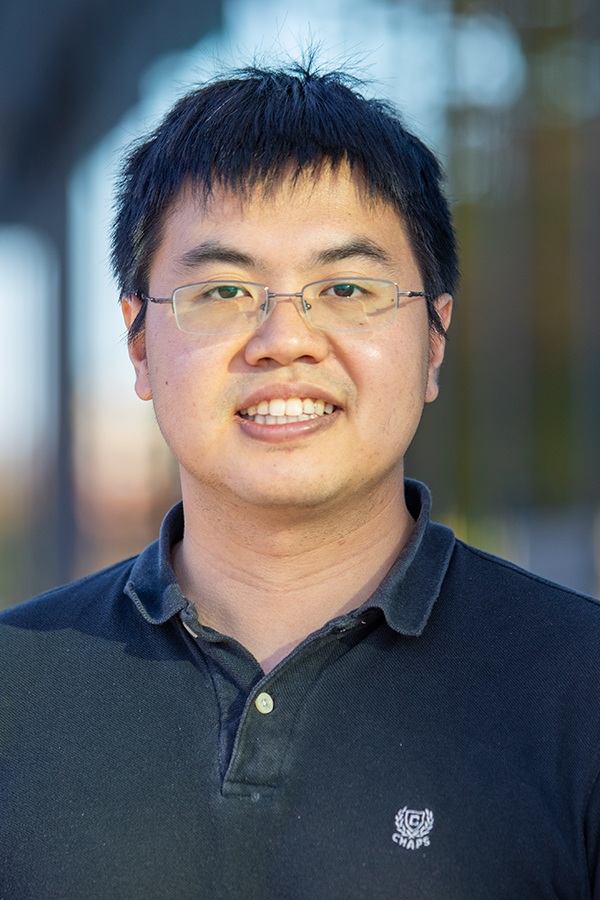
FigureAsia 35 Under 35 · Science
Yilun Du
Age 28 · Compositional generative models and robotics · China / United States
Researcher building compositional world models that let robots plan with video and combine learned capabilities.
- Approximate age at the edition eligibility date
- 28
- Field
- Artificial intelligence
- Country or region
- China / United States
- FigureAsia U35 Assessment
- 87.1 / 100
Profile
Career and documented record
Yilun Du has built a research programme around composition: models should combine concepts, goals and constraints rather than replay a single training distribution. In 2025 he contributed to Gemini Robotics and advanced generative world models that use predicted visual futures to guide physical action.
The work culminated during the period in large video-planning systems designed to support general-purpose robots. Instead of learning one policy per task, the model imagines candidate futures, evaluates them against language goals and converts the selected plan into action.
Video prediction is not yet a universal simulator, and striking demonstrations can conceal brittle failure. Du's contribution is to make composition and planning explicit research objects, joining generative modelling to the harder standard of physical consequence.
FigureAsia selection
Why Yilun Du is on the list
Du is selected for moving generative AI toward structured decision-making in the physical world. His record combines influential theory on compositional models with systems that test whether learned visual dynamics can support robot planning.
Verified work
The 2025–26 record
Gemini Robotics
Contributed research to a generalist vision-language-action system for robots.
Video world models
Developed generative planners that reason over predicted visual futures.
Harvard appointment
Established an independent faculty programme in compositional generative intelligence.
Field context
The work in its field
Robotics needs models that can represent many possible futures and recombine skills under new goals. Composition is the difference between a collection of demos and a reusable planning system.
FigureAsia U35 Assessment
Assessment breakdown
87.1out of 100
Substantive 2025–2026 contribution
16.8 / 20
Contributed research to a generalist vision-language-action system for robots.
Verified scientific impact
12.6 / 15
Du's work influences both foundational generative modelling and high-profile generalist robotics programmes.
Originality and distinction
8.8 / 10
The distinction lies in composing learned concepts and using generative video as an intermediate planning representation.
Field influence
8.6 / 10
For Du, field influence turns on whether this work changes the operating baseline in compositional generative models and robotics; the record supports that judgement.
Individual agency
8.8 / 10
Du's publication record and independent Harvard laboratory identify a coherent programme, while Gemini Robotics remains a large team result.
Durability and trajectory
4.6 / 5
A continuing programme at Harvard University extends beyond this single result.
Asian significance and global relevance
4.6 / 5
Chinese-American researcher whose education and career connect the East Asian diaspora with United States AI institutions.
Evidential validity and reproducibility
7.1 / 8
Papers provide task-level evaluation and demonstrations; physical correctness outside those settings is not assumed.
Advance in scientific knowledge
6.2 / 7
The programme clarifies how compositional energy and diffusion models can support planning rather than generation alone.
Translational or methodological utility
4.5 / 5
World-model planning could let robots reuse data across tasks instead of collecting a new policy for every objective.
Responsible research stewardship
4.5 / 5
The profile keeps simulation error and physical safety central when moving models into embodied systems.