
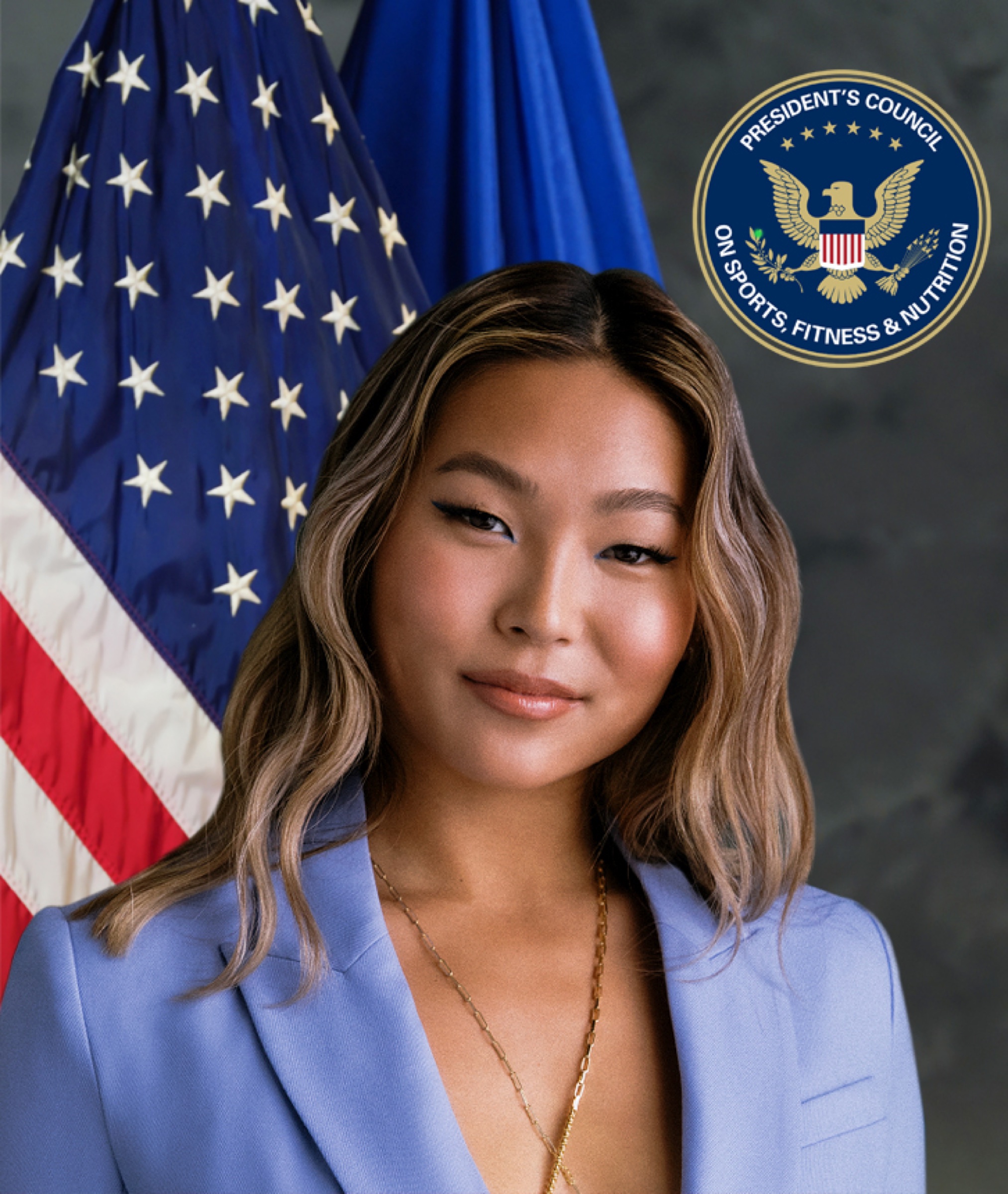
FigureAsia 35 Under 35 · Sports
Chloe Kim
Age 25 · Halfpipe · United States
Three-time world champion with an Olympic silver return
- Age at the edition eligibility date
- 25
- Field
- Snowboard
- Country or region
- United States
- FigureAsia U35 Assessment
- 93.4 / 100
Profile
Career and documented record
Chloe Kim converted a full 2025 championship programme into two World Cup victories and a third world halfpipe title. She won at Laax and Aspen before the World Championships in Engadin, where a score of 93.50 on her first run secured gold. At the 2026 Olympic Winter Games, she returned to the halfpipe final and won silver as a new champion emerged. The sequence records continuing elite performance without pretending the Olympic result repeated her previous gold.
Kim is an American snowboarder on the United States national team, born in the United States to Korean parents and publicly connected to that heritage. Her sporting work is defined by run construction rather than biography. A switch frontside double cork 1080, linked rotations and the amplitude needed to maintain speed through the pipe make each competitive run a sequence of related technical decisions. One unstable edge can end the attempt; three final runs offer only limited opportunities to correct it. Those conditions leave unusually clear individual attribution, even within a judged sport: trick content, execution and published scores belong to the rider. Kim's influence on women's halfpipe is credible because the progression of her switch double-cork combinations is accompanied by completed results. Two tour wins showed repeatability across venues, Engadin supplied the global title, and Olympic silver confirmed that her level remained close to the field's new best. The case is current and measurable, not a retrospective award for two earlier Olympic championships.
FigureAsia selection
Why Chloe Kim is on the list
Chloe Kim won two World Cups and a third world halfpipe title before adding Olympic silver, a four-event sequence that measures current technical command rather than inherited reputation. Her evidence then cleared the competitive threshold four times: World Cup wins at Laax and Aspen, a 93.50 world-title run in Engadin and Olympic silver in 2026. The case is strongest in substantive contribution, originality, individual agency and repeatability across championship settings.
Judged sport requires restraint because scores contain expert evaluation rather than a stopwatch alone. Here, published marks and recorded run content provide a stable basis for comparison, while separate finals reduce dependence on one panel or venue. Kim is assessed against leading halfpipe specialists, not against the reputation created by earlier Olympic gold medals. Her third world title is the sharpest completed result in the window; the two World Cup victories provide season breadth, and the Olympic silver shows continuing proximity to the championship level without being misdescribed as a retained title. That silver also establishes the principal limitation: she did not finish first at the Games. FigureAsia nevertheless selected Kim because her 2025–2026 record combines three victories, four elite finals and technical work that remains directly attributable. The judgement recognises present run construction and completed placings, while excluding celebrity, sponsorship and any assumption that past Olympic success guaranteed the next result.
Verified work
The 2025–26 record
World Cup
Won halfpipe events at Laax and Aspen.
World Championships
Scored 93.50 to win a third world halfpipe title.
Olympic Winter Games
Won the women's halfpipe silver medal.
Field context
The work in its field
Women's halfpipe is a specialist field in which technical difficulty must survive execution, amplitude and the loss of speed through successive walls. Kim's closest comparison is therefore with riders able to link high-value rotations in a complete run, rather than athletes collecting medals across different snowboard disciplines. Wins at two World Cups and the world championship reduce the chance that one course or judging panel carried her case. Olympic silver then provides a clear boundary: she remained at medal level but was surpassed in that final. The case has meaningful event breadth, although its competitive sample remains shorter than a league or extended-tour campaign. That distinction informs the score without diluting the championship results.
FigureAsia U35 Assessment
Assessment breakdown
93.4out of 100
Substantive 2025-2026 contribution
18.0 / 20
Kim won at Laax and Aspen, scored 93.50 for a third world title and added 2026 Olympic silver.
Verified impact
15.0 / 15
Published World Cup placings, the 93.50 championship mark and the Olympic result verify four elite finals.
Originality and distinction
8.0 / 10
Her complete halfpipe runs sustained high-value rotations, amplitude and landing control across different pipe conditions.
Industry influence
9.0 / 10
A third world halfpipe championship placed Kim among the discipline's defining repeat title-winners.
Individual agency
10.0 / 10
Run construction, execution and judging scores attach directly to Kim rather than to a national team total.
Durability and demonstrated trajectory
4.5 / 5
Victories across two World Cups and the worlds reduce dependence on one panel, while Olympic silver confirms continued medal form.
Asian significance and global relevance
5.0 / 5
The Korean-American rider carried Asian-diaspora representation through the strongest global snowboard events.
Level of competition
10.0 / 10
World Cups, the World Championships and Olympic final repeatedly assembled the leading women's halfpipe specialists.
Competitive result
7.2 / 8
World gold was the peak result; second place at the Games clearly limits any claim of Olympic supremacy in 2026.
Cross-format consistency
4.0 / 4
The same technical programme won on three courses and remained medal-worthy at a fourth championship venue.
Sporting consequence
2.7 / 3
Her third world crown extended a championship legacy, although the Olympic title passed to another rider.